There is no do, there is only try.

There is no do, there is only try.

—Inspired by a post by Robert Middleton, Retired Marketing Coach
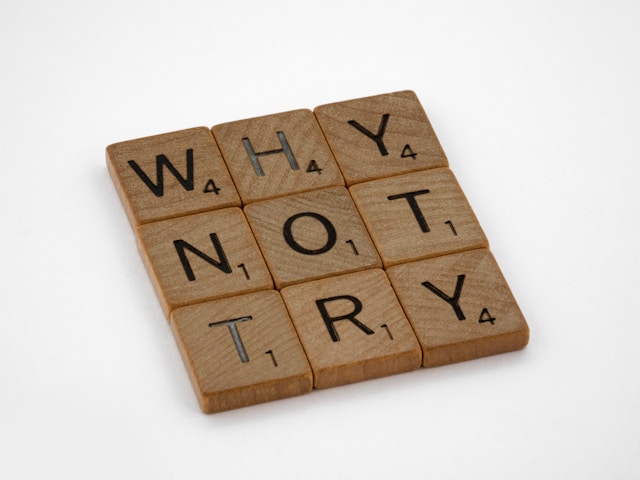
Image from Unsplash by Brett Jordan

There is a quiet trap hidden inside the word “do.”

It suggests certainty, completion, a neat checkbox at the end of effort.

But real life rarely works that way.

Growth lives in motion, in repetition, in the imperfect rhythm of trying again. When we chase “doing,” we judge ourselves harshly for anything unfinished. When we embrace “trying,” we give ourselves permission to learn, adjust, and continue.

Trying is not weakness; it’s commitment in action. It’s showing up when results are not guaranteed. It’s choosing progress over pride.

So, release the pressure to do it perfectly. Lean into the process. Try with intention. Try with curiosity. Try again tomorrow.

EXERCISE:

Where in your life are you waiting for certainty before you begin, as if confidence must arrive before action?

How can you embrace the idea that progress does not belong to the perfect, but to the persistent?
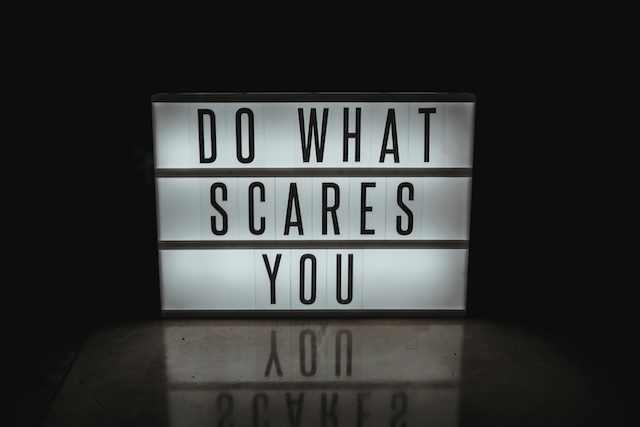
Learning more will increase knowledge, but only attempting more will reduce fear

“Learning more will increase knowledge, but only attempting more will reduce fear. The more you try it, the less you will fear it.”

James Clear, Writer and Speaker

Image from Unsplash by Daniel Velásquez

Learning more will always expand your knowledge — but it won’t shrink your fear.

You can study courage endlessly, yet hesitation fades only when you move. The more you try, the less room fear has time to breathe.

Attempting doesn’t mean succeeding — it means refusing to be paralyzed by “what if.”

Think of fear as a muscle losing strength with each brave repetition. Read, reflect, prepare, but then try again.

Each step forward rewires your certainty and reclaims your freedom.

Knowledge fills the mind; action frees the soul.

The door out of fear is not another book — it’s the next step you dare to take.

EXERCISE:

Choose one small discomfortable action a day: Start a conversation with a stranger, ask a bold question, or state a strong preference.

Make it specific and doable in under 5 minutes. Afterward, answer two questions: “What did I fear, and what actually happened?”

Over time, your nervous system learns that fear and discomfort are survivable and trains your identity as someone who acts despite fear.

“The best angle from which to approach any problem is the try-angle.”

“The best angle from which to approach any problem is the try-angle.”

—Stephanie Staples, Author of The Try-Angle, a New Slant on Life

Image from Unsplash By Brett Jordan

My grandson Weston is a remarkable little guy. He knows the alphabet forwards and backwards, can count to 100, knows his colors, and of course, his shapes.

I love how he pronounces “octagon” in his cute three-year-old voice, but perhaps the most admirable of his qualities is his joyful enthusiasm to try almost anything involving learning and play.

How open and receptive are you at applying the Try-Angle in your approach to life?

How often do you find yourself giving new things a try versus standing pat on your current approach, which may not be working?

EXERCISE:

Where and on what personal or professional challenges do you need to give things another try?

Please let me know where and how your persistence pays.