Who Looks Outside

“Who looks outside dreams; who looks inside awakes.”

—Carl Gustav Jung, founder of analytic psychology

Image from zdnet.com

Image from zdnet.com

I’ve always been fascinated with the idea of exploring new worlds. I was a fan of Mr. Wizard as a child, and dreamed of being an astronaut. The Discovery Channel is one of my favorites, and my first career was as a science teacher.

As I aged and pursued adventure, personal growth, and my current career in coaching, I found new excitement in taking frequent journeys into the land inside of my mind and heart – without the assistance of a rocket or a space suit.

EXERCISE:

Chose a practice such as meditation, prayer, journaling, or reading insightful, thought-provoking books and blogs to explore the worlds inside of you, and engage in new journeys of self-discovery.

“It wasn’t a waste of time if…”

“It wasn’t a waste of time if you learned something.”

—Author Unknown

Photo from thebusyba.com

Photo from thebusyba.com

Rarely do I hear people complain that the way they spend their time is wasteful. Rather, when these individuals have little or no say or influence on their time, their complaint level rises dramatically.

What we perceive as “time well spent” is often viewed by those around us—particularly in our professional worlds—as wasteful. The same thing occurs with most of us when others are orchestrating and influencing our days.

EXERCISE:

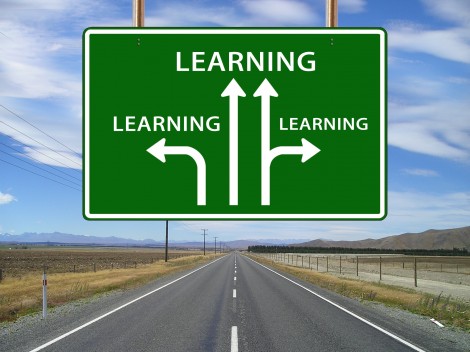
As you begin your day, please consider putting on a pair of “Learning Lenses.”  As you discover and appreciate the wide variety of teachable moments and lessons learned, examine the fulfillment and satisfaction available because of this more productive and empowering perspective.

A Continuous Part of Life

“Education is not something to prepare you for life; it is a continuous part of life.”

—Henry Ford, American industrialist

Photo from Flickr by CODnewsroom

Photo from Flickr by CODnewsroom

When you completed your formal education – whether it was grade school, high school, college or an advanced degree – how prepared were you for the professional and personal roles you have today?

Henry Ford knew as well as anyone that our education depends significantly on the continuous, iterative lessons we learn through life experiences. This form of education puts us to the test before we capture the lessons we need to live successful lives.

EXERCISE:

When and in what ways can you embrace the idea that lifelong learning, and being a continuous work in progress, is the best form of education to prepare you for your future?

“Teaching others scales right back to us.”

“Teaching others scales right back to us.”

—Seth Godin, Author

Photo from Flickr by winnifredxoxo

Photo from Flickr by winnifredxoxo

I have always had a passion for learning. As a child, I remember vividly my mother coming upstairs to read after our evening meal and some family time. Although she had only a high school education, she had the most expansive vocabulary of anyone I knew.

My own family, and my wife’s, were educators, so it was not surprising that my first career was as a teacher. After a few years, I shifted to business and found myself in teaching roles within the company. For the past 22 years, I have continued to be both student and teacher as I pursue my professional efforts as a coach.

Over the years, I’ve learned by watching others, applying what I’ve learned, and learned the most by sharing what I learned with others. The lessons always scaled back to me with even deeper meaning and impact.

EXERCISE:

How can you learn what you most desire by watching people you admire, practice what you learn, and scale these lessons back to you even more by teaching others in your professional and personal life?

As Seth Godin said in his latest book, What to Do When It’s Your Turn, “Teaching rewards us all.”

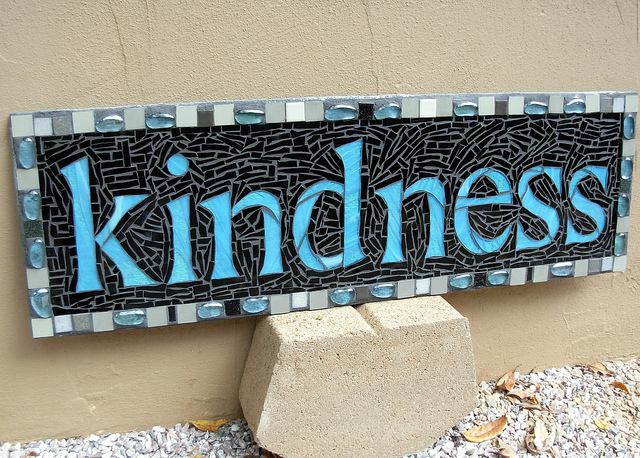
“Kindness causes us to learn, and to forget, many things.”

“Kindness causes us to learn, and to forget, many things.”

– Madame Swetchine, 18th Century Russian Mystic & Writer

Photo from Flickr by Margaret Almon

Photo from Flickr by Margaret Almon

What would happen if we lived in a much kinder world?

Today’s quote suggests first that we would learn more, perhaps due to the openness and receptivity kindness provides.

We would also forget many of life’s speed bumps because kindness has the capacity to help us forgive others and jettison the memories that hold us back.

EXERCISE

How can you intentionally and generously expand your level of kindness to those in your professional and personal worlds?

Notice what this effort helps you learn, and perhaps forget, through the process.

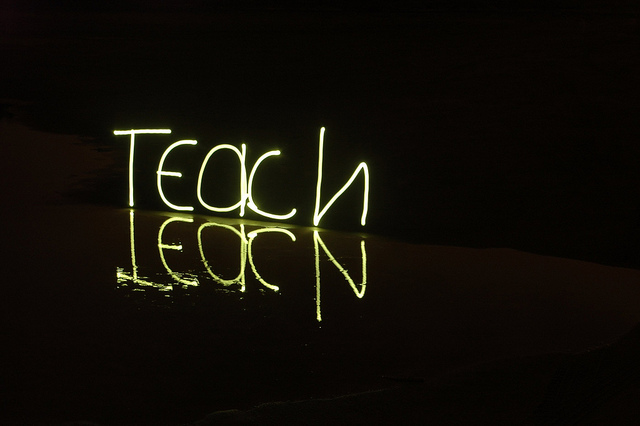
“To teach is to learn twice.”

“To teach is to learn twice.”

—Joseph Joubert, French Esssayist

Photo from Flickr by Duane Schoon

Photo from Flickr by Duane Schoon

Have you ever considered that learning is a multi-step process? Do you recall times in your education when you would read, re-read, and literally memorize information to prepare for a quiz or test?

What happened to this information when you tried to recall it even a few weeks later? If you are like most people, non-essential information is wiped clean from your “cerebral hard drive,” to make room for information that is essential, or critical, to your existence.

EXERCISE:

A simple yet powerful technique to deepen and sustain things you wish to learn and master is contained in these three steps:

  1. Watch others who are very skilled at some behavior.
  2. Try to practice those skills for yourself.
  3. Teaching this skill to others will cement and sustain the lesson.

Remember it this way: Watch One, Do One, Teach One.

A lesson taught with humor

 “A lesson taught with humor is a lesson retained.”

– Ruth K. Westheimer, aka “Dr Ruth”, sex therapist

One of the primary reasons I chose to pursue the profession of coaching 20 years ago was because of the considerable shortcomings of other forms of training and development. We all have books, binders, tapes and seminar folders sitting on our shelves that are barely remembered, and collecting dust.

Coaching is all about stickiness and sustainability, where the lessons learned often – in an experiential way – stay with us and become habituated.

Humor, as Dr. Ruth suggests, is a great way to make an idea or experience memorable, sticky and sustainable.

Exercise:

Where can you add a bit – or a bunch – of humor and fun to lessons being shared in both your professional and personal worlds?

Google the phrase “the use of humor to support learning” and see what you learn.

#112: “One’s mind, once stretched by a new idea, never regains its original dimensions.”

– Oliver Wendell Holmes, Sr, doctor and writer

Yesterday I attended a barbeque with friends and family. My father, at age 85, attended, as did a little three-and-a-half year old boy named Luka. Luka enrolled my dad and others into playing baseball.

I actually got to see Luka’s mind and abilities expand over the hours – resulting in significant pleasure and joy for everyone there.

Exercise:

How have you embraced the pleasure and joy of learning for yourself, and expanded your world?

What ideas do you have to share with others, to expand their worlds too?

Quotes are posted on The Quotable Coach a week after being sent out by email. To get the latest quotes straight to your inbox, pop your details in the sidebar to the right.

#108: “Mishaps are like knives, that either serve us or cut us, as we grasp them by the blade or the handle.”

– Herman Melville, author

The word “mishap” seems a bit more open to interpretation than other words such as mistakes, errors, and failure. Whichever word you currently use to identify life’s bumps in the road, it is our human ability to interpret these events that makes all the difference.

When we grab the blade of these events, we are stopped, defeated, or overcome. We tend to stay down and never do or try that again.

When we grab the handle, though, we see these events as opportunities to learn from, and improve our life and the world.

Exercise:

What mishaps have occurred recently in your life?

How can you grab the handle, so the lessons you’ve learned will serve you in the future?

Quotes are posted on The Quotable Coach a week after being sent out by email. To get the latest quotes straight to your inbox, pop your details in the sidebar to the right.

#54: “Remember to pick something up when you fall.”

– Unknown

We have all heard that experience is the best teacher. Many experiences do not provide us with success on the first attempt. Consider a baby trying to take its first steps, a child learning to read a book or ride a bike, a new leader speaking in public to a large group, learning a new language … the list goes on and on.

Have a “beginner’s mind” and a hunger for the lesson: this offers us the opportunity for value even in adversity.

Exercise:

Where did you fall down today, this week, this month? And what did you pick up when you stumbled?

Quotes are posted on The Quotable Coach a week after being sent out by email. To get the latest quotes straight to your inbox, pop your details in the sidebar to the right.