“Try something different, try something new; you might find it likes you and you like it too!”

“Try something different, try something new; you might find it likes you and you like it too!”

– Dr. Seuss, children’s author

How open are you to doing things in new and different ways? How frequently do you operate from the relative safety of your comfort zone? What are the benefits of trying something new?

Today I had an extremely engaging coaching session with one of my favorite clients. This young man is one of the smartest, most creative people in his organization, and boy, does he think differently!

I asked him, “How will your company make money in the future, and what new initiatives will have it remain relevant and a leader in its field?”

To make a long story short, he developed a template for a project to reinvent how the company currently operates, to potentially save the organization over a million dollars.

Exercise:

Consider taking a new and different action today in both your personal and professional life. Use the following sentence as a guide to help you try something new:

In _______ situation I usually do _________.  Instead, I am going to try ___________.

If you find this difficult, consider:

  • Trying a new restaurant.
  • Eating a new food.
  • Visiting a place for the first time.
  • Taking a class on a subject you always wanted to learn.

For extra credit, take a day off in the middle of the week and label it the “New day, new way” project, where you try as many new things as possible. Feel free to reply and let me know what happens.
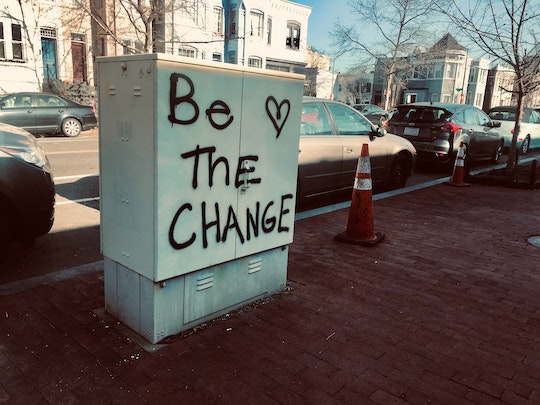
“All meaningful and lasting change starts first in your imagination, then works its way out.”

“All meaningful and lasting change starts first in your imagination, then works its way out.”

– Albert Einstein, theoretical physicist

Loyal readers of The Quotable Coach know one of my favorite quotes is “When patterns are broken, new worlds will emerge,” by Tuli Kupferberg. Here, Einstein is pointing to our imagination muscle as a means of creating these new worlds. In fact, the definition of imagination is the faculty or action of forming new ideas, images or concepts not currently present.

Exercise:

Select a five-minute break in your day for an “imagination vacation” to tap into your creativity and expand your resourcefulness.

“All meaningful and lasting change starts first in your imagination, then works its way out.”

“All meaningful and lasting change starts first in your imagination, then works its way out.”

– Albert Einstein, theoretical physicist

Loyal readers of The Quotable Coach know one of my favorite quotes is “When patterns are broken, new worlds will emerge,” by Tuli Kupferberg. Here, Einstein is pointing to our imagination muscle as a means of creating these new worlds. In fact, the definition of imagination is the faculty or action of forming new ideas, images or concepts not currently present.

Exercise:

Select a five-minute break in your day for an “imagination vacation” to tap into your creativity and expand your resourcefulness.

“When we are no longer able to change a situation, we are challenged to change ourselves.”

“When we are no longer able to change a situation, we are challenged to change ourselves.”

—Viktor Frankl, Austrian neurologist and Holocaust survivor

Image from Unsplash by Maria Thalassinou

Very few days pass by without each of us experiencing at least a few upsets. It is very common for our desires to be unfulfilled or our expectations to be thwarted by outside events. One way to navigate these bumps in the road is to look inward at our attitudes, so we can maintain our footing and continue to move ahead.

Exercise:

What are a few upsetting or undesirable situations in your professional or personal life that you are unable to change at this time?

What do you need to do to rise to the challenge of changing yourself, in order to make the best of these difficult circumstances?

“Don’t worry that children never listen to you; worry that they are always watching you.”

“Don’t worry that children never listen to you; worry that they are always watching you.”

– Robert Fulghum, author

We have all heard the phrase “actions speak louder than words.” My wife Wendy and I have been very fortunate to raise two wonderful children who are now on their own as young adults. Although we no longer see them as often as we did when they lived at home, when we do get to visit together, we are pleased to see the effects of many of the lessons we tried to impart throughout the years.

Even though we were not always sure that the messages were getting through, we are delighted to see them living consistently with many of the behaviors we demonstrated through our daily actions.

Exercise:

What do your children and the people in your life observe in your daily actions? How pleased would you be to see them behaving in the same manner?

What adjustments can you make to your actions to have the impact you wish to have?

“The employer generally gets the employees he deserves.”

“The employer generally gets the employees he deserves.”

– Walter Gilbey, British politician and entrepreneur

A common coaching session I have with individuals in career transition involves the attraction and retention of talent. Once people get beyond specific technical abilities, skill-sets and experience, we find ourselves shifting from objective decision-making to an emotional decision-making process.

“Will this person have the potential to contribute great value to the organization?” the interviewer thinks.

“Will I be happy, challenged, and rewarded fairly?” the candidate thinks.

The bottom line with both of these forms of thinking is that we are attracted to the future possibility of choosing each other.

Exercise:

If you are an employer, build a company that creates a better future for each employee, and you will get an even better company.

If you are a potential employee, show organizations the future they will get by choosing you to join them.

“The winds and waves are always on the side of the ablest navigators.”

“The winds and waves are always on the side of the ablest navigators.”

– Edward Gibbon

Although we all know that it is impossible to control the wind and the waves of life, I do like the concept that as we travel life’s journey, we can still be capable navigators.

Exercise:

What adjustments can you make to your life’s rudders and sails to pursue your personal and professional goals, in spite of rough seas and strong headwinds?

#84: “Be always at war with your vices, at peace with your neighbors, and let each new year find you a better man.”

– Benjamin Franklin, one of the Founding Fathers of the United States

I like bargains and two-for-one sales. This quote is a three-for-one! In Ben Franklin’s time, the word “vices” perhaps meant “behaviors that do not better oneself or another.” Today, I suggest we consider the word “habits” instead.

The idea of being a better person points to our ability to learn, grow, and improve as individuals.

Exercise:

What habits/vices will you declare war upon? Which relationships in your life are ones where you will make a stand for peace? In what ways do you intend to be a better person next year, versus today?

Quotes are posted on The Quotable Coach a week after being sent out by email. To get the latest quotes straight to your inbox, pop your details in the sidebar to the right.

#59: “Progress is impossible without change…”

“…and those who cannot change their minds cannot change anything.”

– George Bernard Shaw

I heard once that the reason many of us resist change is because we are afraid of losing something. It may be the fear of losing the familiar (better the devil you know), fear of losing control, or simply the fear of losing a relationship we have come to know.

But what if we look at the flip side: the opportunities, the things we have to gain? Perhaps if we not only acknowledge that change is constant, but fully embrace it, even intentionally cause it, we can live fuller and more satisfying lives.

Exercise:

Where are you resisting change and maintaining a closed mind?

How can you develop a more open perspective to welcoming change in your world?

Quotes are posted on The Quotable Coach a week after being sent out by email. To get the latest quotes straight to your inbox, pop your details in the sidebar to the right.

#49: “Change the way you look at things and the things you look at change.”

 – Wayne Dyer, self-help author and motivational speaker

We have all heard the phrase “perception is reality.” But what if we are only our perception and there is no fundamental reality?

One way to test this idea is to see if any reality can exist if no-one perceives it. If a tree falls in the woods … you know the rest.

I’m not really interested in discussing semantics but in discussing the practical implementation of ideas. Do they work and are they applicable in our world?

Look at great thinkers like Einstein and Edison for similar wisdom to Wayne Dyer’s: what we see as problems can be opportunities. Failure can be just another way not to do something.

Exercise:

Look at two or three difficulties you’re currently facing in a more optimistic, creative and novel way. How can you change them simply by changing the way you look at them?

Quotes are posted on The Quotable Coach a week after being sent out by email. To get the latest quotes straight to your inbox, pop your details in the sidebar to the right.