We’re not just observers, we’re participants — co-creators of tomorrow.

“We’re not just observers, we’re participants — co-creators of tomorrow.”

Stephen St. Amant, Author of the Savenwood Blog

Image from Unsplash by Daniele Levis Pelusi

We’re not just observers in this unfolding story of life — we’re participants, architects, and co-creators of tomorrow.

Every choice we make, every thought we nurture, builds the framework of what comes next.

Waiting for “someday” surrenders our creative power!

The world doesn’t evolve without our fingerprints on it. So, instead of asking, “What will the future bring?” try asking, “What future am I building right now?”

Each action, conversation, and invention is a brushstroke on the canvas of what’s to come. Step out of the spectator’s seat — the next chapter in our life isn’t written for us. It’s written by us.

EXERCISE:

Where in your world are you intentional about leaving a mark?

What mindful choices and acts of courage are yours to make to give yourself and others many better tomorrows?

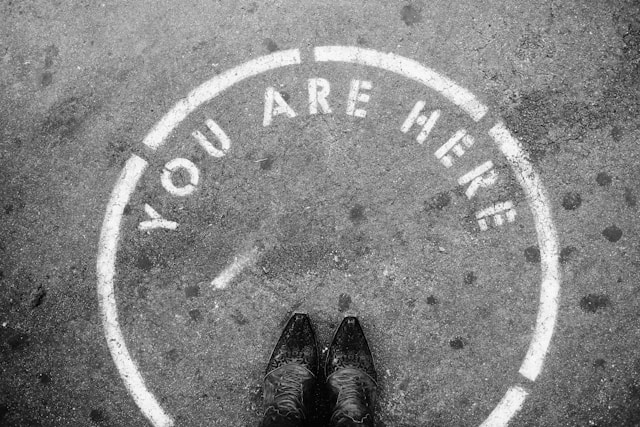
Only what happens now happens later. This is the essence of karma.

Only what happens now happens later. This is the essence of karma.

—Calm App Reflection

Image from Unsplash by Fallon Michael

Karma isn’t some mysterious future accounting system — it’s the ripple of the present moment extended forward. Only what happens now happens later.

Every word, decision, and thought plants a seed in the soil of tomorrow’s reality.

When we act with awareness, we cultivate peace and integrity — which echo back to us in time.

When we disconnect or react carelessly, that too becomes our future.

The essence of karma isn’t punishment or reward — it’s consequence and continuation.

What we do now is not just shaping our destiny; it is our destiny in motion.

The future isn’t waiting to happen — it’s already arriving through this moment.

EXERCISE:

How can you apply the quiet echo of your current choices and actions to shape and mold the future you desire?

Don’t wait for fate — it’s unfolding in every moment.

Is there anything you did today that you would love to do every day

Is there anything you did today that you would love to do every day?

—Author Unknown

Image from Unsplash by Kyle Glenn

Most of us rush through our days collecting tasks, not treasures.

We collapse into bed having answered everyone else’s demands yet rarely ask ourselves this simple filter question. If the answer is “no” too many days in a row, that’s not just stress — that’s misalignment.

This question isn’t about chasing constant pleasure. It’s about noticing the moments that felt deeply right: a quiet walk, an unhurried conversation, helping a client, creating something from nothing.

What if you treated these activities as non-negotiable instead of accidents?

Design tomorrow so at least one “I’d love to do this every day” moment is guaranteed, not hoped for.

Your future is hiding inside today’s best minutes!

EXERCISE:

Keep a daily journal entitled “my best minutes.”

Notice the items that seem to repeat often and begin scheduling them intentionally to help you live your best life every day.


Complainers build walls with their words and wonder why they’re trapped

Complainers build walls with their words and wonder why they’re trapped.

—Calm App Reflection

Image from Unsplash by Omar Prestwich

Every gripe is a brick.

Every excuse is a layer of mortar, slowly constructing an invisible prison.

The irony is brutal: the person who feels most confined is often the one doing the building.

Words shape attention. Complain long enough and the mind becomes an architect of obstacles, seeing only what is wrong, never what is possible.

The wall grows higher. The options shrink.

The way out is simple: speak differently. Trade “This is terrible” for “This is a challenge I can influence.”

Curiosity: “What can I do about this?” – is a doorway. Responsibility is the first step through it.

EXERCISE:

Try giving yourself and others a three to five minute “vent window” to complain and then require either a positive action or let it go.

“Just because you can doesn’t mean you should.”

“Just because you can doesn’t mean you should.”

—Author Unknown

Image from Unsplash by Randy Jacob

You can say yes to every client, every project, every invitation. You can fill your calendar, your plate, and your mind until there’s no room left for you.

You can push your body past exhaustion and call it “commitment.”

The real question is not “Can I do this” but “Does this align with who I am and who I am becoming?”

Every yes that isn’t grounded in your values is a quiet no to your integrity, your health, and your happiness.

Today, dare to disappoint others before you betray yourself.

EXERCISE:

Consider reading “The Power of a Positive No” by William Ury. He shares a powerful three-step method for saying “no” in a way that protects your core needs while preserving important relationships and opening the door to better yeses.

“Never allow a person to tell you no who doesn’t have the power to say yes.”

“Never allow a person to tell you no who doesn’t have the power to say yes.”

Eleanor Roosevelt, longest-serving first lady of the United States

Image from Unsplash by Jon Tyson

Today’s quote is a refreshing reminder to choose wisely whose opinions shape our path.

Too often, we hand our energy to people who can’t see the full picture — or worse, can’t make a difference even if they wanted to.

Today’s nugget of wisdom nudges us to check the source before accepting rejection.

The next time someone tells you “No” pause and ask: Does this person even have the power to say “Yes”?

If not, keep going until you find someone who does. Life’s too short to stop at the wrong gatekeeper.

EXERCISE:

Treat each “No” as a chance to rethink your approach.

Sometimes rejection means the method needs tweaking, not abandoning the goal.

Be prepared to adjust your pitch, timing, or your audience to align better with what will get the “Yes” you want.


Your values are whatever you actually do

“Your values are whatever you actually do. You don’t need clarity to start; you need to start to get clarity.”

Eric Barker, author of Barking Up The Wrong Tree

Image from Unsplash by Alexander Grey

The truth is simple: your real values are revealed by your actions. What you choose, day after day, speaks louder than any good intention or thoughtful plan.

Don’t wait for perfect clarity before making your move — waiting often leads nowhere. Start where you are, with what matters most to you right now.

As you step forward, the fog lifts, and your path becomes more visible with every decision and habit. Meaning isn’t found in hesitation in the doing, but in the trying, and especially in the learning from each step. So, if you’re uncertain, begin anyway — the clarity you seek will grow out of action. Your journey defines your values, shaping tomorrow as you go.

EXERCISE:

Investigate your core values by exploring Brené Brown’s list of values from her book Dare to Lead.

Select the top 20, top 10, and top 3. Write and post the sentence “My three core values are ……….”


We often think that we want an open road

“We often think that we want an open road and the ability to choose any direction for ourselves. But sometimes, what we need is a tunnel that can reduce our choices and send us in a focused direction.”

James Clear, American Author

Image from Unsplash by Daniel Jerez

The pursuit of endless possibilities often feels thrilling — a wide-open road promising freedom and self-determination.

Yet, in moments of overwhelm, too many choices can breed indecision and anxiety. Sometimes, what we truly need isn’t boundless options, but a tunnel: a clear path guiding us forward.

By narrowing our focus, we eliminate distractions and can pour our energy into meaningful progress. Constraints can be empowering, transforming what feels like limitation into a sharp sense of purpose.

EXERCISE:

Where might greater clarity and direction — a purposeful tunnel — offer you greater fulfillment than a wide-open road ever could?

Consider reading “The Paradox of Choice: Why More is Less” by Barry Schwartz for additional ways to combat the overwhelming abundance of choices we all face each day.

At crossroad moments consider which response will best produce the outcomes you desire

At crossroad moments consider which response will best produce the outcomes you desire.

—Calm App Reflection

Image from Unsplash by Mike Enerio

Life is full of crossroads — moments when our choices shape our futures.

When standing before a big decision, pause and ask yourself: Which response will lead me closer to the outcome I truly desire?

Instead of acting on impulse or fear, step back, envision your goals, and let them guide you.

Sometimes, the brightest path isn’t the easiest or most obvious one, but the one that aligns best with your deepest aspirations. You have the power to choose not just your direction, but your attitude, as well.

Approach each crossroad with hope, clarity, and intention. Take a breath, trust yourself, and boldly choose the response that moves you toward the life you want.

EXERCISE:

Map your options using the Eisenhower Matrix: Categorize choices by urgency and importance.

This tool helps highlights which responses are most aligned with your goals and which are distractions, guiding clearer and more impactful decisions.

Friday Review: Choices

Friday Review: CHOICES

What important choices have you made this year? Here are a few related posts you may have missed.

“I am the me I choose to be.”


“Don’t ever work for someone you don’t want to become.”


There are many paths to the same destination. When one path is blocked, we simply choose another. How many WAZE are available to you at this moment?