What’s Important Now

“W.I.N. – What’s Important Now”

—Author Unknown

Image from behappy.me

Image from behappy.me

When people enter a coaching relationship and set their course on a better professional and personal life, winning, or their definition of winning, is the goal.

What does winning the game of life mean to you? What would you like to improve? What new areas would you like to explore? What obstacles and barriers would you eliminate or overcome?

One of the primary reasons we don’t always achieve all that we desire is because we become distracted by unimportant matters that take up too much time.

EXERCISE:

Let’s say that the 80/20 rule is a fact, and that 20% of what we do each day that we consider important produces 80% of our desired results.

What winning results could you produce if you would focus 40%, 60%, 80%, or ultimately 100% of your efforts on what is most important? Do the math!


In the Real World

“In the realm of ideas everything depends on enthusiasm. In the real world all rests on perseverance.”

–Johann Wolfgang Goethe, 19th Century German writer and statesman

image from iRuler.net

image from iRuler.net

Who doesn’t admire and become inspired by the enthusiastic leader with a great idea? It is pretty easy to get caught up in the possibilities of some new and better future.

When reality sets in, we all would note that only a very tiny set of these ideas ever come to fruition. Rigorous execution of a great or even good idea is priceless in our world of metrics and quantifiable results.

EXERCISE:

How can you use a “what gets measured gets done” perspective in your personal and professional world? Consider generating the necessary perseverance to have your best and most enthusiastically shared idea become real.

Nothing Ventured

“Nothing Ventured, Nothing Gained.”

—Geoffrey Chaucer, 15th Century English Poet

image from urbana.ie

image from urbana.ie

Take a moment today to look back over your life at some of your most memorable and significant accomplishments. Pay particular attention to the level of effort and engagement it took for you to realize these noteworthy achievements.

How much did you venture to realize these gains? We can’t relive or change the past, but the future is literally a blank canvas on which we can venture forward to realize gains of remarkable scale and scope.

EXERCISE:

What would be possible if you took a “many things ventured, many things gained” perspective today and in the days ahead? What will be the first action you plan to take to make the years ahead even more remarkable and rewarding?

Finding Fault

“Finding fault replaces peace of mind.”

—Author Unknown

Image from alarminfo.org

Image from alarminfo.org


There doesn’t seem to be much peace of mind, serenity, tranquility, or calmness in people’s lives or in the world these days. In our hyper-connected, media-inundated society, the levels of judgement, blaming, and outright hostility are unprecedented.

In addition to conducting your own version of a media diet or even a complete media fast, take a very close look at your immediate professional and personal worlds to determine the level of fault-finding you observe and perhaps initiate.

EXERCISE:

Beginning with yourself, make an extra effort to see what is right with people and in the world around you, and replace fault finding with the peace of mind you desire.

Create What you Want

“Sometimes you gotta create what you want to be part of.”

-Geri Weitzman, PhD, California Psychologist

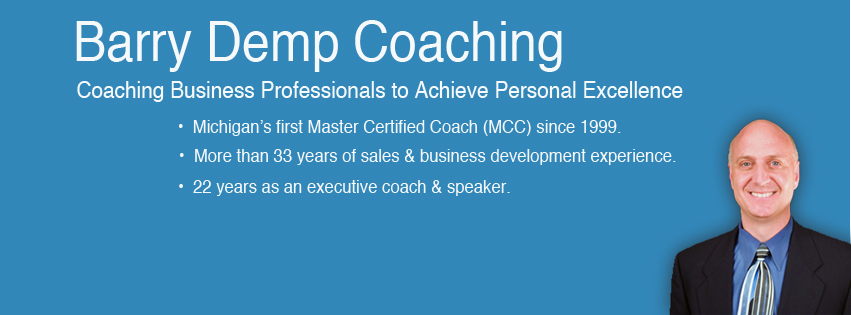
BDC Facebook Banner 2015

Doing work I love is one of the greatest joys I know. Who wouldn’t want to wake up each day – especially Mondays – to a vocation or career that utilizes their strengths and unique abilities? Who wouldn’t want a career that makes a meaningful difference in the lives of others and the world around them?

I was inspired by the 1992 Barcelona Olympic Games to start my career as a coach. In that ten-day span, 5,000 athletes worked with about 2,000 coaches, producing gold medal performances. I thought I’d bring this idea to the business world to help people pursue even greater levels of performance in their professional and personal lives.

The challenge was that business coaching wasn’t considered a “profession” at that time. Still, the idea seemed to be such a great fit for me, and I had gained a great deal from studying the few people who were beginning to be known as coaches. I resigned from my 12-year career as a pharmaceutical industry sales and marketing professional, and created a coaching career for myself. That was 24 years ago – and the best career decision I ever made!

EXERCISE:

Where in either your personal or professional worlds do you need to create something for yourself so that you can be a part of it?

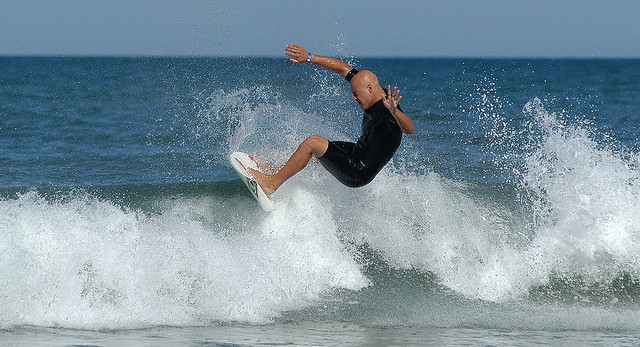
Feelings Are Like Waves

“Feelings are much like waves. We can’t stop them from coming but we can choose which ones to surf.”

-Author Unknown

Image from Flickr by Alain Bachellier

Image from Flickr by Alain Bachellier

One of the greatest freedoms each of us has is the freedom to make choices on a daily basis. Examine your day closely. How many choices did you make intentionally, and how many by default, without thinking?

This examination along with its increased self-awareness will likely have you notice the accompanying feeling about what you are doing, and perhaps with whom you associate.

Today’s quote points us in the direction of actually choosing our perceptions, and thus our feelings, to catch only the waves we most desire.

EXERCISE:

Consider using a journal to capture your feelings as you surf through your day. How can you choose far more ideal waves that will give you the best rides of your life?

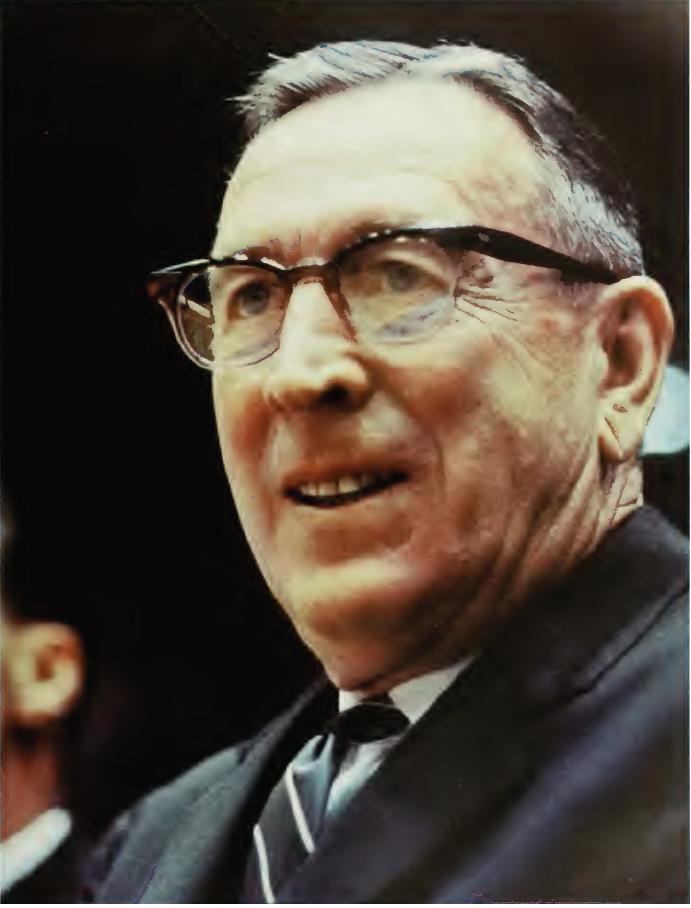
Powerful Leadership

“The most powerful leadership tool you have is your own personal example.”

-John Wooden, late UCLA Basketball Coach

Image from en.wikipedia.org

Image from en.wikipedia.org

Would you like to be like you when you grow up? How and when do you set an excellent example for those in your personal and professional world? How happy would you be if your children turned out just like you?

John Wooden was one of the most admired basketball coaches to ever step foot on the court. The impact he had on great players and championships is legendary. Nothing he ever said to his players had more impact than the example he set for himself, as he led his daily life.

EXERCISE:

Consider your answers to the questions asked in the first paragraph. How can you set an even better example to those around you, to become the kind of person and leader you desire to be?

Day of Infinite Length

“The day is of infinite length for him who knows how to appreciate and use it.”

-Johann Wolfgang Goethe, 19th Century German writer and statesman

Image from www.rottentomatoes.com

Image from www.rottentomatoes.com

In the 2006 movie CLICK starring Adam Sandler, the hero is an overworked architect who neglects his family. He acquires a magical universal remote that enables him to fast forward through unpleasant or outright dull parts of his life. He soon learns that the seeming bad moments he keeps skipping over contain valuable time with his family, and important life lessons.

EXERCISE:

How can you use your own life remote to slow down or pause the passage of time, so you can more fully appreciate each moment of every day?

Don’t Let Yesterday

“Don’t let yesterday use up too much of today.”

-Will Rogers, 19th/20th Century American Cowboy, Vaudevillian, and Humorist

Image from denvertent.com

Image from denvertent.com

Imagine you are planning to take a hike, climb a hill, or even scale a mountain. Your goal is to go as far as you can and see all the beauty along the way. Unfortunately, you have chosen to carry a very heavy backpack filled with too many weighty issues from your past.

EXERCISE:

What can you do to lighten your load and carry fewer yesterdays, in order to make the best out of each and every day ahead?

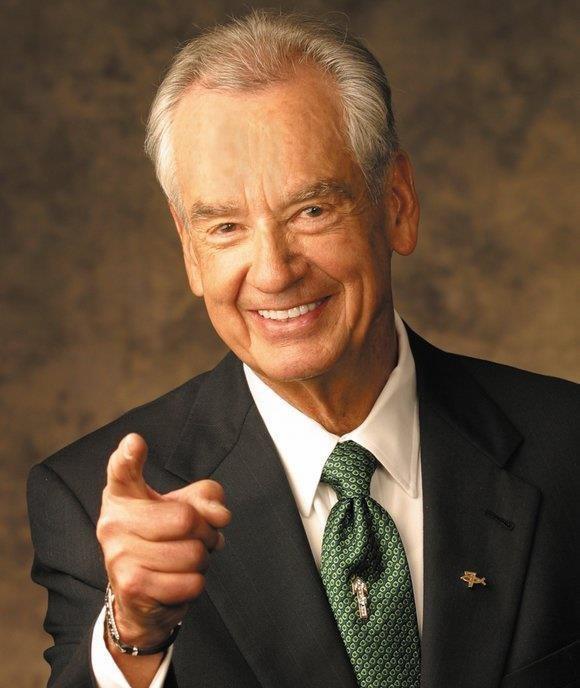
Small Minds

“Don’t let small minds convince you that your dreams are too big.”

-Zig Ziglar, late American author and motivational speaker

image from theproductivtypro.com

image from theproductivtypro.com

Who are some of the small-minded people in your personal or professional worlds? What qualities or characteristics have you assigned to them? See how many of the following qualities describe those who appear to have diminishing or completely crushing the dreams of others as their purpose:

Antagonistic Righteous Fear-Based
Condescending Oppositional Aloof
Perfectionism Judgmental Overly Aggressive
Controlling Critical Unethical
Combative Wishy-Washy Disrespectful
Temperamental Pessimistic Arrogant
Volatile Uncooperative Dishonest

EXERCISE:

How can you reduce or eliminate the small-minded people in your world, and replace them or attract more big-minded people to support your biggest personal and professional dreams?

Consider making a list of the big-minded qualities and characteristics to help you recognize these folks when you meet or see them.