“Try to live your life the way you wish other people would live theirs.”

“Try to live your life the way you wish other people would live theirs.”

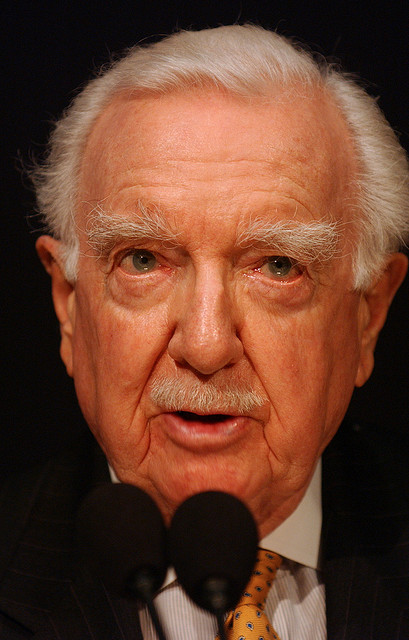
– Raymond Burr, former TV personality

512Image from Flickr by Marcalz.

Wishful thinking sounds like a pretty good strategy. It conveys a positive, future-oriented perspective. What could possibly be wrong with that?

Consider for a moment how often you wish others in your professional and personal life would:

  • Follow through on their promises
  • Treat others with respect
  • Keep an open mind
  • Work harder

… you get the idea.

Unfortunately, this wishful thinking has almost no influence on others. Instead, Raymond Burr is suggesting we point the finger currently focused on others back toward ourselves, where we can take 100% responsibility for our lives.

Exercise:

How can you do an even better job walking your own talk to achieve the life you’ve always wanted?

“Flowers only bloom when they are ready. People are the same way. You cannot rush or force them to open just because you think it’s time. Be patient.”

“Flowers only bloom when they are ready. People are the same way. You cannot rush or force them to open just because you think it’s time. Be patient.”

– Timber Hawkeye, author of Buddhist Bootcamp

511Image from Flickr by icathing

It’s early spring in Michigan and the entire state is breathing a collective sigh of relief, knowing that winter is over and the better weather is ahead. Although the snow has melted and we are experiencing a few April showers, we still have not seen the bloom we so joyfully anticipate.

Just as the Earth circles the sun over a 365 day cycle, we all need to take things in their own timeframes to practice greater patience with numerous aspects of life.

Exercise:

Where would exercising greater patience and not forcing or rushing matters make the biggest difference in your personal or professional life?

“Monotony is the awful reward of the careful.”

“Monotony is the awful reward of the careful.”

– A. G. Buckham, pioneering aviation photographer

510Image from Flickr by ste3ve.

One of the four key behavioral characteristics I evaluate with each new coaching client is their need for stability. Although there are both pros and cons to this characteristic, some people discover that too high a need for stability and safely can lead to a lack of variety and a routineness that diminishes their happiness and fulfillment.

Examine your current vocation and notice your orientation to trying new activities toward growth versus the tedium and boredom that is constantly doing the same thing the same way.

Consider your personal life and some of the choices – or perhaps I should say default choices – you make daily that have one day look like pretty much like countless others.

Exercise:

Decide to spice up both your personal and professional worlds today by taking a few small risks. Consider a few of the following to begin the process of breaking free from any monotonous aspects of your life:

  • Wake up 30 minutes earlier tomorrow and choose to work on a pet project you’ve longed to start.
  • Eat something for breakfast or lunch you haven’t tried before, or haven’t had in some time.
  • Take a different, perhaps more scenic, route to work or another destination.
  • Volunteer to participation on a new project or new committee at work that will add some variety or opportunity to your career.

Feel free to reply to this message to let me know what changes you plan to make to challenge the current status quo of your world.

we are challenged to change ourselves

“When we are no longer able to change a situation, we are challenged to change ourselves.”

– Victor Frankl, Austrian psychologist and Holocaust survivor

Image from likesuccess.com

Image from likesuccess.com

 This has been a particularly challenging week for a number of my clients, colleagues, friends and even family members. Unfortunately many of the situations they found themselves in were not within their control.

As Ari Weizweig, the CEO of Zingerman’s said, we’re not always living on “planet fair.” Feeling the upset and acknowledging it is a key first step to experiencing freedom from anger that could continue to poison our perceptions, attitudes and relationships.

Assuming the responsibility to change yourself in such situations means you are going to move forward and work toward a positive value-centered future as quickly as possible.

Exercise:

Acknowledge at least one upsetting event in your personal or professional life where you are not able to change the situation.

Determine how you will change your perception, attitude or behavior and regain the freedom to move confidently forward in your life.

“Negative people need drama like oxygen. Stay positive, it’ll take their breath away.”

“Negative people need drama like oxygen. Stay positive, it’ll take their breath away.”

– Tony Gaskins, American life/relationships coach

508Image from Flickr by GYLo.

I’ve been reading a book on leadership by Ari Weinzweig. The chapter I just finished was on the importance of energy management and how critical it is for both individuals’ and organizations’ productivity and success.

Negative people and the drama they create (or perpetuate) literally sucks the energy and life out of an organization. In the quote above, Gaskins is suggesting that by monitoring the amount of drama and negativity and boosting our positivity, we can extinguish their destructive forces.

Exercise:

How can you notice, eliminate or at least diminish the negative people in your world, to take away their breath and extinguish their destructive energy-draining capacities?

What optimistic and energy-boosting people and resources can you use to infuse your organization or community with the fun, engagement and productivity you desire?

“Never lose an opportunity of seeing anything that is beautiful. Welcome it in every face, in every sky, in every flower.”

“Never lose an opportunity of seeing anything that is beautiful. Welcome it in every face, in every sky, in every flower.”

– Ralph Waldo Emerson, American writer and philosopher

507Image from Flickr by Parvin

We are a couple of weeks into spring and with daylight savings time here in North America, the hours of sunshine and even the temperatures are headed in the right direction. Just this week, I’ve noticed a broader smile on the faces of many of my clients as they walk in the door.

Emerson knew that beauty from virtually any source has a transformative power that can add a special and very noticeable boost to each and every day.

Exercise:

Imagine that the windshield of your car, the lenses of your glasses (if you wear them) and even the lenses of your eyes enhance your ability to see beauty by 100%.

Consider capturing this awareness in a journal, or even in your smartphone by taking a photograph.

Sometime this week, bring a bit more beauty into your physical world, at home or at work, to enjoy the boost it provides.

“If you want to keep your memories, you first have to live them.”

“If you want to keep your memories, you first have to live them.”

– Bob Dylan, American singer-songwriter

506Image from Flickr by shutterhacks.

Over the years, one of my strategies to get to know others better and deepen relationships has been to take a sincere interest in their interests.

One method I’ve used to get to know my daughter Rachel is to read books she has enjoyed. Among these are:

1. The Greatest Salesman in the World, by Og Mandino (http://www.amazon.com/Greatest-Salesman-World-Og-Mandino-ebook/dp/B004G8PIQ8)

2. Take the Stairs, by Rory Vaden (http://www.amazon.com/Take-Stairs-Steps-Achieving-Success/dp/0399537767)

3. A Million Miles in a Thousand Years, by Don Miller (http://www.amazon.com/Million-Miles-Thousand-Years-Learned/dp/1400202981)

The last one made a particular impression on me, in that its focus was on a life well lived and the fantastic memories that can accompany it.

Exercise:

Consider picking up a copy of A Million Miles in a Thousand Years for yourself and turn up your “memory meter” of life.

Consider reading books and exploring other forms of shared experiences with those you care about to take this memory-sharing and memory-developing journey together.

“The best way out is always through.”

“The best way out is always through.”

– Robert Frost, American poet

505Image from Flickr by Erik Cleves Kristensen.

Someone once told me that when you’re going through hell, keep going!

Who doesn’t have their daily personal and professional challenges? Many people seek the support of a coach to deal with such matters in a more effective and efficient manner so that they experience greater fulfillment, satisfaction and joy.

Frost is suggesting here that rather than avoiding or escaping our difficulties, we work through them to get to the other side.

Exercise:

Consider using my three-step coaching technique, the pivot point exercise, to work through at least one of your front-burner issues or challenges.

You can find it on The Quotable Coach site here: www.thequotablecoach.com/action/theres-always-some-further-action-to-take

Feel free to reply to this message and let me know how things work out.

“You’ll never know when a moment and a few sincere words can have an impact on a life.”

“You’ll never know when a moment and a few sincere words can have an impact on a life.”

– Zig Ziglar, best-selling author and motivational speaker

504Image from Flickr by Benson Kua.

A few weeks ago, I received a nice note from a woman named Tammy, providing the quote above. Other loyal subscribers have been kind enough to take a few “moments” of their day to acknowledge the impact these quotes are having in their personal and professional lives.

These comments give me a great boost to continue my efforts to make them available, having now reached the milestone of my 500th post.

Exercise:

Please take this moment to share The Quotable Coach or another resource you value with others in your world who could benefit. Hopefully you too will reap the personal satisfaction of this pay-it-forward strategy.

“The most powerful weapon on earth is the human soul on fire.”

“The most powerful weapon on earth is the human soul on fire.”

– Ferdinand Foch, French soldier and writer

503Image from Flickr by mattewvenn.

When I first read this quote, I wanted to dismiss it immediately. I’m a pretty peaceful person and I’m not a fan of weapons. So with some editorial privilege I’ve given myself, I’d like to change the word “weapon” to “force” or even “resource”.

One of the most attractive things about being a coach is that I get to express and tap into the passionate fires within myself and others and help mobilize them in the world to produce positive personal and professional results.

Exercise:

How can you add an extra log or two to your flame (and others’ flames) to have them burn even brighter?