“The ability to perceive or think differently is more important than the knowledge gained.”

“The ability to perceive or think differently is more important than the knowledge gained.”

– David Bohm, theoretical physicist

On / off, right / wrong, black / white are examples of polar opposites or, some might say, the duality of a situation. Knowledge, although highly prized and valuable in our world, often points us in the direction of the “right answer” and can often lead us to a somewhat limited view on a particular subject.

Bohm suggests that being open to various perspectives and having the ability to think differently is more important than knowledge in our world today. We need the wisdom to evaluate things with a full spectrum of colors and multiple shades of grey.

Exercise:

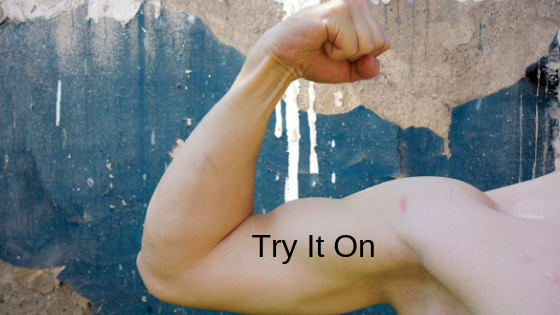
Where in your personal and professional life are you limited by knowledge gained and your need to be right? How can you exercise your “try it on” muscle to explore opportunities and possibilities beyond your knowledge of things?
“People are anxious to improve their circumstances, but they are unwilling to improve themselves. They therefore remain bound.”

“People are anxious to improve their circumstances, but they are unwilling to improve themselves. They therefore remain bound.”

– James Allen, author and philosopher

Do you play the lottery? Are you a wishful thinker? Would you like many of your life’s circumstances to change for the better? Do you believe in luck? As a highly optimistic person, I tend to live on the sunny side of life, where I not only hope for the best but work quite diligently to create my own luck.

Exercise:

Consider picking up the book Outliers: The Story of Success by Malcolm Gladwell, to explore many surprising insights into the world of success and how the hard work of improving ourselves is a fundamental key to extraordinary living.

Interview on Coaching with the Michigan Business Network

I had the pleasure of being interviewed on the Michigan Business Network’s radio show “Association Impact” last week. During the discussion, I answered questions such as:

  • What kind of process do you use when working with executives?
  • What makes a coaching process more effective than training alone?
  • What does a typical coaching relationship look like in terms of time commitment and costs?

You can listen to the interview here:

[audio:http://www.dempcoaching.com/wp-content/uploads/2013/05/MMOTIONSS5.mp3|titles=Barry Demp on Association Impact – Part One] [audio:http://www.dempcoaching.com/wp-content/uploads/2013/05/MMOTIONSS6.mp3|titles=Barry Demp on Association Impact – Part Two]

Quotching: Coaching Through Powerful and Inspiring Quotes

I just got back from a conference where we were encouraged to create new and different approaches to accomplish our goals.

One thing we learned is that to create a strong brand, it’s helpful to have your own unique word. Given my love of quotes and my love of coaching, I came up with the word quotching, which is simply coaching through the use of powerful and inspiring quotes.

I have registered the domain www.quotching.com and will be creating a site there.

Your Help Needed!

The Quotable Coach currently has over 600 subscribers, but I want to get these 30-second nuggets of inspiration and motivation out there for an even larger audience.

If you were me, what creative, innovate, or novel approaches would you use to bring these 250+ quotes (so far) to more people?

Please leave a comment below to let me know your ideas.

“It’s choice – not chance – that determines your destiny.”

“It’s choice – not chance – that determines your destiny.”

– Jean Nidetch, co-founder of Weight Watchers

It is surprising to learn the percentage of people who have clearly defined written goals for both their personal and professional life. Estimates are definitely in the single digits – with most hovering around three percent.

So many people have a “take it as it comes” attitude to life, and they may even believe that their destiny is already determined. Yet free will and our capacity to choose how we spend our days are simply fundamental to being human.

Exercise:

Take five minutes this morning to choose how you will spend your day. Select only those activities and people who fit best with your vision and values.

Take five minutes at the end of your day to reflect on what you learned, achieved and experienced.

Consider doing this exercise every day, or at least every week, if you like what you discovered. Feel free to email me at barry@dempcoaching.com to let me know if something wonderful happens.

“Enjoy the little things, for one day, you may look back and realize they were the big things.”

“Enjoy the little things, for one day, you may look back and realize they were the big things.”

– Robert Brault, freelance writer

The human mind is an amazing thing. It provides us with a phenomenal capacity to learn, to create, to solve problems and to remember.

There was recently a TV crime show where the detective had a photographic memory – she could remember every single detail. For most of us, this is impossible and in many cases, undesirable. We need to restrict what enters our mind to simply get through our days with a degree of balance and sanity.

Of course we want to remember and cherish those big events, such as graduations, weddings, new jobs and the births of our children. But what about those little things – those simple pleasures of each day that add to the richness of life?

Exercise:

Develop a “little things” journal to capture the small and highly important life events that happen each day.

Block out 30 minutes over this coming weekend to start your list with at least 100 of these little things, which may actually be the big things that make life so meaningful.

“The only things that stand between a person and what they want in life are the will to try it and the faith to believe it’s possible.”

“The only things that stand between a person and what they want in life are the will to try it and the faith to believe it’s possible.”

– Rich DeVos, co-founder of Amway

Many years ago, I read a book by Wayne Dyer entitled Manifest Your Destiny. In it, Dyer suggests that each person represents a miracle manifested by God – and that since we were created by God, we too have the capacity to create and intentionally manifest our lives.

DeVos is recommending that we exercise our faith muscle and believe that greater things in our lives are possible, and that we mobilize our will to take the necessary action to realize these possibilities.

Exercise:

Consider picking up a copy of Dyer’s book (http://www.amazon.com/Manifest-Your-Destiny-Principles-Everything/dp/0060928921). I also enjoyed a second book by Dyer, The Power of Intention, which you may also wish to read (http://www.amazon.com/Power-Intention-Dr-Wayne-Dyer/dp/1401902162).

Print out this quote and post it in a prominent place in your world as a reminder to believe that great things are possible and to take the courageous action toward these possibilities each day.

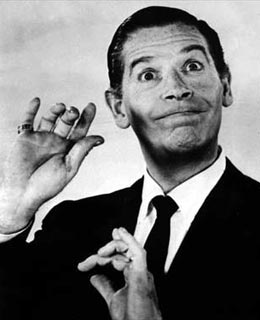
“Laughter is an instant vacation.”

“Laughter is an instant vacation.”

– Milton Berle

Milton Berle

In the book Anatomy of an Illness, Norman Cousins goes to considerable length to overcome his debilitating condition, with the help of funny movies, other forms of humor, and high dose Vitamin C.

There is considerable evidence that the lighthearted experience of laughter has positive effects on our immune system. It protects our nervous system by reducing stress, and it may actually enhance our life span.

Milton Burle, often referred to as “Mr. Television” or “Uncle Miltie” was born in 1908 and lived to the age of 93; he had a career of bringing “s—t-eating grins” and belly laughs to generations.

In our rapidly-moving and often stress-filled lives, we often find ourselves longing for an escape to our favorite vacation spot.  Unfortunately, our ability to make these journeys may only occur a few times a year. Let’s all take Burle’s suggestion, and take far more mini-vacations to brighten our days.

Exercise:

Google Milton Burle and check out some of his video clips on YouTube.

Explore the works of other comedians – such as Lucille Ball, Carol Burnett, Robin Williams, Billy Crystal and Bob Hope – or check out some jokes / funny story books and websites and share a few chuckles on a daily basis.

“Courage does not always roar. Sometimes, courage is the quiet voice at the end of the day saying, ‘I will try again tomorrow.”

“Courage does not always roar. Sometimes, courage is the quiet voice at the end of the day saying, ‘I will try again tomorrow.”

– Mary Anne Radmacher, writer and artist

I love to go to the movies. One of my favorite types are adventure movies – you know, the kind when the hero or heroine summons the courage to overcome seemingly overwhelming odds to reach their goal, get the girl, or achieve some other form of victory. We all love a good story.

Radmacher’s quote touches home for me in that most of us live much quieter, less adventurous lives, where we summon the courage daily to do our best to contribute and serve others at home and at work.

Exercise:

Consider how often, at the end of your day, you feel the satisfaction of knowing that you did what you could with what you had, where you were – knowing and hoping that you could do it again tomorrow.

Capture your thoughts and feelings in a journal or with others.

“It is common sense to take a method and try it. If it fails, admit it frankly and try another. But above all, try something.”

“It is common sense to take a method and try it. If it fails, admit it frankly and try another. But above all, try something.”

– Franklin D. Roosevelt, 32nd President of the United States

In my coaching work with clients, I have a favorite simple technique to help them solve problems. I refer to this as a “pivot point exercise.” It involves three simple steps:

1.       Identify the current reality of a situation – what’s working and not working.
2.       Describe your vision for the future that you and others desire.
3.       Decide what new and different actions you and others can take that move you from the current reality toward your committed vision.

Exercise:

Capture this three-step pivot process on a few post-it notes and place them strategically in your home and in your place of work.

Add the word “repeat” as the fourth step to build your own self-coaching muscle to move your world forward.