“To better the future, we must disturb the present.”

“To better the future, we must disturb the present.”

—Catherine Booth, 19th Century co-founder of The Salvation Army
Image from Unsplash by Ronnie Overgoor

What comes to mind when you think about goal setting and the achievement of your personal or professional objectives?

What has been your track record in meeting or exceeding your desired intentions?

For many, the course taken is often the path of the New Year’s Resolution — most of which are slowed down or completely stopped by mid-February.

A common reason for giving up may simply be that we believe we must always go big and have tectonic shifts in our reality if we are to realize our dreams of a better future.

Many pioneers in the world of human achievement and behavior suggest it is better to go small.

Books such as Tiny Habits and Atomic Habits point to the power and sustainability of even the smallest of actions taken on a routine basis, producing big, long-term results.

EXERCISE:

How can and will you make small but subtly disruptive changes in your life to help you realize the better future you desire?

“Left untended, knowledge and skill, like all assets, depreciate in value surprisingly quickly.”

“Left untended, knowledge and skill, like all assets, depreciate in value surprisingly quickly.”

—David Maister, former Harvard Business School professor

Image from Unsplash by Fredy Jacob

Where are your skills and knowledge not keeping up with the times?

Where have you dropped your intellectual anchor, letting the whole world know you have stopped at what seems like a safe spot to rest and sit things out?

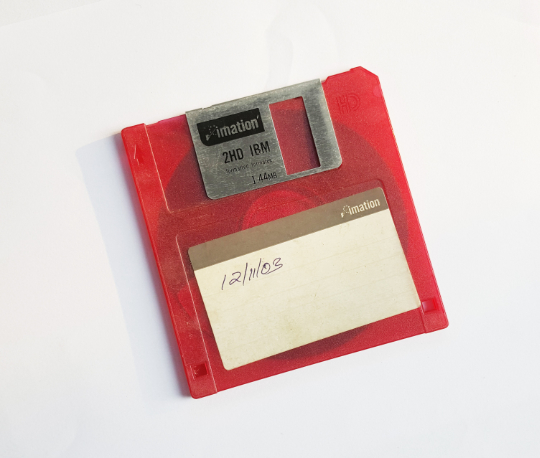
I was recently asked to help a friend with her printer, to make copies of her resume to secure a new job. Although she had brand new cartridges installed, her computer couldn’t communicate with her printer due to an old, unsupported operating system.

EXERCISE:

Where are you falling a bit behind in the skills and knowledge needed to be successful professionally or personally? What investments can and will you make that will appreciate in value in the years ahead?


“We have two lives, and the second one begins when we realize we only have one.”

“We have two lives, and the second one begins when we realize we only have one.”

—Attributed to Confucius

Image from Medium.com

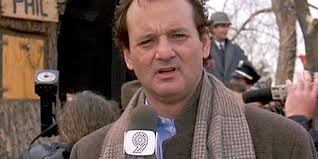
Groundhog Day with Bill Murray is one of my favorite movies. Beyond its humor is the central message of waking up to our lives anew each day.

Take a close look at your life. Examine each day of the past week, month, or even the past year or so. Can you see each moment with clarity, or do things look more like a train speeding by?

I’ve practiced a daily meditation over the past five years. I’ve found this simple — yet often not easy — daily discipline has slowed me down considerably. I have become more mindful and aware of how I navigate my days.

EXERCISE:

How and in what ways can you apply the wisdom of today’s quote to realize and not miss any possibilities in your precious life?


“Lower the volume so your soul can speak.”

“Lower the volume so your soul can speak.”

—Barry Demp, Demp Coaching

Image from Unsplash by Alasdair Elmes

What do you hear when your mind is quiet?

By quieting the thinking mind, your soul has a better chance to be heard.

It is this deep soulful voice we wish to hear so that we can be fully present to both ourselves and others on a more profound level.

Lowering the volume to a whisper can help put you on a path to explore even greater mindfulness and self-awareness.

EXERCISE:

Where and how do you take time each day to lower the volume so your soul can speak to you?

Friday Review: Self-Image

FRIDAY REVIEW: SELF-IMAGE

How has your self-image shifted over the last year? Here are a few related posts you may have missed.


“When I let go of what I am, I become what I might be.”


“When science discovers the center of the universe, a lot of people will be disappointed to find they are not it.”


“Your ‘I Can’ is more important than your I.Q.”


“Be humble, for you are made of earth. Be noble, for you are made of stars.”

“Be humble, for you are made of earth. Be noble, for you are made of stars.”

—Serbian Proverb

Image from Unsplash by Noah Buscher

Who are the people in your communities that you consider humble and kind?

Sometimes we refer to these special folks as being “down to earth.” What other qualities do you see in them that make them so grounded and solid?

How many of the same people also demonstrate noble qualities? These are the people who not only shine, but they also energize and illuminate those around them. They tend to attract others with a gravitational force that holds things together.

EXERCISE:

If you asked these questions of your family, friends, and colleagues, how many of them would put YOU on their list?

What efforts can and will you take to be this proverbial person in the days and years ahead?

Every morning you have two choices

“Every morning you have two choices: Continue to sleep with your dreams, or wake up and chase them.”

—Carmelo Anthony, American professional basketball player

Image form Unsplash by Oladimeji Ajegil

What time do you get up in the morning on weekdays and weekends?

How often do you find yourself hitting the snooze button rather than leaping out of bed to pursue your day with intention and excitement?

Fast forward a few hours to the time you crawl under the covers. Recount your day to see if it was a good one or not.

What are the factors that have you give an “A” for your efforts and progress?

EXERCISE:

How frequently do you actually chase your dream and not just contemplate them?

How do your efforts correlate to a far more satisfying sense of engagement and fulfillment?

“This is the world as it is. This is where you start.”

“This is the world as it is. This is where you start.”

—Saul D. Alinsky, 20th Century American writer

Image from Amazon

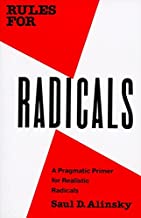
Saul David Alinsky (1909-1972) was a Chicago-born community organizer and writer often considered the founder of modern community organizing. He worked to improve the living conditions of poor communities across North America. Alinsky is known for his 1971 book, Rules for Radicals, which counsels activists on achieving change and knowing “the difference between being a realistic radical and being a rhetorical one.”

The quote and commentary for today came from the Goodreads post for January 30, 2017.

The idea of a realistic radical versus a rhetorical one had me look over the past year and half to assess people in both groups.

EXERCISE:

Where will you start today, given that this is the world as it is?


Discover your beauty cracks and all

“Discover your beauty cracks and all. These are your gifts of imperfection.”

—Barry Demp, DempCoaching.com

Image from Unsplash by Joeyy Lee

Our cracks, flaws, and mistakes are simply a part of our humanity.

By accepting them as gifts and understanding our imperfections we can also begin to accept and appreciate others for their beautiful humanness.

God doesn’t make junk and he wants us to fully accept and love one another as we are.

It is our daily acts of kindness and goodness that allow us to fill the cracks to be whole and our own unique work of art.

EXERCISE:

Where and how can you discover more of your own beauty in the gifts of your imperfections?

Consider reading The Gift of Imperfection by Brené Brown