“Argue as if you are right and listen as if you are wrong.”

“Argue as if you are right and listen as if you are wrong.”

—Chip Conley, American hotelier, author, and speaker
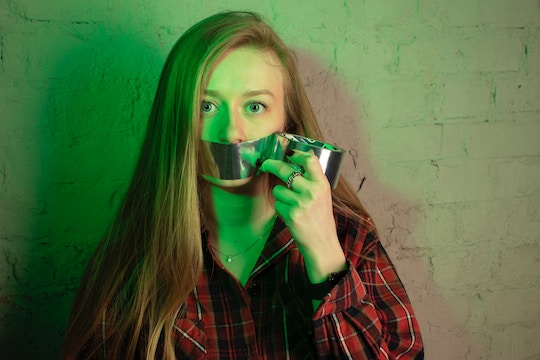
Image from Unsplash by Maria Krisanova

We all desire autonomy. We all wish to be heard and to have what we say make an impact and influence our world. To do that, we must voice our thoughts and opinions, sometimes loudly.

After all, speaking about the future well beyond our current reality may never be noticed if we are silent or only whisper our views to avoid a ruckus.

We have two ears and one mouth. Our creator must have known that we would need to hear other’s voices that might be contrary to our own, and consider the possibility of our own views being incorrect.

EXERCISE:

To what degree do you currently speak up and argue for what you believe?

How carefully and completely do you currently listen to others, given the potential for being wrong?

In which of these areas and with whom would an extra effort make the biggest difference?

“I am not afraid of storms, for I am learning how to sail my ship.”

“I am not afraid of storms, for I am learning how to sail my ship.”

—Louisa May Alcott, 19th Century American author of Little Women

Image from Unsplash by Bobby Burch

If you enjoy good stories with wonderful characters, please go see the movie Little Women, or by all means, read the book.

In our daily lives we can all be coached by the times we see others face and overcome their challenges and obstacles. Doing so can instill the belief that we, too, can do the same.

EXERCISE:

Where in your personal or professional life are you facing considerably rough waters?

In what ways can and will you face these challenges boldly and courageously to chart your course toward a brighter future?

Friday Review: Procrastination

FRIDAY REVIEW: PROCRASTINATION

In what aspects of your life are you given to procrastination? Here are a few procrastination-related posts you may have missed.


“Life lived for tomorrow will always be just a day away from being realized.”


“Never put off for tomorrow what you can cancel.”


“Procrastination is the art of keeping up with yesterday.”


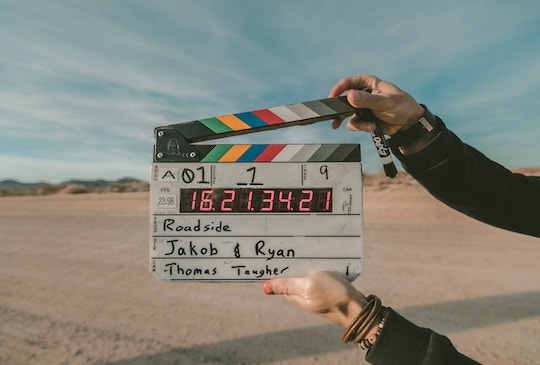
“If your habits don’t line up with your dream, then you either need to change your habits or change your dream.”

“If your habits don’t line up with your dream, then you either need to change your habits or change your dream.”

—Sam Horn, American author and communications strategist

Image from Unsplash by Jakob Owens

Thoughts become things only when we take action.

Wishful thinking is not a good strategy for success. Even new millionaires who won the lottery knew they had first to buy a ticket.

To pretty much guarantee yourself a winning ticket in your life lottery, take a good look at your habits and daily practices.

If you are healthy inside and out, you likely eat well, exercise, get adequate rest, and probably have a few other self-care and spiritual practices.

What are your dreams for this year and beyond? To what degree are you progressing toward them through your daily efforts?

EXERCISE:

Consider swapping out one new good habit for one that is holding you back. To explore how to do this, consider studying and applying the work of Charles Duhigg in his brilliant book, The Power of Habit.

“Aliveness comes from living a life of personal integrity in which…”

“Aliveness comes from living a life of personal integrity in which our outer actions match our inner values, beliefs, wishes, and dreams.”

—Jerry Colonna, American venture capitalist and professional coach

Image from Unsplash by Katya Austin

How alive do you feel at this moment?

Take a trip down memory lane into your 20s, 30s, 40s, 50s, and ask yourself the same question. Dig a bit deeper to determine the intrinsic and extrinsic reasons for your answers.

What about projecting this question forward into your 60s, 70s, 80s and beyond?

How can you maintain and even increase your aliveness well into your senior years? What can and will you do to experience far more life in your years, not just more years in your life?

Life expectancy data points to many more of us becoming centurions due to exponential technologies, especially in the field of medicine.

EXERCISE:

A few books you may wish to explore relative to this topic are:

Halftime by Bob Buford
Replace Retirement by John Anderson
Abundance by Peter Diamandis
Younger Next Year by Chris Crowley

Also consider taking the online Real Age Test to see how biologically youthful you are today.

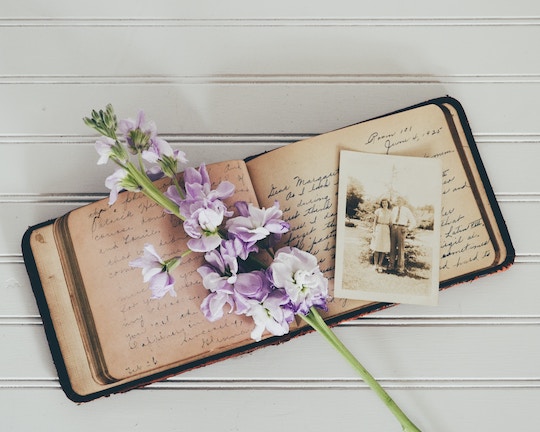
“God gave us our memories so that we might have roses in December.”

“God gave us our memories so that we might have roses in December.”

—James M. Barrie, 19th Century Scottish author of Peter Pan

Image from Unsplash by Debby Hudson

It is February, and Michigan is in the grip of winter. The blooming flowers of spring and summer are months away. For many, the weather can be physically, mentally, emotionally, and spiritually draining, making it feel that a good bit of our “get up and go” has gotten up and gone.

Our minds can, in such situations, operate as time machines, in which we experience some of those sunny days in which our lives were far rosier.

EXERCISE:

Consider a three-to-five minute daily meditative journey today, and for the rest of the weeks of winter. Reminisce and bask in some of the sunnier days of your past. How can and will you take this energy boosting experience into your day and spread its beauty to those in your personal and professional communities?

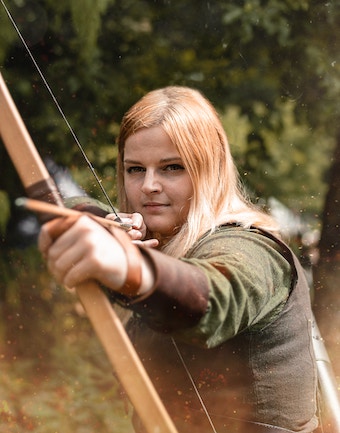
“Setting your intentions is like drawing an arrow…”

“Setting your intentions is like drawing an arrow from the quiver of your heart.”

—Bruce Black, American writer, teacher, and poetry judge

Image from Unsplash by Bianca Berg

The modern expression, “The road to Hell is paved with good intentions” is a proverb first published in the mid 1800s in Henry G. Bohn’s Handbook of Proverbs. An alternative form is, “Hell is full of good meanings, but Heaven is full of good works.”

In 2004, Dr. Wayne Dyer published The Power of Intention: Learning to Co-Create Your World Your Way, which is one of my personal favorites.

EXERCISE:

What are your intentions for 2020?

How many heart-based efforts do you intend to realize, personally and professionally?

How may arrows will you let fly?

“Decide to DIY your education.”

“Decide to DIY your education.”

—Chip Conley, American hotelier, author, and speaker

Image from Unsplash by Jo Szczepanska

I recently learned about Chip Conley through Seth Godin. They first met when attending Stanford and were part of a think tank or mastermind group supporting their entrepreneurial spirits.

Without question, Stanford is one of the finest academic institutions in the world, yet Chip and Seth saw it as limiting in some way. They decided to attract other great and creative thinkers, and take responsibility for their own extracurricular education.

Follow these links to learn about Chip and Seth, and how their continuing education is turning out.

EXERCISE:

How and in what ways can and will you create a DIY education plan for yourself? Who will you choose as your professors or partners on your journey?

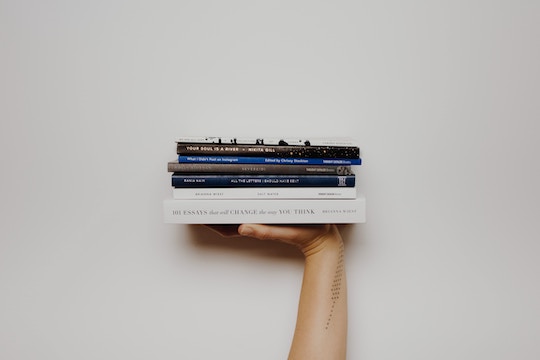
Some books should be tasted, some devoured, but only

“Some books should be tasted, some devoured, but only a few should be chewed and digested thoroughly.”

—Sir Francis Bacon, 16th Century Lord Chancellor of England

Image from Unsplash by Thought Catalog

I have a math problem for you on the subject of books. According to Google’s advanced algorithms, about 130 million books have been published in all of modern history.

Consider multiplying 130 million by the number of hours it takes you to read an average book, giving your reading speed. To keep it simple, let’s assume it takes you ten hours. Multiply 130 million by ten and you see that it would take you one billion, three hundred thousand hours to read all the books published in modern history.

Now let’s pretend you began reading at birth, and that, given advanced medical breakthroughs, you live to be 100.

If my math is correct, it would take 876,000 lifetimes to read them all – far more if you took time to sleep, work, eat, or do anything other than read.

EXERCISE:

As you examine your book tasting efforts, which new books, or perhaps a few oldies but goodies, are worth your valuable time in the years ahead?