“Feeling gratitude and not expressing it is like…”

“Feeling gratitude and not expressing it is like wrapping a present and not giving it.”

— William Arthur Ward, one of America’s most quoted writers

Photo from Flickr by Steven Depolo

Photo from Flickr by Steven Depolo

Six or seven years ago the economy in Michigan and the U.S. hit a rough patch. Most people were tightening their belts and cutting back on unessential expenditures.

That year, my wife Wendy and I agreed that we would take the vacation we both desired, and consider the trip the only holiday gift we would give each other.

When the holidays arrived, I was shocked and upset to find a pile of presents in front of our fireplace. Before I could utter a word, Wendy said: “Calm down. I know you think I’ve broken my promise. Before you say anything, please open one of the gifts.”

To my surprise, she had boxed and wrapped many of my favorite things  from around the house — my favorite book, a special tie, my most comfortable sweater — because she wanted to express her love and gratitude to me by surprising me with gifts to unwrap.

EXERCISE:

What new and creative ways can you find to express your gratitude this Thanksgiving, and throughout this holiday season?
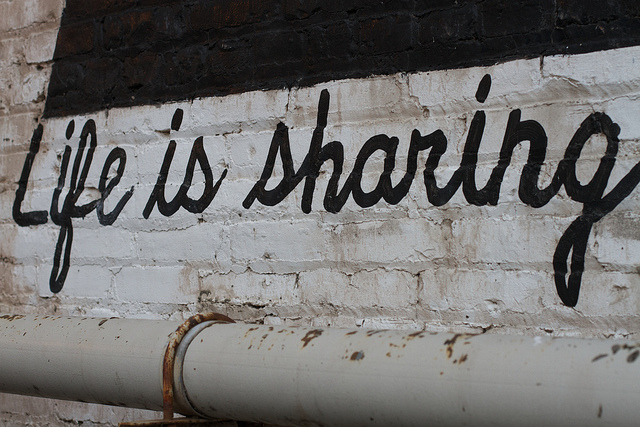
“If you are really thankful, what do you do? You share.”

“If you are really thankful, what do you do? You share.”

— W. Clement Stone, businessman, philanthropist and self-help book author

Photo from Flickr by Alan Levine

Photo from Flickr by Alan Levine

This is perhaps the most appropriate Thanksgiving quote of all time. It conveys the two fundamental ideas for this great American holiday, and this time of year.

“Thanks” is a simple word expressing gratitude for all our blessings.

“Giving” expresses love and genuine caring, which always comes back to us two-fold, and gives us even more reason for gratitude.

EXERCISE:

Take a moment today to explore exactly what Thanksgiving means to you, and feel free to share your thoughts. I’d be very thankful if you do!

The Worst Walls

“The worst walls are never the ones you find in your way. The worst walls are the ones you put there – you build yourself.”

– Ursula K. LeGuin, American 20th century science fiction writer

Image from Flickr by Eric Lockhart

Image from Flickr by Eric Lockhart

Many years ago, I was having a conversation with a fellow coach. The discussion centered on the claim of “breakthrough results” in his company’s marketing materials.

Although this phrase is often considered jargon or “consultant-speak,” he pointed out that in order for a breakthrough to occur, a barrier must be overcome.

This quote reminds us that we are the architects and builders of some of our own barriers. What makes the walls we build the worst and perhaps the most difficult to break through is the fact that we may not even know we have constructed them, or that they are actually stopping us.

EXERCISE:

In the next day or so, spend some time working with a mentor, close friend, colleague, or coach, who can help you examine and explore some of the internal walls you have built. Once identified, develop a plan and a support structure to get to the other side.


“Getting over a painful experience is much like…”

“Getting over a painful experience is much like crossing monkey bars. You have to let go at some point in order to move forward.”

—C.S. Lewis, 19th century novelist, poet, and essayist

Photo from Flickr by RawheaD Rex

Photo from Flickr by RawheaD Rex

Over the course of my 21 years as a coach, I’ve seen just about every sorrow and success a person can experience. Peaks and valleys, stepping up and sliding down, are par for the course and no one is immune to life’s fluctuations.

I’ve also noticed that the people with the greatest sense of balance, happiness, and satisfaction are those who experience life events for whatever they are, and don’t hold on too long. They’ve learned to let go in order to move on.

EXERCISE:

Examine your own life or the lives of those close to you. Is assistance needed to let go of past painful experiences in order to move forward?  Consider requesting or offering assistance where appropriate.

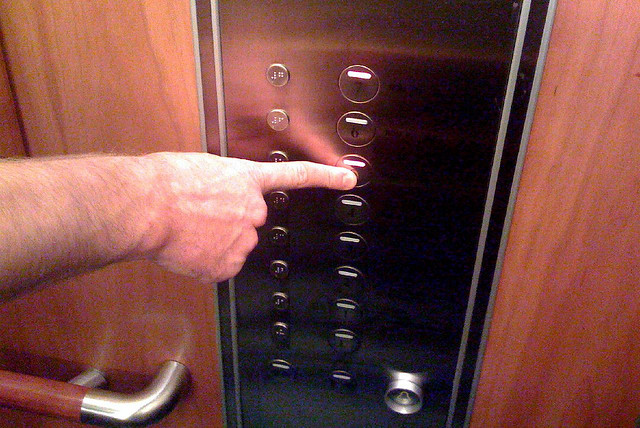
“Life is like an elevator. On your way up…”

“Life is like an elevator. On your way up, sometimes you have to stop and let some people off.”

– Author Unknown

Phot from Flicker by Lars Kristian Flem

Phot from Flicker by Lars Kristian Flem

Virtually everyone entering a coaching relationship desires a new and better future, and finds it difficult to achieve their goals on their own, or wants to speed up the process.

Often, through coaching, they discover internal and external barriers that limit or block their success. External barriers can include critical personal or professional relationships that don’t support the journey, and those that sabotage or stop the progress altogether.

EXERCISE:

Take a moment to consider if there are people in your life that need to be let off your “life elevator.” How can you take this important step and do it courteously and respectfully?

“Normal day, let me be aware of the treasure…”

“Normal day, let me be aware of the treasure you are. Let me not pass you by in quest of some rare and perfect tomorrow.”

– Mary Jean Irion, Pennsylvania Teacher and Writer

Photo from Flickr by Jan

Photo from Flickr by Jan

Have you ever sat in front of your TV, eating chips or another favorite snack, only to find your fingers at the bottom of an empty bag, searching for more, and wondering how you could have possibly eaten your way through all those treats?

Just like food we consume mindlessly, our days, months, and years sometimes fly by unnoticed, because we think there’s plenty more “in the bag,” or simply because we do not cherish each moment as a precious gift.

EXERCISE:

If you knew your days were numbered (which they are) how would you spend this “normal day”?

“Don’t be distracted by criticism. Remember…”

“Don’t be distracted by criticism. Remember… the only taste of success some people have is when they take a bite out of you.”

—Zig Ziglar, American author, salesman, and motivational speaker

Photo from Flickr by Stuart Richards

Photo from Flickr by Stuart Richards

How are you doing on your personal success journey? If you gave yourself a grade, would you be deserving of an “A+”? Or would it be something less remarkable?

It’s not unusual for most of us to be distracted by nay-Sayers – those who cause us to doubt our progress and take our foot off the gas, even if it is only momentary.

Perhaps the critics feel that as we move forward, they fall further behind. They point the finger at us rather than themselves in an attempt to sabotage our efforts or deflate our sense of accomplishment so they can feel better about themselves.

EXERCISE:

How can you invite more people in your professional and personal worlds to join you in their own success journey? Should they choose not to come along, how will you shield yourself from their biting criticism? What if you removed the toxic individuals from your life entirely?

“We all want to say yes…”

“We all want to say yes, because with yes comes so much opportunity, but with power of no comes focus and engagement.”
—Jared Leto, American actor, singer, songwriter, and director.

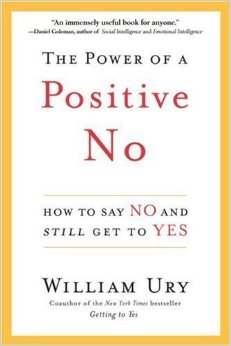
Image from Amazon.com

Image from Amazon.com

Today’s quote immediately brought to mind William Ury’s 2007 book, The Power of the Positive No.

Ury is a renowned negotiator, mediator, and Harvard professor who saw the need to stop some of the madness of the limitless choices in our high stress world. He promotes the concept of a “positive NO” to make room for what really counts – our own needs, values, and priorities.

EXERCISE:

How will the power of the positive NO provide you the level of focus and engagement you need to bring about the YESES for your most important opportunities?

“All things are difficult before they are easy.”

“All things are difficult before they are easy.”

—Thomas Fuller, 17th Century English churchman and historian

Photo from Flickr By City Gypsy II

Photo from Flickr By City Gypsy II

Take a moment to examine all the things you do with ease, every day. Walking. Talking. Turning a page. Reading a paragraph. Most of these activities are so effortless you don’t even pay attention to what goes into making them happen.

Imagine for a moment you had a time machine, and could go back to the point in your infant life where these activities were difficult. Now go forward a bit – how long did it take to move from difficulty to competency, and then to mastery?

EXERCISE:

What professional or personal goal do you find difficult at this moment? Begin the journey today, and at some point in the future, this goal will be part of your list of successes.

Feel free to reply to this message with the goal you selected.

“You can only lose what you cling to.”

“You can only lose what you cling to.”
— Health Magazine published by Dr. Burke’s Sanitarium, of Sonoma County, California December 1905

Photo from Flickr by Mary Anne Enriquez

Photo from Flickr by Mary Anne Enriquez

Are there people in your life you would describe as “clingy”?

Perhaps they hold on tightly, invade your personal space, have an overly strong attachment or dependency, to you or another, or resist letting go of the past.

What response does their “clinginess” elicit from others?

Today’s quote implies that the more we cling to something, the more likely we are to lose it – whether that something is an inanimate object, or another person.

EXERCISE:

How might loosening your grip on the things you value lead to a more abundant life?