“One resolution I have made, and try always to keep, is this: To rise above the little things.”

“One resolution I have made, and try always to keep, is this: To rise above the little things.”

-John Burroughs, American naturalist and nature essayist
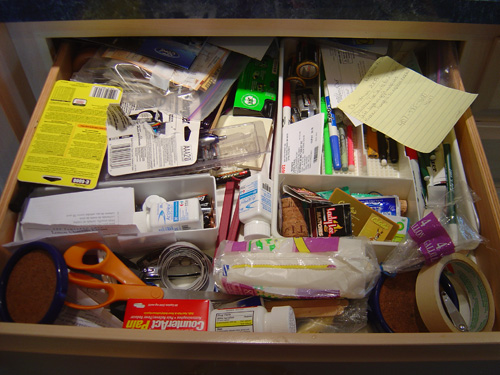
Photo from Flickr by Barbara Olson

Photo from Flickr by Barbara Olson

In the early years of coaching there was a man named Thomas J. Leonard, whom many consider a primary catalyst for the profession we know today.

Among his prolific writings, as he developed the curriculum for Coach University, was a simple exercise to improve one’s life by reducing or eliminating the small things that often drain our energy and satisfaction. He called these little things that sap our lives, “tolerations.”

EXERCISE

Generate a list of little and not so little things in your world that diminish your life in even the smallest ways.

How can you reduce, eliminate, or, as John Burroughs suggests, rise above these things, to live a more fulfilling life?

Select at least one “toleration” and take some action today, and consider making this exercise an everyday practice to improve your life.
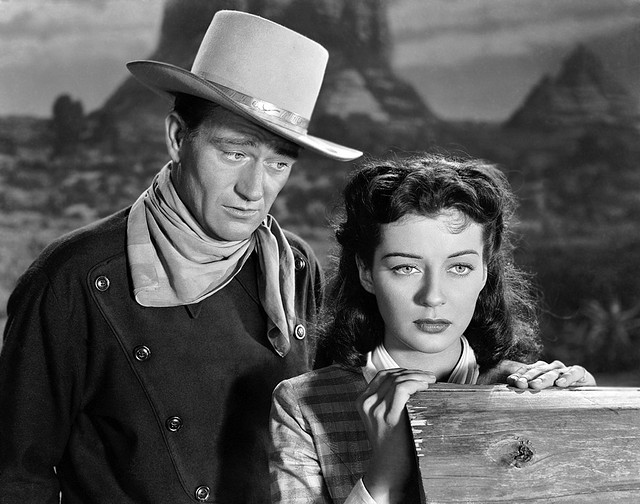
Courage is being scared to death… and saddling up anyway

“Courage is being scared to death… and saddling up anyway.”

-John Wayne, American film actor, director, and producer

Photo from Flickr by Insomniacurredhere

Photo from Flickr by Insomniacurredhere

Perhaps no movie star epitomizes strength and courage more than John Wayne. Some of his most famous films, in a career that produced 142 pictures, were Stagecoach, Fort Apache, Sands of Iwo Jima, Rio Bravo, El Dorado, and True Grit.

EXERCISE

What one or two current issues or challenges are you facing that require you to summon the courage, saddle up, and do what needs to be done?


“In seeking truth you have to get both sides of a story.”

“In seeking truth you have to get both sides of a story.”

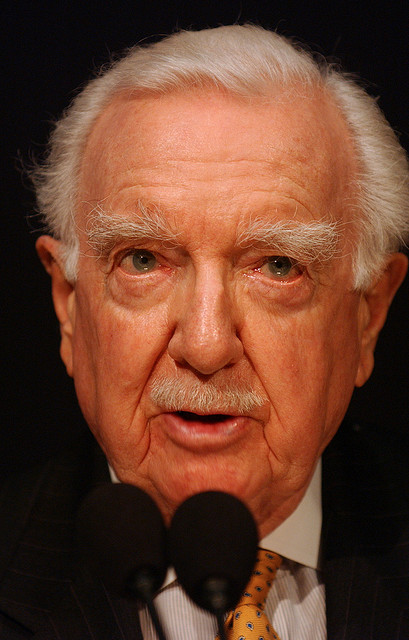
-Walter Cronkite, anchorman for the CBS Evening News for 19 years

Photo from Flicrk by NASAHQPhoto

Photo from Flickr by NASAHQPhoto

Perhaps no television news anchor has ever or will ever be respected and trusted as much as Walter Cronkite. Millions of people watched him each evening without fail, knowing his reports of the news would be objective, balanced, and trustworthy. As an inquisitive and thorough reporter, he knew there were always numerous views and perspectives on every topic, and successfully rooted out and communicated the truth — with candor and his unique brand of professionalism and humanity.

EXERCISE

How can you demonstrate your openness and receptivity to the many sides of the stories you hear professionally and personally, to do an even better job of seeking and discovering the truth you desire?

“Don’t compare your beginning to someone else’s middle.”

“Don’t compare your beginning to someone else’s middle.”

– Jon Acuff, New York Times Bestselling author

Photo from Flickr bykevandotorg

Photo from Flickr by kevandotorg

Have you or do you know anyone close to you who started a new job, hobby, or sport?

Although we all know cognitively that it takes time to build competency and eventually mastery, many people compare their own beginning skill level to others who have been on this or a similar journey for some time.

They see where they are limited or falling short because the comparisons they make are not equal, and actually unfair.

EXERCISE

As you strive toward excellence in any area of life, be inspired by the mastery and  capabilities of those you admire, yet compare your current capabilities only to those of what you were capable of yesterday.

“Yesterday is gone. Tomorrow has not yet come. We have only today. Let us begin.”

“Yesterday is gone. Tomorrow has not yet come. We have only today. Let us begin.”

– Mother Theresa, founder of the Order of the Missionaries of Charity

#625-01

How much of your day do you spend reflecting on the past with either a sense of great satisfaction or perhaps regret?

How much of your day do you spend hopeful about the future or perhaps consumed by worry?

If this time were converted into money – let’s say $100.00/hour, how much would you have spent, or in this case, wasted, with little or nothing to show for it?

EXERCISE

Consider taking Mother Theresa’s coaching to begin spending more time today pursuing and accomplishing what you sincerely desire. What would be possible if you did this each and every day?

“Friends are as companions on a journey…”

“Friends are as companions on a journey, who ought to aid each other to persevere in the road to a happier life.”

– Pythagoras, pre-Socratic Greek philosopher

Photo from Flickr byFunkyah

Photo from Flickr by Funkyah

It is said that Pythagoras was the first man to call himself a philosopher,  a lover of wisdom.  Sources indicate that his ideas influenced Plato, and through him, all of western philosophy.

If this quote regarding being a friend to others was your predominate goal for each and every day, what results would be produced, and what level of happiness would you and others experience?

EXERCISE

Select one friend, family member, or colleague today to travel with to support and encourage their journey to a happier life. Imagine a world where everyone did this!

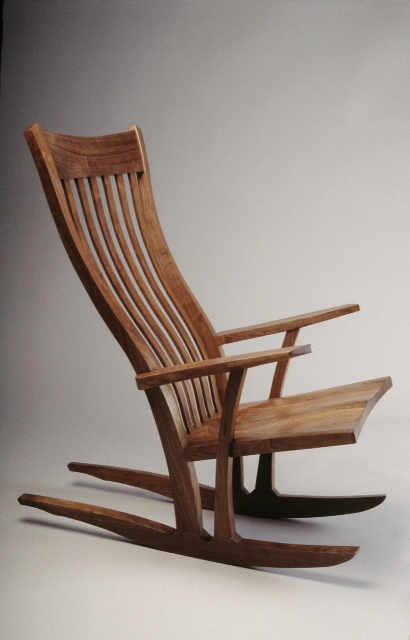
Worry is like a rocking chair

“Worry is like a rocking chair: It gives you something to do but never gets you anywhere.”

—Erma Bombeck, humorist and author

Photo from Flickr by Jeff Hand

Photo from Flickr by Jeff Hand

Many people are familiar with the 80/20 rule, also known as the Pareto Principle.

An example of this rule is that 80 percent of our results comes from only 20 percent of our efforts.

On the other hand, 80 percent of our time and efforts account for only a small portion – 20 percent – of our results.

Bombeck would probably include worry as a significant part of this non-productive yet time-consuming aspect of our days.

EXERCISE:

Create a list of your professional and personal worries, then apply this two-step process:

  1. Look at each worry through an objective lens, not only from a negative or emotional perspective.
  2. Consider these issues from an optimistic perspective and explore some new or different approaches to stop rocking and start improving your situation.

Also consider Mark Twain’s statement: “I have lived a long life and had many troubles, most of which never happened.”   Read more about it here.

“To teach is to learn twice.”

“To teach is to learn twice.”

—Joseph Joubert, French Esssayist

Photo from Flickr by Duane Schoon

Photo from Flickr by Duane Schoon

Have you ever considered that learning is a multi-step process? Do you recall times in your education when you would read, re-read, and literally memorize information to prepare for a quiz or test?

What happened to this information when you tried to recall it even a few weeks later? If you are like most people, non-essential information is wiped clean from your “cerebral hard drive,” to make room for information that is essential, or critical, to your existence.

EXERCISE:

A simple yet powerful technique to deepen and sustain things you wish to learn and master is contained in these three steps:

  1. Watch others who are very skilled at some behavior.
  2. Try to practice those skills for yourself.
  3. Teaching this skill to others will cement and sustain the lesson.

Remember it this way: Watch One, Do One, Teach One.

“A hunch is creativity trying to tell you something.”

“A hunch is creativity trying to tell you something.”

– Frank Capra, American Film Director

Photo from Flickr by Dania J

Photo from Flickr by Dania J

Do you have them?  Hunches, that is.

Sometimes they are called intuition, instincts, gut feelings, or inklings.

For some reason, almost everyone has them, but they tend to be elusive in our ability to harvest them at will.

Over the last decade or two, the subject of creativity and non-linear thinking has gotten considerable attention, particularly in our ability to harness it to fuel the economic engines of business.

All you have to do is generate your own list of the most innovative and creative companies that have become mega stars and economic powerhouses.

EXERCISE:

How can you bolster your own capacity to tap into your own hunches to further develop your own creativity muscle to enhance your personal and professional worlds?

Two books I recommend on this subject are:
A Whole New Mind by Daniel Pink
Blink by Malcom Gladwell

Feel free to reply to this message to share some of your own favorite hunch-expanding ideas and resources.


“Some people drink from the fountain of knowledge, others just gargle.”

“Some people drink from the fountain of knowledge, others just gargle.”

– Robert Anthony, PhD and Hypnotherapist

Photo from Flickr by Martina Yach

Photo from Flickr by Martina Yach

During coaching sessions, I often refer to the reasonably extensive collection of books in my office.

I highlight, underline, and do a good bit of writing throughout the pages of these books, to enhance my ingestion and digestion of these nuggets of knowledge.

For me, a good book is not only an investment of $20, it is an investment of many hours of my life. It is time in which I intend to embrace the considerable value each author hoped to share with readers such as myself.

EXERCISE:

Notice where you drink and/or gargle from the fountain of knowledge. What small or large adjustments can you make to these efforts to impact your life for the better?

Pay particular attention today to your engagement with all forms of information, including everything from the great works of fiction and non-fiction to the wide variety of social media choices available.