“Put old wine into new bottles.”

“Put old wine into new bottles.”

—Author Unknown

Image from Unsplash by Markus Spiske

I have always had a passion for learning. I guess that may be why my first career out of college was as a science teacher. Learning how the world worked was a place to explore with endless possibilities.

For me, learning for the sake of learning only took me so far. Over the years, I began to notice how attracted I had become to the actual practical application of this learning.

In the midst of COVID, I have had a lot of time to read and explore what I like to call The Wisdom of the Ages, along with many new books and resources from today’s great writers, thinkers, and leaders.

A common practice in many current books is the use of provocative quotes and engaging stories. They often include many references and expansive indexes that bolster their current insights and messages.

Perhaps there is very little truly unique and original thinking these days. Maybe what the best and brightest of us do is simply put old wine into new bottles.

EXERCISE:

Where and how can you, too, use the knowledge and wisdom you have acquired over the years to navigate your current challenges and opportunities?

Consider exploring my book, The Quotable Coach – Daily Nuggets of Practical Wisdom – with its 365 quotes, coaching commentaries and exercises as a tool to support this effort.

Thank You!
“What is the least I can teach you that would be the most valuable?”

“What is the least I can teach you that would be the most valuable?”

Michael Bungay Stanier, Founder of Box of Crayons

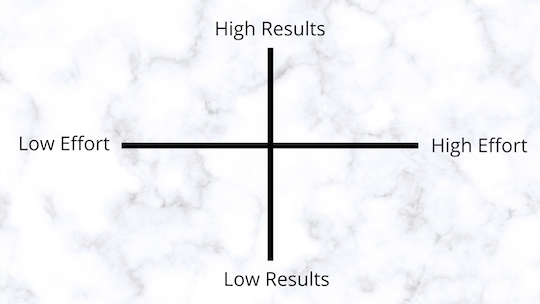
How familiar are you with the developmental and problem-solving tool called a quadrant graph?

Even if this specific term is unfamiliar, my guess is that you use some form of this concept to be productive and achieve your goals.

Take the example above, using effort and result as the two axis of the graph.

By evaluating each quadrant, we can calculate a course of action to optimize a path toward the result we desire.

The Quotable Coach blog series tries to apply a similar approach by offering a nugget of wisdom in about a minute’s read, potentially providing significant value to the reader.

EXERCISE:

Where and with whom could you apply today’s quote in your role as either a teacher or a student?

Please reply to this post to describe the value created.

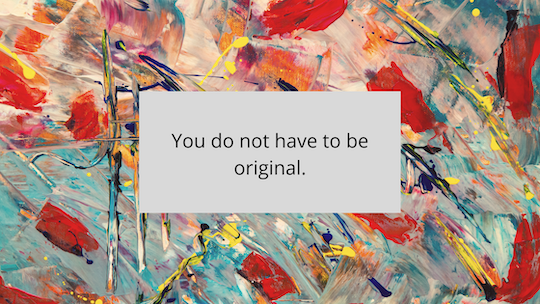
“You do not have to be original.”

“You do not have to be original.”

—Seth Godin, American Author

The seven words of today’s quote would have been useful about ten years ago when I dipped my toe into the blogging world. How many of you, like myself, have an inner critic that shuts down your thoughts or at least your voice and what you have to contribute to the world?

Somehow many of us came to believe that unless our ideas were unique and ground-breaking, we would be better off bottling them up and leaving that kind of work to the geniuses and other “special” folks?

Each of us travels a unique path through life. No one else can tell your one-of-a-kind stories with all the ups and downs, twists and turns. Perhaps our own lessons learned and how we applied them makes us quite original after all!

EXERCISE:

How can you take off the pressure and necessity to be a stand-out or a beacon of originality and still put your unique fingerprints on the world?

Please consider replying to this post with your thoughts.

“At some point the virtue of being persistent turns into the vice of denying reality.”

“At some point the virtue of being persistent turns into the vice of denying reality.”

—Chip Heath, Decisive

Image from Unsplash by Rosie Kerr

We have all been told that winners never quit and quitters never win.

To what degree do you actually live by these words in your personal and professional worlds?

I have embraced these words and think I must have an internal tattoo reminding me to never give up, and that persistence always pays.

How many books or stories have you read or heard throughout your life in which the underdog and hero within courageously stayed the course and triumphantly achieved their dreams?

Alternatively, how many stories have you heard in which this message has been swept under the carpet and hidden from view because of bad PR?

EXERCISE:

How and in what ways has your world changed?

What closed doors – some possibly locked forever – are you still trying to open with the key of persistence?

Where might you be denying a hard reality? Where might taking a new path be a virtue in which persistence would pay off once again?

Consider reading Seth Godin’s book, The Dip, to further explore when to quit and when to stick with some of your most important current and future decisions.

“Show up and turn lights on for people.”

“Show up and turn lights on for people.”

—Seth Godin, American Author

Image from Unsplash by Isabella & Louisa Fischer

Before electricity, the primary way to turn on the lights were fire, the occasional lighting storm, and of course, waiting for our sun to rise so we could begin our days.

These days, we live in a 24/7 world that never sleeps. With the ON switch always at the ready, why is it that so many folks are still in the dark with the covers pulled over their heads?

In today’s quote, Seth is probably referring to both external and internal fires of inspiration that have gone out and require more fuel and oxygen to breathe life into them once more.

EXERCISE:

How and in what ways can you turn on a few more lights for others in your personal and professional communities?

How can you add a spark of encouragement and inspiration to help others rediscover their own inner fires?

Who can and will you show up for today?

“What would I tell my best friend to do in this situation?”

“What would I tell my best friend to do in this situation?”

—Author Unknown

To what extent do you tap into the head, heart, and guts of those in your personal and professional communities for feedback?

A common practice in the business world is to seek the input and perspective of colleagues to help identify blind spots and additional opportunities for greater achievement.

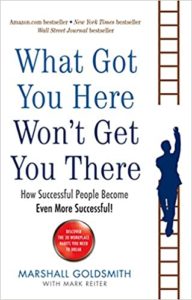
In his book, What Got You Here Won’t Get You There, Marshall Goldsmith—considered among the top coaches in the world—uses the “feed forward” concept to advise and direct others toward more effective strategies and behaviors.

Unfortunately, many of us are far better at shelling out our wisdom and great council than accepting it. We all tend to think we are navigating our lives and careers just fine.

Today’s quote suggests that we can attach a boomerang to our advice monster to try our own brilliant perspective on ourselves.

EXERCISE:

How would your life improve if you increased your coach-ability through your own wise words and the “feed forward” from others you admire and respect?

Friday Review: Respect

FRIDAY REVIEW: RESPECT

How much respect do you give to others? How about to yourself? Here are a few respect-related posts you may have missed.


“At the end of our lives we will all ask, ‘Did I Live? Did I Love? Did I Matter?’”


“You must look into people, as well as at them.”


“Never close your lips to those to whom you have opened your heart.”


“It’s amazing how a little tomorrow can make up for a whole lot of yesterday.”

“It’s amazing how a little tomorrow can make up for a whole lot of yesterday.”

—John Guare, American Playwright

Image from Unsplash by Leonardo Yip

Time travel is not just possible. Today’s quote suggests that we all do it daily in our thoughts. Through forms of mindfulness such as meditation or leisurely walks in nature we can view our thinking mind with greater perspective and objectivity.

How often do you review or replay the events of yesterday with a critical eye of what worked and what didn’t? How self-satisfied or perhaps upset do you feel about various events, efforts, and interactions? How easy is it to let these thoughts go, be present, and look toward the future you intend to create?

The power of a vision is miraculous in that it pulls us like a tractor beam in a sci-fi space adventure. This gravitational attractive force is a critical element of self-leadership—and leadership in general—when we are intentional about thinking and speaking about a bright future.

EXERCISE:

How can and will your own self-leadership efforts to speak and create many better tomorrows make up for any yesterdays that didn’t go as you hoped? What would be the value of doing this exercise on a daily basis?

“Rather than choose ‘all’ or ‘nothing,’ choose ‘a little something.’”

“Rather than choose ‘all’ or ‘nothing,’ choose ‘a little something.’”

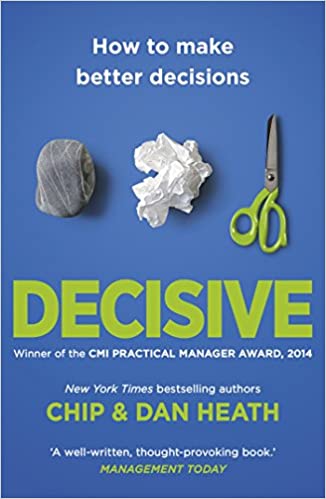
—Chip & Dan Heath – Decisive

Image from Amazon

It seems like it is necessary to “go big or go home” in order to get attention these days. The noise levels are so high that all in efforts are required to stand out.

How is this approach working for you or others in your personal and professional communities?

Growing up, my parents and grandparents believed that being loud and proud was not the path of a good life, and that humility and doing most things in moderation was the way to go.

EXERCISE:

Where in your life would taking the “a little something” approach be the wisest strategy to pursue? Where would finding a more moderate middle ground offer the right balance you may be seeking?