“It is always your next move.”

“It is always your next move.”

—Napoleon Hill, American writer one of the great writers on success
Photo from Flickr by Wyoming Jackrabbit

Photo from Flickr by Wyoming Jackrabbit

Do you play board games or video games? How about other types of games?

If you do, you know that what keeps us engaged is the goal of winning, and celebrating each achievement along the way.

What about the game of life, where professional or personal achievement is the goal? Sometimes when we feel stuck or stopped, when we become frustrated or discouraged, we forget that our next move might be the one that shifts the world for the better.

EXERCISE:

Notice where you are stopped, stuck, or plateaued in your professional or personal life. Explore and courageously choose to make your next move in at least one area, toward a more desirable future.

Feel free to reply to this post and let me know what happens.

“Fear doesn’t prevent death…”

“Fear doesn’t prevent death, but it certainly prevents life.”

—Darren Hardy, Publisher of Success Magazine

Photo from Flickr by Juan Pablo Gonzalez

Photo from Flickr by Juan Pablo Gonzalez

Many years ago, I attended a personal development seminar with about 150 people where the presenter asked the participants why most people get up in the morning. Following a variety of expected responses such as “to go to work and make a living,” he gave his own answer.

He said that most people get up in the morning because they did not die in their sleep.

The entire audience was shocked.

His perspective was that a majority of people navigate through their days a bit robotically without any level of excitement, vitality, or enthusiasm.

Fear, he suggested, was a primary reason many of us lower our sights and play it safe. Rather than not being dead, he asked us to look at the question: What does it mean to be fully alive?

EXERCISE:

In what way will you overcome a fear you may have by summoning the courage to be fully alive today?

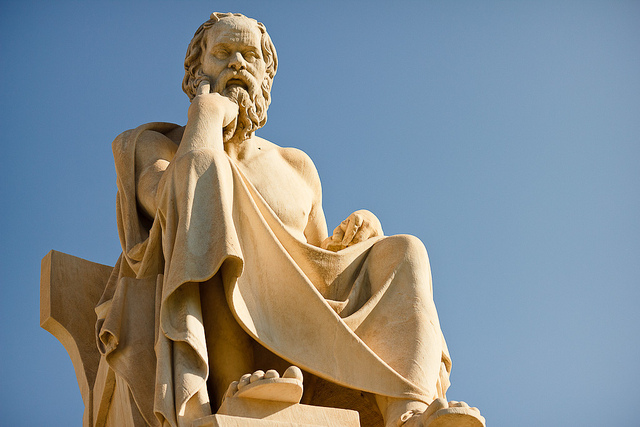
“Even Socrates, who lived a very …”

“Even Socrates, who lived a very frugal and simple life, loved to go to the market. When his students asked about this, he replied, ‘I love to go and see all the things I am happy without.’”

— Jack Kornfield, American author and Buddhist teacher

Photo from Flickr by Carlos Blanco

Photo from Flickr by Carlos Blanco

Nearly three years ago I began writing the Quotable Coach series. Six hundred and eighty-three posts later, I recall one of the very first quotes I selected: “The Best Things in Life are not Things.”

Consider exploring the nugget of wisdom by Jack Kornfield to examine the happiness Socrates found from leading a simple life.

EXERCISE:

What are your current sources of happiness? How might traveling lighter and living without some things make you even happier in the year ahead?

“Create each day anew.”

“Create each day anew.”

—Morihei Ushiba, founder of the Japanese martial art of aikido

Photo from Flickr by Kevin Simpson

Photo from Flickr by Kevin Simpson

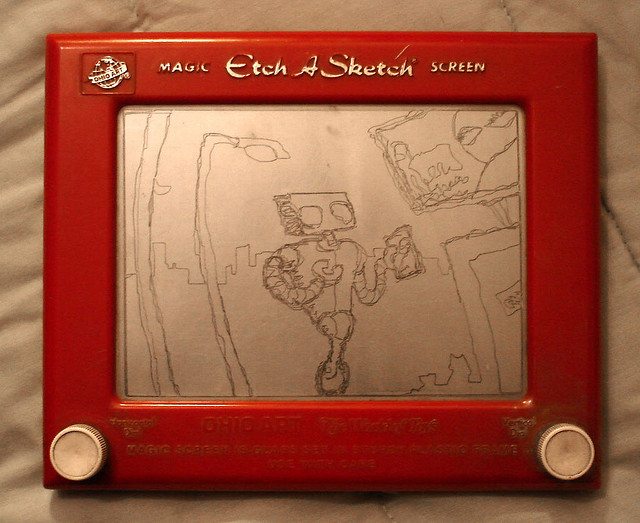
When I was a young child, Etch-a-Sketch was one of my favorite toys.

You could draw almost anything just by twisting the two knobs at the bottom.

Imagine for a moment that your professional and personal life was created anew each morning, and that overnight someone or some power would shake it to clean the slate for the new day.

I am sure that with today’s technology there are many far more advanced toys and tools to create whatever you wish—perhaps in color or three dimensions.

EXERCISE:

How can you design your commitments and vision for a better future for yourself and those around you, to live each day as a masterpiece?

“A year from now you may wish…”

“A Year from now you may wish you had started today.”

-Karen Lamb

Creative Commons photo

Creative Commons photo

Today’s post is to help you get a head start on your New Year, and not wait for the first, second, third, fourth, or even Monday the fifth.

EXERCISE:

Take five minutes to create a list of the top five things you must do the day you return to work after the holidays. Block out a chunk of time today to do just that.

For the greatest benefit, repeat daily.

Happy New Year!

“Patience is also a form of action.”

“Patience is also a form of action.”

—Auguste Rodin, French Sculptor

Photo from Flickr by Karen Neoh

Photo from Flickr by Karen Neoh

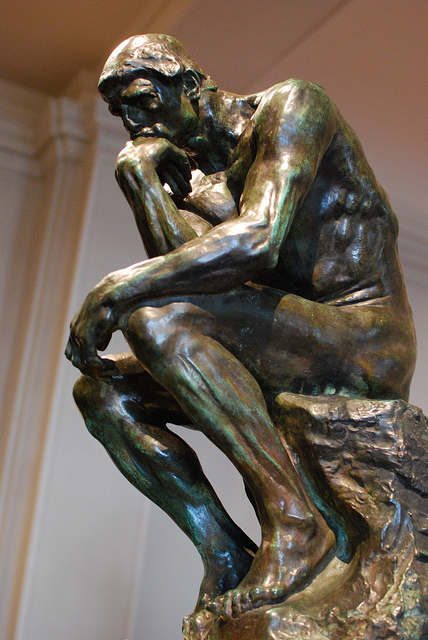
Rodin’s “The Thinker” is among the world’s most recognized works of art.

I wonder what Rodin would think about our 21st century, 24/7 world in overdrive.

Perhaps today his call for patience is an even more precious form of action that allows for better discernment, better decision making, and better actions.

EXERCISE:

With whom, and in what situations, would greater patience be the appropriate action in your life?

Please share your intention to expand your capacity for patience, to potentially reap greater benefits within your personal or professional communities.

“It’s always worthwhile to make others…”

“It’s always worthwhile to make others aware of their worth.”

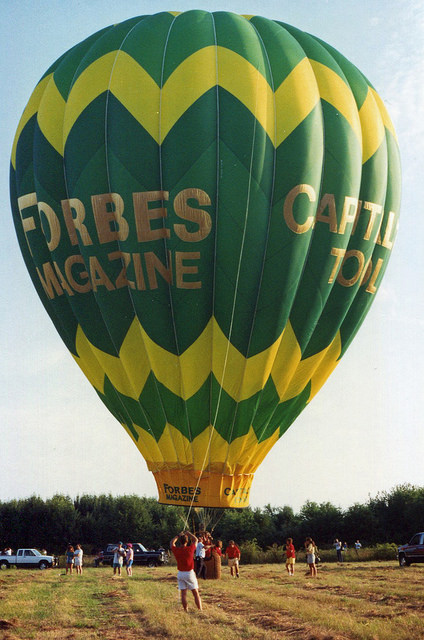
—Malcom Forbes, publisher of Forbes magazine, promoter of capitalism

Photo from Flickr by Robert Fitzpatrick

Photo from Flickr by Robert Fitzpatrick

Malcom Forbes was perhaps one of the best known capitalists of the 20th century, famous for his namesake magazine and his extravagant lifestyle.

For his 70th birthday, he spent over 2.5 million dollars to charter a Boeing 747, a DC-8, and a Concord, to fly eight hundred of the world’s rich and famous from New York to London for an extraordinary celebration.

EXERCISE:

Think about how you currently acknowledge and reward those around you in your professional and personal life.  How can you enhance these efforts to more fully recognize the worth of these special individuals?

“It wasn’t raining when…”

“It wasn’t raining when Noah built the ark.”

—Howard Ruff, financial adviser and writer

Photo from Boy Scouts of America

Photo from Boy Scouts of America

We tend to live our lives at a mad pace, with only a few moments each day to catch our breath.

When we do this consistently, our level of stress goes up, and our effectiveness and productivity go down. Another consequence of this rush-around world is that we rarely get to the big and important projects that we most desire.

Taking time to plan and build our own “ark of life” prepares us for the critical life events that come our way and make life worthwhile.

EXERCISE:

Examine some of the most important and urgent life issues that are just around the corner or over the horizon. How can you work backwards from these events, to be as prepared as possible and get ahead of the rainstorms of life that are coming?

“There must be more to life than..”

“There must be more to life than having everything.”

—Maurice Sendak, American illustrator and writer of children’s books

Photo from Flickr Porto Bay Hotels

Photo from Flickr Porto Bay Hotels

Are you a content person?  If not, what will it take to satisfy you? Imagine that you are attending the world’s most sumptuous smorgasbord with all the finest foods and beverages, prepared and selected by the most famous chefs.

What will be your strategy to enjoy your meal to the fullest? What would happen if you ate and drank far more than you knew was prudent for your body?

EXERCISE:

How is the smorgasbord metaphor related to your choices in life? What trade-offs are you willing to make to have everything you truly need? What needs and wants will bring you the satisfaction and contentment you desire?