“Knowledge is like climbing a mountain; the higher you reach, the more you can see and appreciate.”

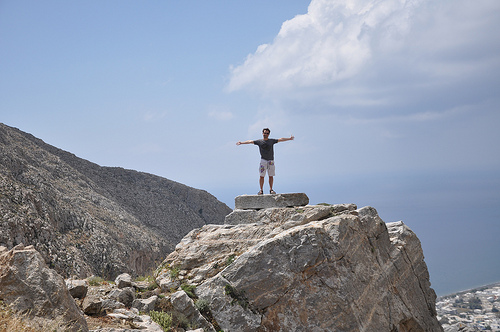
“Knowledge is like climbing a mountain; the higher you reach, the more you can see and appreciate.”

– Unknown

484Image from Flickr by kiszka king

When I first read this quote, I immediately wanted to change the word “knowledge” to “wisdom.” After all, most of us have images of wise prophets and sages living on mountaintops, bequeathing us mere mortals below with the wisdom of the ages. However, the pursuit and acquisition of knowledge is still part of the process.

Exercise:

Consider replying with your definitions of “knowledge” and “wisdom,” and how they are related.

What new sights have you been able to see and appreciate during your climb to the top?

Five Quick Quotes

Five Quick Quotes

483Image from Flickr by juhansonin

Today, I’d like to share a number of short and provocative thoughts about aging to help all of us live more empowered and fulfilling lives as we navigate this journey:

“It is sad to grow old but nice to ripen.” (Brigitte Bardot)

“Age is how we determine how valuable you are.” (Jane Elliot)

“Youth is the gift of nature but age is a work of art.” (Stanislaw Jerzy Lec – attrib.)

“The golden age is before us, not behind us.” (Shakespeare)

“Loving someone liberates the lover as well as the beloved. And that kind of love comes with age” (Maya Angelou)

Exercise:

Explore your value as you ripen, to discover the artistry of this golden age and hopefully you will be liberated and loved by many for a very long time.

“We are always the same age inside.”

“We are always the same age inside.”

– Gertrude Stein, American writer

Image of mother and daughter jumping

Image from Flickr by mikebaird

As I write this, I’m  in Florida with my dad and wife. I can’t believe how much self-reflection I’m doing as I observe everyone going about life as seniors and in many cases super-seniors.

Social clubs and activities abound, and I feel as if I’m in what my wife Wendy refers to as “winter camp”! Of particular note is the level of youthful spirit I see in those around me as I go to the gym, play golf, go out for meals with friends, attend shows and even go out for frozen yogurt at my normal bedtime back home!

These people are still very much the same age inside – and though time has provided a number of bumps that may slow them down a bit, their youthful zest for life keeps them looking forward to each new day.

Exercise:

Examine how your own external image of yourself reflects of your internal age. What thoughts do you have daily that reflect a significantly younger you?

Consider taking the Real Age test to compare your chronological age to what they describe as your “real age.”

“Wrinkles should merely indicate where smiles have been.”

“Wrinkles should merely indicate where smiles have been.”

– Mark Twain, American author and humorist

481

Image from Flickr by basykes

I am writing this post sitting in my 87-year-old father’s place in southern Florida. Besides enjoying the beautiful weather and time with family (my wife is here too), I’d like to share a wonderful surprise I had last night.

My dad lives in a senior community of about 15,000 people, during what is affectionately called the “snowbird season.” This place is something to see. Each week they have all kinds of top entertainment.

Last night was Tony Orlando, who I only remember from my youth. For two hours, this almost 70-year-old joyful and energetic performer took an audience of over 1,000 excited, hand-clapping, singing-along people on a wild ride down memory lane with songs from the likes of the Beatles, Led Zeppelin, Johnny Cash, James Taylor, and a wide variety of his own hits.

The level of joy it brought to all of us points to the long and fulfilling lives these seniors continue to lead even today, given the beautiful “wrinkle-fest” we all experienced. 🙂

Exercise:

Do your best today to turn your own frown (and other people’s) upside down, and start an even bigger wrinkle collection of your own.

“When furious, get curious.”

“When furious, get curious.”

– Author Unknown

480

Image from Flickr by isforinsects

It seems like there is a lot of anger in the world these days. Consider what you observe each day in such areas as our roadways, parking lots, social media, television – especially news programming – politics, the workplace, and even in our own homes.

How often are you the direct recipient of this anger? How often might you be a contributor to it?

Anger can be seen as the outcome of some triggered portion of our comfort zones, based on past experiences or events. The quote above is suggesting that instead of allowing the trigger to automatically generate an anger response, we enter a state of inquiring and curiosity to see what is behind this response – thus resulting in a more workable and peaceful solution.

Exercise:

Pay particular attention today when you observe yourself (and others) getting angry. Ask yourself one or more of the following questions to engage your inquiring mind and observe what happens:

  • What emotions and feelings am I experiencing right now?
  • What is occurring that is triggering these emotions?
  • When else has that occurred in the past, and what was the end result of my response?
  • What alternative responses are possible that will result in a more satisfactory outcome?

Consider picking up a copy of Susan Scott’s book Fierce Conversations to explore additional techniques that can assist you in similar situations.

“Shoot for the moon, even if you miss, you will land among the stars.”

“Shoot for the moon, even if you miss, you will land among the stars.”

– Unknown

479Image from Flickr by dingopup.

Have you seen Westerns, military shows or movies which included the phrase “ready, aim, fire?” Whether it is shooting at the moon or focusing on a critical goal, your desire to take each of these steps is necessary.

Some people and organizations suffer from the paralysis of analysis where the phrase might sound like “ready, aim … aim … aim …”

The act of taking the shot or taking action allows us to see what happens when we miss the mark, and also allows us to adjust our aim to hit our target the next time around.

Exercise:

How can you take more shots today toward your intended target? Look for ways to learn what there is to learn when you miss – and also adjust your aim to hit the mark on your next attempt.

“Knowing where you’re going is the first step to getting there.”

“Knowing where you’re going is the first step to getting there.”

– Ken Blanchard, American author and management expert

478Image from Flickr by malfet_

About ten years ago I had the opportunity to meet Ken Blanchard in person at a coaching conference where he was the keynote speaker. He has co-authored over 30 books including his famous The One Minute Manager. After his keynote, he had a separate breakout session with a smaller group of coaches to conduct an open forum on topics of interest to the group.

Surprisingly, he brought his coach Shirley with him to the discussion. During our session, she made a statement about Ken that left a lasting impression on me. She said, “When I coach Ken, I need to both remember who he is and at the same time forget who he is.” This way, she would be an advocate for his greatness, and not be intimidated by it at the same time.

Exercise:

How can you, like the accomplished Ken Blanchard, keep setting your sights on your personal and professional goals as the first step in achieving them? If you’ve already read The One Minute Manager, consider reading some of his other books: three of my other favourites include Raving Fans, Gung Ho! and Whale Done!

Take Another Step

“If you take another step, and another, you will be surprised to know how far you can go from the point you thought was the end.”

– Marc and Angel, personal development writers

477

Image from Flickr by Bods

Whether it’s taking one more step or going the extra mile, the power of persistence is without question a key to success. Being persistent helps build self-confidence. Once you know you can make it through one struggle, you’re more likely to take that next step in other areas of your life.

A good friend once told me that what stops most people is … stopping. What if we simply didn’t buy in to a life of ease and convenience, and tapped into our own personal grit and character to keep going, stay the course, and finish strong on those things that matter most?

Exercise:

What issues, challenges or struggles are you currently facing that would most benefit from taking the next step and then another until you arrive victorious?

“It’s always better to be at the bottom of a ladder you want to climb than at the top of the one you don’t.”

“It’s always better to be at the bottom of a ladder you want to climb than at the top of the one you don’t.”

– Unknown

476Image from Flickr by gosheshe.

A fundamental concept I refer to often in the process of coaching is “creative tension,” first described to me in Robert Fritz’s book The Path of Least Resistance. Stated simply, creative tension is the gap between the current reality and some desired vision for the future.

In the case of the quote above, someone at the bottom of the ladder is looking forward to taking each and every step to reach their desired summit. But for someone already at the top of the ladder they didn’t want to climb, there is simply nothing to look forward to – they are at a dead end with no hope or aspirations to drive them further.

Exercise:

To what extent are you climbing the ladders of life to your personal and professional peaks of achievement?

Where are you currently at the top of life’s ladders with nowhere to go?

“Never discourage anyone who continually makes progress, no matter how slow.”

“Never discourage anyone who continually makes progress, no matter how slow.”

– Plato, Ancient Greek philosopher

475

Image from Flickr by wwarby

Who doesn’t recall the story of the tortoise and the hare, or the phrase “slow and steady wins the race”? Yet in the world today, moving fast is often seen as a critical part of success.

In terms of the coaching process, each individual and organization needs to be treated uniquely and define their own standard of success. It troubles me when people place their own definition of success and achievement on others – often invalidating, judging and diminishing the efforts and progress of those around them.

Plato is suggesting that we support and celebrate others’ effort and progress, no matter how slow, in order to be supportive coaches, mentors and colleagues to those we care about.

Exercise:

How will you be an encourager and not a discourager of others in your personal and professional lives today?