be prepared for opportunity

“It is better to be prepared for an opportunity and not have one than to have one and not be prepared.”

– Whitney Young, Jr., American Civil Rights Leader

Image of Boy Scout Logo

When I was young, I was a Boy Scout – you know, that organization that teaches young folks to “be prepared.” Although I never achieved the rank of Eagle Scout, this motto has remained with me all these years.

People today may tease or ridicule us for being a Boy Scout – for the plans we make, the lists we create, and the forethought we give to projects and areas of importance. For me, being a bit of a Boy Scout has worked out pretty well.

Exercise:

Look at your own efforts to be prepared for those important opportunities you may know about – and perhaps others not currently on your radar.

Determine what additional or modified Boy Scout habits would help you make the most of the opportunities life presents.
“If we were to sit down together, three years from now, what would have to happen to make you feel happy, successful, and fulfilled?”

“If we were to sit down together, three years from now, what would have to happen to make you feel happy, successful, and fulfilled?”

– Dan Sullivan, founder of Strategic Coach

The question above from Dan Sullivan, the founder and coaching pioneer of the Strategic Coach® program, is fundamental to the program’s considerable success.

Once you begin answering this question for yourself, you will discover the leverage it provides for a more expansive and rewarding life. Of course, you will need to continually break your existing behaviors and habits to pursue such a future.

Exercise:

Ask yourself this question, or better yet, have a coach or committed friend, colleague, or family member ask it of you.

Once you have provided your initial answer, follow it up by asking “what else?” three to five times, to dig even deeper.

Unfounded Worry

“I have lived a long life and had many troubles, most of which never happened.”

– Mark Twain, author and humorist

marktwain_cc_img_0

Do you know someone who worries a lot? These individuals are often people who experience considerable fear throughout their life. Perhaps you are one of them.

Twain points to the fact that many of these fears and worries are unfounded – and yet they can limit our enjoyment of life.

Exercise:

When you or someone you know is experiencing worry or fear, ask these questions:

1. What is the likelihood that this thing I’m afraid of will actually happen?
2. What if I am successful?
3. Who can help me resolve this issue?
4. What one step can I take to improve the situation?
5. What, realistically and objectively, is the worst that could happen?
6. How would I cope with it if it did happen?
7. What can I do to minimize the danger of …?

Lastly, try breathing deeply. This technique has a magical way of lightening the load of worry.

“You may have a fresh start at any moment you choose. This thing we call ‘failure’ is not the falling down, but the staying down.”

“You may have a fresh start at any moment you choose. This thing we call ‘failure’ is not the falling down, but the staying down.”

– Mary Pickford, actress

Whenever I’m asked about the value of coaching, I usually say that people who have a coach almost always achieve more than they would on their own, faster than they would on their own. One key reason for this is that they get up more quickly following the setbacks that often occur when they stretch beyond their comfort zones.

A coach supports the propensity for committed action and will often provide a hand – or even a kick in the butt if necessary – to help people get up, brush away the dust of apparent failure, capture the lessons learned, and get right back to it.

Exercise:

Select a setback or failure you recently experienced and discuss it with a close friend or colleague. Request their coaching or support to get right back on the horse and try again.

Schedule frequent touch-points with this individual, so that if you stumble again, you bounce back more quickly and give it another go.

What becomes fragile when we age

“What becomes fragile when we age is not our bodies as much as our egos. The best time to take some daring steps is when we get older.”

– Helen Hayes, actress

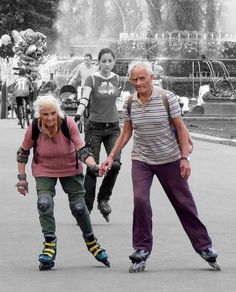
Image of seniors rollerblading

Prospective clients often ask me: Who are your coaches? Who supports you in living your best life?

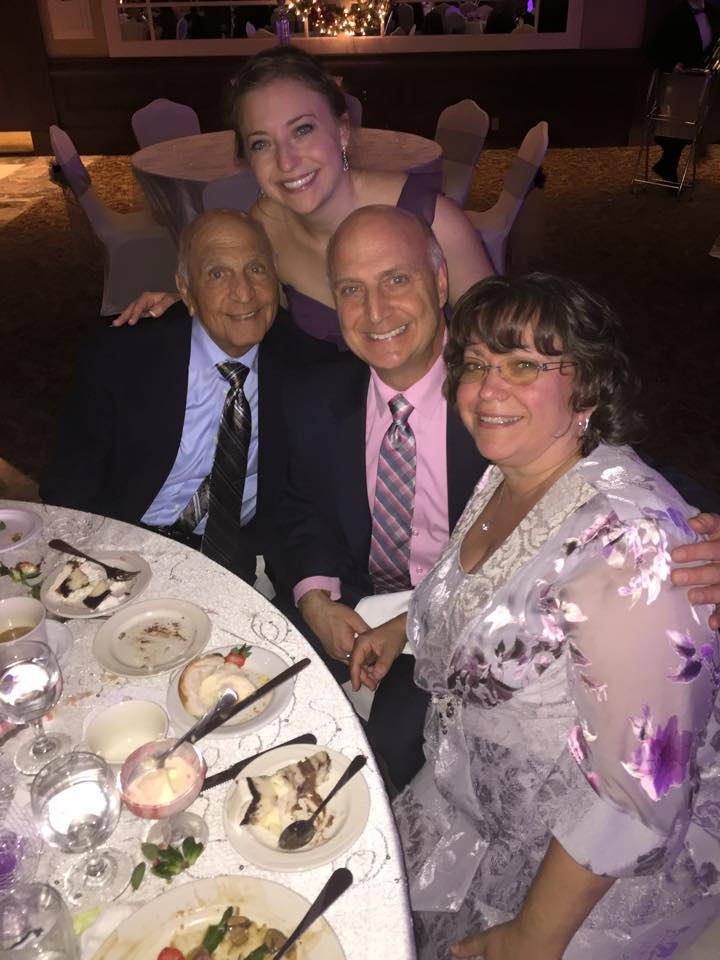
Over the years, a number of key people who have supported me. The best and most enduring has been my 86-year-old father, Marvin. For over 56 years, he has been a steadfast supporter.

This past year, following the passing of my mom, my dad and I, along with my wonderful wife Wendy, engaged in what was, for us, some adventures:

  • A ride in a hot air balloon.
  • A safari in Disney World’s Animal Kingdom.
  • A high-speed adventure on the Test Track ride at Disney World.
  • A trip to the top of Mount Washington, the highest peak on the East Coast, on the famous Cog Railroad.
  • A canoe ride down the Delaware River.

Exercise:

Regardless of your age, how can you find a bit more daring and adventure to spice up your life, and engage others you care about in the journey?

Feel free to reply to this message with some of your own efforts to step out of your aging ego.

“One can choose to go back toward safety, or forward toward growth. Growth must be chosen again and again; fear must be overcome again and again.”

“One can choose to go back toward safety, or forward toward growth. Growth must be chosen again and again; fear must be overcome again and again.”

– Abraham Maslow, psychologist

What would you do today if you were laid off from your job unexpectedly? Most of us would be jolted from our experience of relative stability into full alert, maybe even panic.

On the other hand, what if each morning, you had a new job or career, where you got to lead and influence your day? What new results and difference could you make? It’s up to you to pursue safety or growth, courage or fear. Your choice!

Exercise:

As you go throughout your day, reflect on the following thoughts:

Faced with X, I usually do Y. Instead, I’m going to choose Z which will support my growth.

Consider writing me back and let me know what “Z”s you took.

“To keep a lamp burning, we have to keep putting oil in it.”

“To keep a lamp burning, we have to keep putting oil in it.”

– Mother Teresa, Catholic saint and Nobel peace prize winner

To keep our bodies going, we must put food and water into them. To keep our cars running, we must put fuel into them. To keep our appliances running, we must plug them into an energy source.

Exercise:

Beyond food and water, what is your proverbial oil that keeps you burning? Consider selecting from the list below – and feel free to reply to this email with some of your own ideas:

  • Quality of relationships
  • The pursuit of knowledge and wisdom
  • Religious and faith-based practices
  • Meaningful goals that inspire your passion and efforts
  • Commitment to community and country
  • A journey toward personal mastery
  • Helping or being of service to others

“The heart that gives, gathers.”

“The Heart That Gives, Gathers.”

– Marianne Moore, poet and writer

Photo from freehdw.com

When I began my coaching career 20 years ago, the primary method I used to build my business was networking. Of course, this was at the early stages of the internet and social media was about a decade away from seeing its first light.

Networking, when practiced most effectively, emphasizes giving before gathering. In fact if you actually try to gather first, it most often backfires. The premise of giving is that it both feels right and often generates a desire from the other person to reciprocate in kind.

Exercise:

1. Focus, in the coming weeks, on generously contributing to members of your networks.

2. Go out of your way to meet new people, who may at some point be valuable additions to yourself and your existing network.
Don’t count on it, but also don’t be surprised when you reap the rewards of reciprocity.

You can get a copy of my Masterful Networking workbook from www.dempcoaching.com/workbooks or by emailing me.

“How far you go in life

“How far you go in life depends on your being tender with the young, compassionate with the aged, sympathetic with the striving, and tolerant of the weak and strong. Because some day in your life you will have been all of these.”

– George Washington Carver, scientist and inventor

three generation photo

My father, daughter, self, and wife Wendy

At my current age, I find myself often reflecting on my life and on those around me. I consider myself fortunate to be aware of myself and my world as I support others through coaching.

In the past few months, I’ve interacted with babies, seen young teens celebrate their B’nai Mitzvah, celebrated my son’s marriage, partnered with many middle-aged individuals in a variety of professional and personal challenges, and partnered with my wonderful wife in supporting my aging father.

Exercise:

What stage of life do you find yourself in, and how can you partner with those around you to appreciate and generously contribute to all the people you meet along the way?

“I have one life and one chance to make it count for something. … My faith demands that I do whatever I can, wherever I am, whenever I can, for as long as I can, with whatever I have, to try to make a difference.”

“I have one life and one chance to make it count for something. … My faith demands that I do whatever I can, wherever I am, whenever I can, for as long as I can, with whatever I have, to try to make a difference.”

– Jimmy Carter, 39th President

Jimmy Carter sums up a fundamental need (and value) that most people have. His life is a very strong example of fulfilling the need to contribute and to make a difference. Even at the age of 88, he still puts forth his best in support of a variety of causes that have great meaning and purpose.

Exercise:

Where are today’s opportunities for you to do whatever you can to make a difference in your world?

Given your health status and your capabilities, what are some of the longer-range goals that you will commit to, to make your life count and to leave a legacy of contribution?