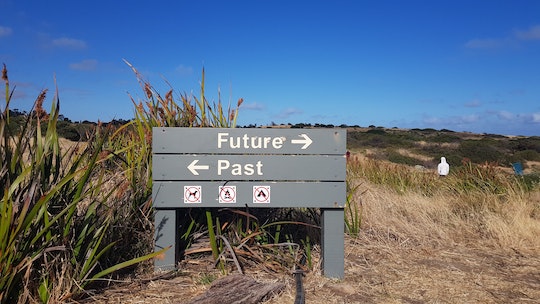
Letting go is hard, but holding on is harder.

Letting go is hard, but holding on is harder.

—Zen Teaching

Image from Unsplash by Chip Vincent

We clutch old fears, grudges, and stories like lifelines, not realizing they’re the weight that keeps us from surfacing.

The mind whispers, “what if I need this later?” Yet every clinging thought drains the energy we could spend creating something new.

Freedom doesn’t come from fixing the past—it comes from loosening our grip on it.

In Zen, letting go isn’t giving up; it’s waking up. The hands that release are the same that can finally build love and live again.

So, ask yourself today: what are you gripping so tightly that it’s cutting off your circulation?

EXERCISE:

In what areas of your life are you clinging to old disappointments, identities, resentments, and expectations as if they somehow offer you safety?

How can you embrace the idea that letting go isn’t about forgetting or surrender—it’s about trusting that something truer waits beyond our grasp?


It turns out that not knowing is a necessary part of being alive in this world

“It turns out that not knowing is a necessary part of being alive in this world.”

Bernadette Jiwa, bestselling Irish-Australian Author

Image from Unsplash by Vitaly Gariev

We spend so much of life chasing certainty, as if knowing were the same as safety.

But what if not knowing is the true heartbeat of being alive?

Every risk, every question, every hope we cling to grows from uncertainty. Without it, there’s no adventure, no curiosity, no reason to get out of bed.

Knowing tries to cage life; not knowing lets it breathe.

Wonder is the soul’s way of keeping the world open, of saying “I’m still learning, still surprised.”

So maybe the point isn’t to solve the mystery, but to savor it.

Certainty can definitely be a comfort, but not knowing? That’s where the pulse of real-life beats.

EXERCISE:

Notice how taking on a new project, hobby, or moving to a new place always begins with uncertainty.

How is not knowing fundamental to making these experiences come alive?

Who are the greatest teachers in your life?

Who are the greatest teachers in your life? They can sometimes be unlikely ones who set bad examples or bring you down.

—Calm App Reflection

Image from Unsplash by Taylor Flowe

Who are the greatest teachers in your life? Chances are, they’re not all the ones who cheer you on.

Some wore disapproval like armor.

Others knocked you down just to see if you would rise.

They taught resilience the hard way—through rejection, betrayal, or loss.

Painful? Yes.

But those moments shaped your wisdom more deeply than an easy success ever could.

The truth is that life’s best classroom often has poor lighting and uncomfortable chairs.

When we step back, we see that even the people who challenge or hurt us were powerful mentors, showing us what we’d never want to become—and what we’re finally strong enough to be.

EXERCISE:

Who are or have been your most difficult and challenging teachers?

How do or did their lessons wrapped in discomfort help you become the person you are today?

Friday Review: MEMORIES

Friday Review: MEMORIES

What are your favorite memories? Which memories aren’t so pleasant? Here are a few related posts you may have missed.

“When your past calls, don’t answer. It has nothing to say.”


“Of all the paths you take in life, make sure a few of them are dirt.”


“When you see somebody taking a photo of their friends, offer to take the shot for them so that they can be in the picture.”


If all you did was look for things to appreciate

“If all you did was look for things to appreciate, you would live a joyously spectacular life.”

Esther Hicks, American Motivational Speaker

Image from Unsplash by Donald Giannatti

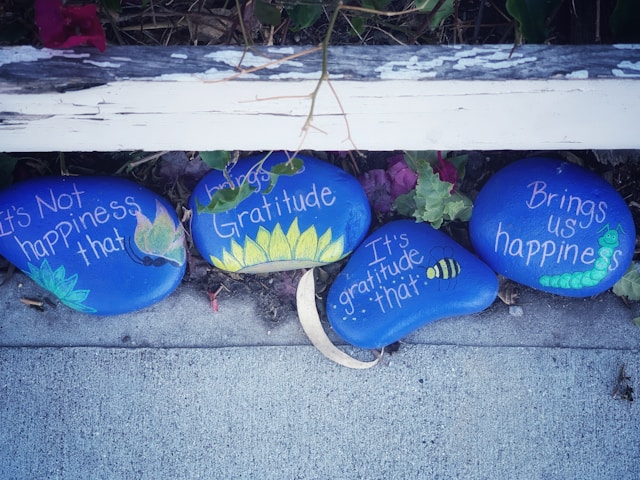
What if joy isn’t something we chase but something we notice?

Imagine waking up each morning and deciding to look for even the smallest things to appreciate—the warmth of sunlight on your face, the sound of laughter, the smell of coffee brewing.

Gratitude shifts everything. It slows the noise, opens the heart, and reminds you that even ordinary moments can shine with meaning.

If all you did was train your eyes to see what’s already good, your life would quietly transform.

Appreciation doesn’t ignore what’s hard—it balances it, and in that balance, you begin to live—not just happily, but joyously and spectacularly alive, right where you are.

EXERCISE:

How can you savor more simple moments?

Try slowing down for more than a few moments when something feels pleasant—sunlight through a window, a friendly wave, a satisfying breath. Let yourself feel the enjoyment instead of rushing past it.

The people who chase being ‘the most interesting person in the room’

“The people who chase being ‘the most interesting person in the room’ are rarely the most useful.”

Shane Parrish, Author of the Farnum Street Blog

Image from Unsplash by Toa Hefitba

Many people chase the identity of being the most interesting person in the room. They curate stories, sharpen opinions, and compete for attention.

But usefulness lives somewhere quieter. The most valuable person is often the one asking better questions, listening deeply, and noticing what others need before they say it.

Interest dazzles for a moment, but usefulness builds trust over time. One feeds the ego, the other feeds connection and progress.

In coaching, relationships, and leadership, people remember how you helped them think, decide, or grow. So, instead of trying to impress, try to serve.

Ironically, the truly useful person becomes the most interesting anyway, without ever chasing it.

EXERCISE:

Where in your world are you focusing on being interesting versus interested?

Being interesting can win a moment and entertain, but a focus on being useful helps others, and makes hard things simpler wherever you go.

The best revenge is not to be like that

“The best revenge is not to be like that.”

Marcus Aurelius—Roman emperor and philosopher

Image from Unsplash by Brett Jordan

Today’s quote reminds us that it’s less about others and more about self-mastery.

When we mirror pettiness, we inherit it.

When we answer anger with anger, we become what we oppose.

Real strength is quieter—the discipline to pause, to choose integrity over impulse, to walk away without bitterness.

In a world that rewards reaction, restraint becomes power.

Ask yourself: Who am I becoming at this moment?

Every slight is an invitation to shrink into reactivity, or expand into character.

The deeper victory is internal—keeping your values intact when it would be easier not to.

That choice, repeated daily, quietly shapes a life of dignity and peace.

EXERCISE:

Consider reading Meditations by Marcus Aurelius. It’s a collection of his private reflections on stoic philosophy, written as personal notes rather than a formal book.

It centers on living with virtue, accepting what cannot be controlled, treating others with patience, and keeping a steady mind in the face of hardship and mortality.

We all have strength and resilience

We all have strength and resilience to make it through tough times.

—Calm App Reflection

Image from Unsplash by Fabian Møller

Life doesn’t test our strength—it reveals it. Every challenge, heartbreak, or setback is a mirror, showing us the resilience we’ve carried all along.

We often think courage means never cracking. In truth, it’s found in small acts—getting out of bed, taking the next step, choosing to hope when fear beckons louder.

Storms don’t last forever, but they shape us into more grounded, compassionate, and unshakable versions of ourselves.

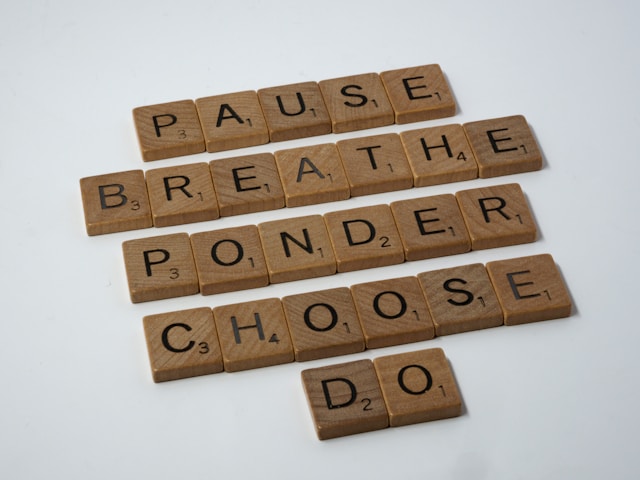
So, when life feels unbearable, pause and breathe.

You’ve walked through darkness before, and you’re still standing.

That is proof of your quiet power.

The strength you need isn’t somewhere out there. It’s already in you, waiting to be remembered.

EXERCISE:

In what ways are you braver than the moments that try to break you?

At these moments it can be helpful to realize just how many storms you’ve already weathered.

Friday Review: MASTERY

Friday Review: MASTERY

How do you define and acknowledge mastery in yourself and others? Here are a few related posts you may have missed.

“Though you can love what you do not master, you cannot master what you do not love.”


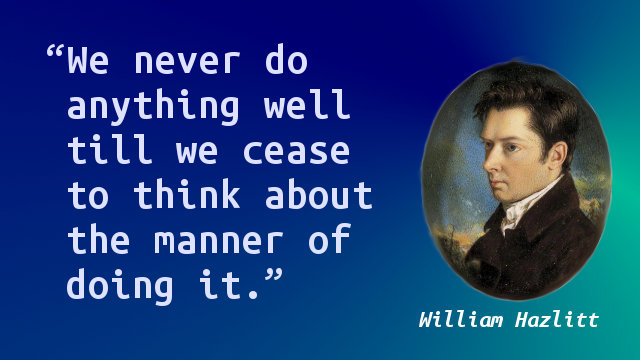
“We never do anything well till we cease to think about the manner of doing it.”


“Man arrives as a novice at each age of his life.”


“There is more wisdom in your body than in your deepest philosophy.”

“There is more wisdom in your body than in your deepest philosophy.”

Friedrich Nietzsche, 19th Century German Philosopher

Image from Unsplash by Beth Chobanova

We spend so much time trying to think our way into clarity that we forget the quiet intelligence already living in our body.

Your body registers truth faster than your mind can explain it — through tension, ease, energy, and resistance.

Start paying attention. Notice what expands your chest and what tightens your gut. Notice when you feel grounded versus scattered.

These signals are not random — they are guidance.

Before making a decision, pause and ask: What is my body telling me? Then listen without overriding it with logic.

Philosophy can point the way, but the body confirms it. When you learn to trust its signals, you move though life with a deeper, more integrated kind of wisdom.

EXERCISE:

When making a choice, imagine saying YES! to it and notice your body’s response.

Then imagine saying NO! and notice again. A relaxed, settled feeling often signals alignment, while tightness or contraction can signal resistance.