“Yesterday is gone. Tomorrow has not yet come. We have only today. Let us begin.”

“Yesterday is gone. Tomorrow has not yet come. We have only today. Let us begin.”

– Mother Theresa, founder of the Order of the Missionaries of Charity

#625-01

How much of your day do you spend reflecting on the past with either a sense of great satisfaction or perhaps regret?

How much of your day do you spend hopeful about the future or perhaps consumed by worry?

If this time were converted into money – let’s say $100.00/hour, how much would you have spent, or in this case, wasted, with little or nothing to show for it?

EXERCISE

Consider taking Mother Theresa’s coaching to begin spending more time today pursuing and accomplishing what you sincerely desire. What would be possible if you did this each and every day?

To Conquer Ourselves

”It is not the mountain we conquer but ourselves.”

– Sir Edmund Hillary, the first climber to reach the summit of Mount Everest.

Photo from Flickr by Popeyed

Photo from Flickr by Popeyed

Sir Edmund Hillary is one of the world’s most famous mountain climbers. His adventures to the top of Mount Everest, the tallest mountain in the world, are legendary.

Hillary knew that we must first face and climb our internal mountains if we are ever to surmount the challenges we face in our outer worlds.

EXERCISE:

What external mountains do you need to face or climb? How will you summon the courage to conquer the internal barriers that appear to keep you safe and limited at base camp?

“Success is a ladder that cannot be climbed with your hands in your pockets.”

“Success is a ladder that cannot be climbed with your hands in your pockets.”

—Author Unknown

Image from Flickr by Travis Hornung

Image from Flickr by Travis Hornung

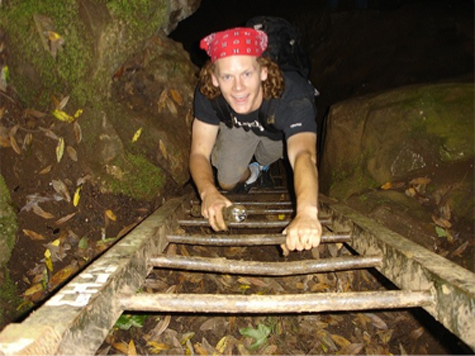
The spring and fall seasons here in Michigan require a “clean-up process” of leaves and other plant-related debris. This includes the need to climb up ladders and clear out the gutters on our roofs.

Imagine taking on this task and being told you had to leave your hands in your pockets as you climbed. Would you do it? Of course not!

Notice when, in your personal or professional life, you take on tasks half-heartedly, thereby leaving your hands in your pockets.

Exercise:

Where would grasping the ladder of success with both hands make the biggest difference for you today?

“The best way to succeed in this world is to act on the advice you give to others.”

“The best way to succeed in this world is to act on the advice you give to others.”

– Author Unknown

Photo from Flickr by Paleontour

Photo from Flickr by Paleontour

The quote above has many brother and sister quotes. Do either of the following sound familiar?

•  Practice what you preach
•  Walk your talk

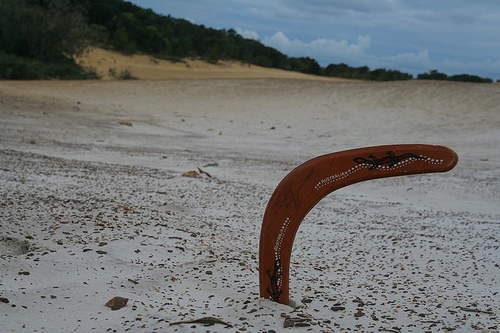
Imagine your words of wisdom and advice are like boomerangs. When you throw them toward others, with the intention to help and serve, they will always return to you, so you can apply their lessons to yourself.

Exercise:

Pay particular attention to the suggestions and guidance you offer others today, and see how impeccably you follow your own advice and counsel.

Feel free to share any similar brother or sister quotes to the ones above by replying to this message.


“How wonderful it is that nobody need wait a single moment before starting to improve the world.”

“How wonderful it is that nobody need wait a single moment before starting to improve the world.” – Anne Frank, diarist and Holocaust victim

Photo from Flickr by Symphony of Love

If you happen to watch the news these days, it sure looks like the world could use some improving. You might ask yourself, “Who am I to tackle such a matter? I am only one person in the world and its challenges seem infinite.”

One strategy that comes to mind is related to that old saying, “How do you eat an elephant?” If you’ve never heard this before, the answer is, “One bite at a time.”

Exercise:

Examine the areas of your own life, including your health, your family, your local community, your workplace, and others that come to mind where you can seize this moment to take a small or big bite and improve your piece of the world.

If we all did this together each day, imagine how much the whole world would improve.

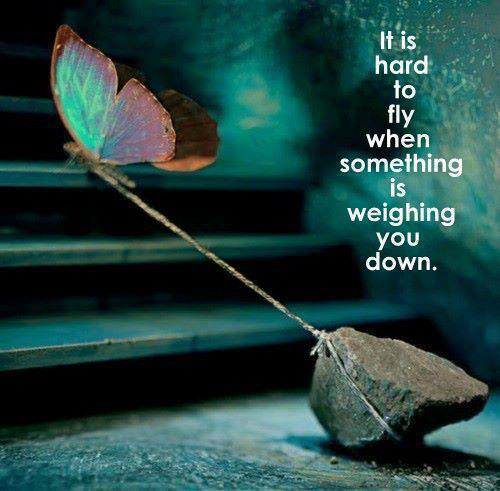
What Weighs You Down

“It is hard to fly when something is weighing you down.”

– Unknown

weighing

My health club is one of the largest in the region. It includes all the regular exercise facilities you might expect, plus some extras such as tennis courts, basketball courts, swimming pools, and even a climbing wall.

I’ve noticed some of the fittest and most competitive athletes adding extra weights to their ankles or waists, to weigh themselves down and make their normal athletic efforts even more difficult.

When they remove them and are no longer weighted down, they experience a lightness and an added strength that lets them fly a bit higher and further.

Exercise:

Identify the circumstances and issues that weigh you down.

How can you use these personal and professional challenges as a resource to build your capacity to fly once you remove them completely from your life?

hiding in the crowd

“The world will never discover a person who is hiding in the crowd.”

– Dr. Mardy Grothe, psychologist

520Image from Flickr by Si1very.

When my children were young, we would often play a searching game with them called “Where’s Waldo?” The books in this series consisted of detailed double-spread illustrations depicting dozens or hundreds of people doing amusing things at a given location.

Readers were challenged to find Waldo, a slender, glasses-wearing, nerdy character sporting a red and white striped shirt, bobble hat, and blue trousers.

Unfortunately, most people don’t like taking the time to find the “Waldos” of opportunity in their world. They much prefer opportunities to stand out in the world shouting, “Here I am!”

Exercise:

What special efforts can you make or what goal can you accomplish today that will have you stand out from the crowd?

“There’s always some further action to take.”

“There’s always some further action to take.”

– Pierre Boulle, French novelist

490Image from Flickr by Celestine Chua.

One of my favorite coaching techniques is called the “pivot point”. It involves three steps:

Step 1: Assessing the current reality of a situation.

Step 2: Identifying and choosing a vision for the future that you (and perhaps others) desire.

Step 3: Selecting and taking the next appropriate action to get you to your desired goal or objective.

Taking Step 1 alone can provide for considerable awareness … but it will leave you right where you are. Taking Step 2 leaves you with only a possible future, or what some may call “wishful thinking”.

By taking the last and final action step, you can make these potential futures real.

Exercise:

Where are you currently stuck at Step 1 or Step 2 in your personal or professional pivots? How can you take the next action step?

“Live neither in the past nor in the future, but let each day’s work absorb all your interest, energy and enthusiasm.”

“Live neither in the past nor in the future, but let each day’s work absorb all your interest, energy and enthusiasm.”

– Sir William Osler, physician and founding professor of John Hopkins Hospital

work

Image from Flickr by Sean MacEntee

In his book Drive, Daniel Pink describes three predominant qualities to life that drive all of us. They include:
  • Autonomy, or the ability to influence our world.
  • Mastery, or the capacity to grow and improve our skills and abilities.
  • Purpose, or a sense of meaning – knowing that our daily efforts are making a difference to our own lives and the lives of others.

Exercise:

Using the three qualities above as a framework for a driven life, how do you plan to focus your interest, energy and enthusiasm today?

“Today is when everything that’s going to happen from now on begins.”

“Today is when everything that’s going to happen from now on begins.”

– Harvey Firestone Jr., businessman

A considerable number of people who enter into a coaching relationship have a “governor” on their life and career engine that seems to be limiting them from moving forward at the speed they desire.

Their trips down memory lane regarding past accomplishments and setbacks often limit what they’re willing to do at this moment in time.

Exercise:

To minimize these journeys into the past, which may limit your orientation for forward movement, consider creating a number of Post-it notes with the following question. Place them throughout your personal and professional environments.

What is the most important thing I can do at this very moment?

Repeat this question often, to do what you can from where you are.