“Ever notice how hard it is to do anything useful when you’re upset?”

“Ever notice how hard it is to do anything useful when you’re upset?”

—Author Unknown

Image from Unsplash by Ryan Snaadt

Your mind spins, your focus narrows, and even small tasks feel impossible.

Anger, frustration, and hurt hijack your mental energy, pulling you into a storm where logic takes a back seat.

The Irony?

The more you push to be “productive” the more stuck you feel. The real power comes not from forcing action, but from pausing — breathing and letting emotional waves settle.

Once calm returns, clarity sneaks back in, and suddenly what felt unmanageable becomes simple.  It’s wisdom in motion — the foundation for doing anything truly meaningful.

EXERCISE:

What are a few recent upsets that knocked you off your game?

Where would it be useful to admit that being human means sometimes you just need to stop, let the noise settle, and wait for your better self to come back online?

When we can lay down our fear and anger and choose responses other than aggression,

“When we can lay down our fear and anger and choose responses other than aggression, we create the conditions for bringing out the best in us humans.”

Margaret Wheatley, American writer, speaker, and management consultant

Image from Unsplash by Ditto Bowo

To what degree are these times bringing out the worst in us as humans?

How much fear, anger, and aggression have you seen in the media and your communities over the past several months?

Consider Victor Frankl‘s statement: Between stimulus and response there is a space. In that space is our power to choose our response. In our response lies our growth and our freedom.

EXERCISE:

In what ways can you choose to keep a cool and level head in these turbulent times?

How can you mindfully choose more appropriate responses to the hotheads around you, to bring out the best in yourself and others?

When angry, count to ten before you speak.

“When angry, count to ten before you speak. If very angry, count to one hundred.”

Thomas Jefferson, 3rd President of the United States

Image from Unsplash by Piotr Miazga

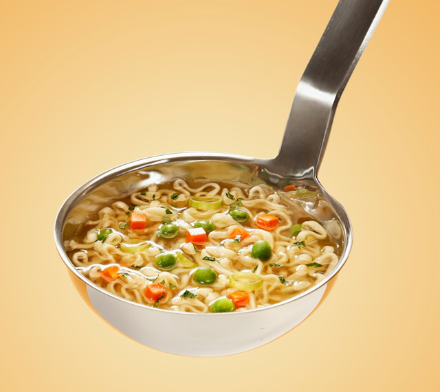
Have you ever considered how similar anger is to a bowl of hot soup?

This past winter, we discovered that our grandkids love my homemade chicken soup. They love slurping up the noodles and then lifting the bowl to drink every last drop of goodness.

Teaching them to blow on their spoons and waiting until the soup cools on its own is a lesson they quickly learned!

How do you cool things off when tempers flare?

Counting to 10, 100, or more is a proven method to allow boiling emotions to subside and let a cooler head prevail.

EXERCISE:

What other chicken soup remedies do you use when faced with heated emotions?

Where and with whom would Jefferson’s counting technique prevent things from overheating in the first place?

Don’t lose your temper, use it

“Don’t lose your temper, use it.”

Dolly Parton, American musician, actress, philanthropist, and businesswoman

Image from Unsplash by Icons8 Team

Although anger is an emotion most of us prefer not to experience, it does have immense power if harnessed toward good rather than its dark side.

When force faces off with opposing force things usually go poorly. Standing for things we value and believe in is far more powerful that being against issues and people with whom we differ.

When we stand for our beliefs, we exude an energy that can attract and enroll others to consider alternative perspectives and find common ground.

EXERCISE:

Where and how can you use your temper instead of losing it?

When you are furious, get curious!

“When your rage is choking you, it is best to say nothing.”

“When your rage is choking you, it is best to say nothing.”

—Octavia E. Butler, late American science fiction author

Image from Unsplash by Brett Jordan

How familiar are you with the Heimlich maneuver? You’ve probably seen it performed on TV in both dramatic and comedic situations. Did you know that you can even perform a variation of this procedure on yourself?

Dislodging an item of food to reopen an airway to breath is serious stuff. Sometimes, however, we find ourselves choking with strong emotions that, if released, can make a situation far worse.

EXERCISE:

Where have you or others in your life opened mouths and inserted feet or caused other difficulties?

Where and when is it best to say nothing when choked with rage or other strong emotions?

“Nothing burns like the cold.”

“Nothing burns like the cold.”

—George R.R. Martin, Author of Game of Thrones

Image from Unsplash by Frank Busch

Back in February, a wave of arctic air blew across Michigan. Not wanting to miss my daily walk, I bundled up and set forth to put in my 10,000+ steps.

During half of my walk, the wind was at my back and my steps felt easy and steady. Heading in the other direction, with the wind in my face, I noticed the considerable chill and the burn on my face, thighs, and fingers.

Where else do you experience cold in your worlds? Take some time to look at relationships — personal or professional — that are adversarial, in which you might be giving or getting the cold shoulder, or a frigid reception. Where do you notice the burn of anger, resentment, indifference, and judgment?

EXERCISE:

Consider engaging in a loving kindness meditation to warm up relationships in your personal and professional communities.

Sharing your experience of this exercise will be like adding another log to the fires of friendship. Please reply to this post with your own perspective.

Friday Review of Posts on Anger

FRIDAY REVIEW: ANGER

How do you deal with anger – your own, or that of others? Here are a few anger-related posts you may have missed. Click the link to read the full message.

Image of hot coals


“Holding on to anger is like grasping a hot coal with the intent of throwing it at someone else. You are the only one who gets burned.”


“When furious, get curious.”


“Better to be occasionally cheated than perpetually suspicious.”


Anger is an Acid

“Anger is an acid that can do more harm to the vessel in which it is stored than to anything on which it is poured.”

—Author Unknown

dark image of a man's fractured face

Image from Flickr by katmary

Research has shown that angry outbursts have a damaging effect on the heart, and increases the risk of a heart attack twofold.

This seems to be the case with expressed as well as repressed anger, when we try to hold it in.

Other harmful aspects of anger include the risk of stroke, and a weakening of the immune system, diminishing the body’s ability to protect itself and heal.

EXERCISE:

Consider any or all of the following strategies to reduce or perhaps even prevent anger’s harmful effects.

  1. Breathing Exercises
  2. Muscle Tensing Exercises
  3. Doing #1 and #2 Together!
  4. Meditation
  5. Exercise and Physical Activity
  6. Time in quiet, natural surroundings


The Best Speech You’ll Ever Regret

“Speak when you are angry and you’ll make the best speech you’ll ever regret.”

—Ambrose Bierce, 18th Century American Writer and Civil War Soldier

Image of 2 men screaming at each other

Image from Flickr by Sid

When was the last time you lost your temper and really let someone have it? Perhaps you even rehearsed your speech and shared your seemingly justified attack articulately with equally practiced volume and gestures.

What happened after the initial “feel better” burst of adrenaline and getting things off your chest?

If you are like many, you may have experienced considerable fallout, and repercussions much like the aftershocks of an earthquake.

EXERCISE:

Where would counting to ten or a hundred, or simply holding your tongue more frequently, dramatically reduce the number of regretful interactions you experience?


Better to be Occasionally Cheated

“Better to be occasionally cheated than perpetually suspicious.”

—B.C. Forbes, 20th Century Scottish-born American financial journalist

Meme stating "Assume Positive Intentions"

Have you ever been duped, cheated, taken advantage of, or just lied to about an important matter?

If you’re like many, it can be the cause of anger, frustration, and sometimes even embarrassment.

What is the cost of being too trusting?

What is the benefit of assuming positive intentions by those around us?

Unfortunately, many people become increasingly suspicious and take a “Fool me once, shame on you, fool me twice, shame on me” perspective, building an “I’m No Fool” wall around themselves.

EXERCISE:

Where and with whom would an Assume Positive Intention (API) perspective make the biggest difference in your personal or professional world?