Friday Review: JUDGEMENT
How do you react when others judge you? What criteria do you use in judging others? Here are a few related posts you may have missed.
 “Dogs bark at those they do not know.”

Friday Review: JUDGEMENT
How do you react when others judge you? What criteria do you use in judging others? Here are a few related posts you may have missed.
“Dogs bark at those they do not know.”

Image from Unsplash by Caleb Jones
“Use your best Judgment” sounds empowering, but it is also a ruthless invitation. It leaves you without a script, without a scapegoat, without a neat rule book to hide behind.
When someone says this, they are really saying: stand in the full light of your own values. No policies, no guarantees, just you, your conscious and the consequences.
Most people secretly want certainty, not freedom, because certainty lets them blame others and the system. Judgement does not.
Your “best” judgement demands that you examine your motives, your fears, and your comfort with being wrong.
It asks: will you choose what is easy to defend, or what is quietly, unshakably right for you?
EXERCISE:
Where in your life are you at an important crossroad requiring your best judgement?
How would standing in the full light of your own values help you make the “best” decision for you?

Image from Unsplash by Kyle Glenn
Wisdom and judgement work hand-in-hand, shaping the way we live and lead.
Wisdom is more than knowledge — it’s the ability to see beyond the moment and understand the long-term consequences of our choices.
But wisdom alone is not enough.
Without judgement, it remains theory, a quiet voice never acted upon.
Judgement is wisdom in motion — the daily practice of applying insight to decisions both big and small.
It prevents us from repeating mistakes and guides us toward actions that align with our values and goals.
When we cultivate judgement, we turn awareness into impact.
True growth comes not from simply knowing what is right, but from consistently choosing to act on that wisdom.
EXERCISE:
Value check your decisions today to determine how well your choices align with you values and long-term goals.
Applying this practice daily will decidedly impact the way you live and lead.

Image from Unsplash by Brett Jordan
We all make assumptions and judgements of others — it’s human nature. But what if, instead of letting those thoughts define our interactions, we chose to offer a “space of grace”?
This simple shift can transform relationships and deepen our empathy.
Offering grace involves pausing before reacting, recognizing that we don’t know someone’s full story.
It’s about giving others the benefit of the doubt and allowing room for misunderstandings and mistakes.
When we create this space, we foster respect and kindness for ourselves and those around us.
EXERCISE:
Where in your world would it be helpful to replace your assumptions and judgements with curiosity?
Ask yourself, what else could be true here or what might I not be seeing?

Image from Unsplash by Andre Ouellet
This past summer 10,500 athletes from 184 counties participated in the Paris Olympic games.
Following these games, the Paralympic games were held there, featuring 22 sports including blind football, sitting volleyball, and wheelchair basketball, fencing, rugby, and tennis.
The athletes that participated in these games are not only from different countries they also experience a diverse range of physical, visual, and cognitive disabilities that impact their performance.
EXERCISE:
What lessons can we all learn about accepting and celebrating our differences from the Olympic and Paralympic athletes?
How can an attitude of our oneness help eradicate the judgements that often divide us?

Image from Unsplash by i yunmai
How often do you find yourself operating as your own PR firm, with your inner voice painting a rosy picture?
How often do you try to fool yourself by denying the realities about you and around you?
Many people do this with their personal appearance. In our youth-worshiping world, we often compare and contrast ourselves to those genetically lucky folks with perfect figures and six-pack abs.
Our propensity to judge others and ourselves can be a constant source of dissatisfaction and denial.
Looking back at the starlight from earlier times only makes us miss the current moments we’re fortunate enough to experience.
EXERCISE:
In what ways are you deluding yourself from seeing the realities of your life?
How would a more honest and objective view of things lighten your load and improve your overall attitude?
’Tis said: “Beware the Ides of March” — the judgement day for Julius Caesar. Here are a few related posts you may have missed.

“By a small sample we may judge the whole piece.”

“Punishing others is punishing work.”
“Every now and then go away. For when you come back to your work your judgement will be surer.”

Image from Unsplash by Markus Winkler
How often do you catch yourself judging and being critical of yourself and others?
When you do notice, what is this inner voice saying?
How much trouble would you be in if these inner thoughts were vocalized and put on an external speaker? What if these criticisms were sent in a text or email and there was no way to take them back?
Unfortunately, it’s very difficult to keep some of these messages from being delivered even when we remain silent.
Facial expressions and body language clues give us away, resulting in others judging us in turn.
EXERCISE:
How would greater openness, kindness, and assuming positive intentions from others improve your world?
What would it look like if everyone made the same effort?
How can and will you take the lead in this area, starting today?
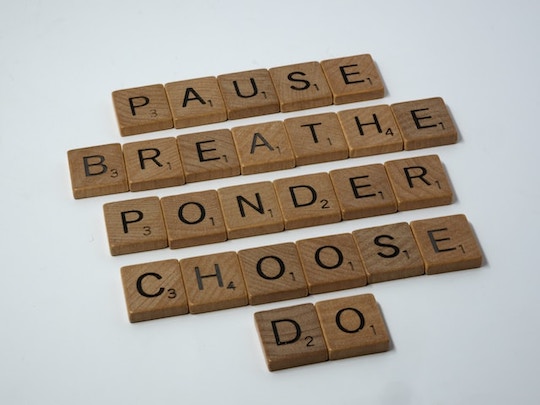
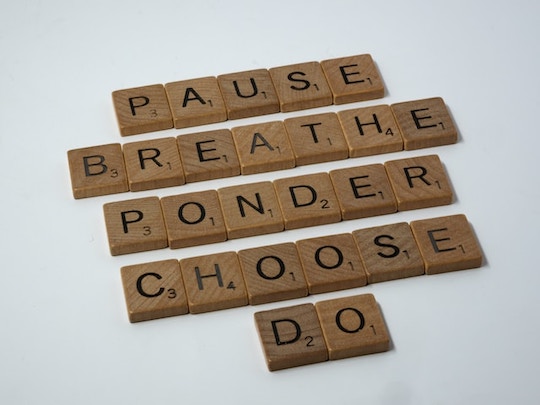
Image from Unsplash by Brett Jordan
What would be possible if you resisted the urge to judge and criticize others?
Where could an intentional pause allow you to pivot in a better direction when you are hooked by what others say and do?
Unfortunately, the time between stimulus and response seems to keep getting shorter and shorter.
Our urgent need to get things done, multitask, and speed though the unsavory parts of our lives often has us shoot before we aim.
EXERCISE:
Who are the people in your life that push your buttons and provoke you?
What are some frequent topics or events that trigger heated emotions and upsets?
What approaches can you take to mindfully pause before your amygdala is hijacked?

Image from Unsplash by Lucas Vasquez
Ed Kotch was the mayor of New York City from 1978 to 1989. In his efforts to be a good mayor and serve the city well, he would often ask How am I doing? to gain feedback and enhance his efforts.
How often do you evaluate your own efforts and contemplate how you are doing? Where are you judging yourself and making comparisons to others to see how you stack up? Where is this habit causing you misery?
EXERCISE:
How would taking yourself out from under your microscope of judgement free you up to simply act more and think less about your life?
How would assuming that you are doing just fine at being who you are help you be far happier and satisfied with your life?