“Great things are done by a series of small things brought together.”

“Great things are done by a series of small things brought together.”

—Vincent Van Gogh, 19th Century Dutch Painter
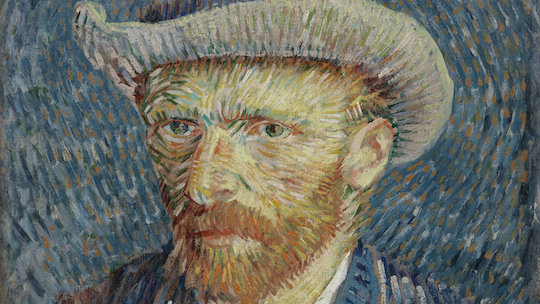
Image from vangoghmuseul.nl

During his lifetime Van Gogh created 2,100 artworks, including around 860 oil paintings, most of which date from the last two years of his life. Doing the math, you can see that during that period he averaged over two paintings per day. Imagine how many small brush strokes he used to create masterpieces such as Sunflowers- 1888, Café Terrace at Night- 1888, The Bedroom- 1888, Starry Night- 1889, and Irises- 1889.

EXERCISE:

Where and how are you placing your own series of small daily brush strokes on the canvas of your life to achieve and contribute your own greatness to your world?

“This world is but a canvas to our imaginations.”

“This world is but a canvas to our imaginations.”

—Henry David Thoreau, 19th Century American naturalist, essayist, poet, and philosopher

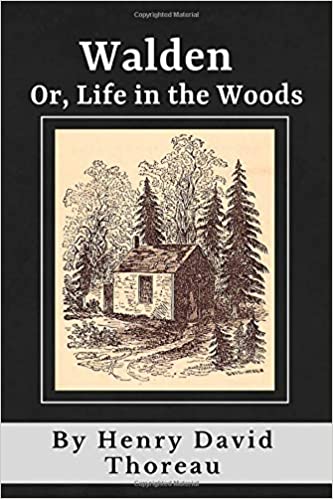
Image from Amazon

Thoreau lived for two years, two months, and two days by Walden Pond in Concord, Massachusetts.

His writing about his time there became a model of deliberate and ethical living. His words and deeds continue to inspire millions around the world who seek solutions to critical environmental and social challenges.

Gandhi’s work in India, Tolstoy’s philosophies in Russia, and Martin Luther King Jr’s civil rights stand in the United States are just a few notable individuals inspired by his work.

EXERCISE:

How and where in your personal and professional communities can and will you embrace and generously offer your own imaginings to create a more beautiful world?

Friday Review: Solutions

Friday Review: Solutions

What is your process for finding solutions to problems in your personal or professional worlds? Here are a few solution-related posts you may have missed.


“If they give you lined paper, write the other way.”


“What are you here to teach me?”


“Let’s work together to produce alternative solutions to our differences that we both recognize are better than the ones either you or I produced initially.”


Character cannot be developed in ease and quiet.

“Character cannot be developed in ease and quiet. Only through experience of trial and suffering can the soul be strengthened, ambition inspired, and success achieved.”

—Helen Keller, 20th Century American author, disability rights advocate, political activist

Image from Anazon

Life is very different from traditional schooling in that it gives us the test first and then we (hopefully) learn the lesson.

What character-building experiences and trials has life presented you over the past year?

How has your soul been strengthened?

Where have your ambitions been inspired, leading you toward new levels of achievement and success?

EXERCISE:

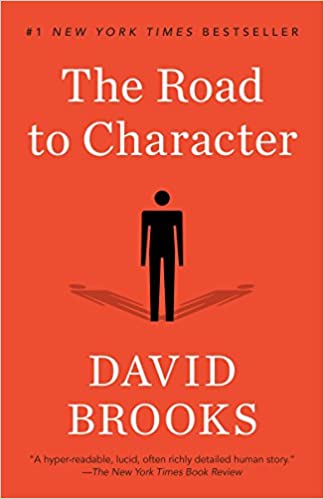
Please pick up a copy of The Road to Character by David Brooks to challenge yourself to re-balance the scales between the focus on external success (“resume virtues”) and your core principles.

“All people are beautiful, and the difference between us is so much less than the sameness.”

“All people are beautiful, and the difference between us is so much less than the sameness.”

—Berry Gordie, Jr., Founder of the Motown record label

Image from Unsplash by Oren Atias

The passing of my father Marvin in March has been a catalyst for many changes in my life. On a recent trip to Florida, Wendy and I had the opportunity to thank some very close friends who supported Dad while we needed to keep our distance.

Over a wonderful three-hour dinner that included wine toasts and delicious food, we celebrated this wonderful man and the beauty of the wonderful people who were there when they were most needed.

As a record producer and the founder of Motown records, Berry Gordy clearly has been a force, wanting us all to “get it together” and “be there” for one another.

EXERCISE:

Where have you been focused on the ugliness and differences between people over the past year? Where have you discovered the beauty in others by connecting and appreciating our sameness?

“Has the most important thing changed? Am I chasing an outdated target?

“Has the most important thing changed? Am I chasing an outdated target?”

—James Clear, author, entrepreneur, and photographer

Image from Unsplash by Ross Findon

Today’s quote contains two closed-ended questions. Did you answer yes or no to either or both?

Let’s change them a bit to make them open-ended….

What important things in your life have changed in the past year?
Where are you chasing a goal or target that is no longer relevant or essential?

EXERCISE:

Explore both the open and closed-ended approaches with a friend, family member, mentor, or coach.

Please let me know what new insights and actions result from this inquiry.

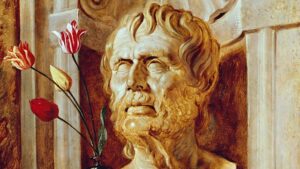
“Works, not Words.”

“Works, not Words.”

—Seneca, ancient Roman Stoic philosopher

Image from BBC radio

Talk is cheap.
The road to Hell is paved with good intentions.
After all is said and done, more is said than done.

What other cliches do you know that make a similar point?

How about alternative phrases such as:

Put up or shut up.
Actions speak louder than words.
Do something about it.
What is your body of work?
Take a massive baby step.

EXERCISE:

How can and will you embrace Seneca’s three words and turn them into works today?

“Many of life’s treasures remain hidden because we never search for them.”

“Many of life’s treasures remain hidden because we never search for them.”

—Andy Andrews, The Noticer

Image from Unsplash by Marten Newhall

Looking again and again at your everyday life is an interesting exercise. How much has it changed over the past year? Where has it gotten worse, stayed about the same, or improved? Where are you discovering lumps of coal, or finding diamonds?

Searching more carefully and deeply for the hidden treasures beyond our current outer and inner horizons is accessible to everyone. With the many challenges facing us over the past fifteen months, some have actually transformed their lives.

Just as an able sailor heads out to sea rather than remaining in the harbors of the past or perceived safety, we can all benefit from venturing beyond our current view of things.

EXERCISE:

How and in what ways can and will you lead your own search party to discover even more of the hidden treasures life has to offer?

“When making choices in life, combine cognitive, emotional, spiritual, intuitive, and social intelligence.”

“When making choices in life, combine cognitive, emotional, spiritual, intuitive, and social intelligence.”

—Bill Burnett & Dave Evans, in Designing Your Life

Image from Unsplash by Matthew Henry

When you examine your humanness, what do you notice? Look again at your first answer and keep digging through your crust, your mantle, your outer core, and your inner core.

Where have you only glimpsed the precious resources within? Where are there new sources of heat, pressure, and magnetism within, waiting to be captured or released?

How would you rate yourself in relationship to your IQ and EQ? Instead of the old paradigms of intelligence, let’s simply determine our capacity to live better by embracing all aspects described in today’s quote.

EXERCISE:

Examine a few of the significant choices you have made this past year. How can the further development of your head, heart, and gut intelligence support you in making even wiser choices today and in the future?