Friday Review: QUESTIONS
How often do you question yourself and your life choices? Here are a few related posts you may have missed.
 “Why do you get up in the morning?”
 “If one does not know to which port one is sailing, no wind is favorable.”

How often do you question yourself and your life choices? Here are a few related posts you may have missed.
“Why do you get up in the morning?”
“If one does not know to which port one is sailing, no wind is favorable.”

Image from Unsplash by Buddha Elemental 3D
We often chase better answers yet overlook a quieter skill: asking better questions.
The questions we pose shape what we see, what we try, and how we adapt.
When uncertainty rises, a sharp question acts like a buoy, keeping us from sinking into fear or confusion.
Instead of asking, “Why is this happening to me?” try, “What is this inviting me to learn or change?”
Better questions widen options, reveal patterns, and invite curiosity over judgement.
They turn problems into pathways.
Over time, this habit builds resilience and clarity. You don’t need certainty to move forward; you need direction.
And direction begins with a question that opens — not closes — your mind.
EXERCISE:
In what ways can asking better questions become anchors and give you greater buoyancy in changing waters?
Each morning, write down one guiding question for your day.
Let this question shape your decisions and influence your actions and mindset.
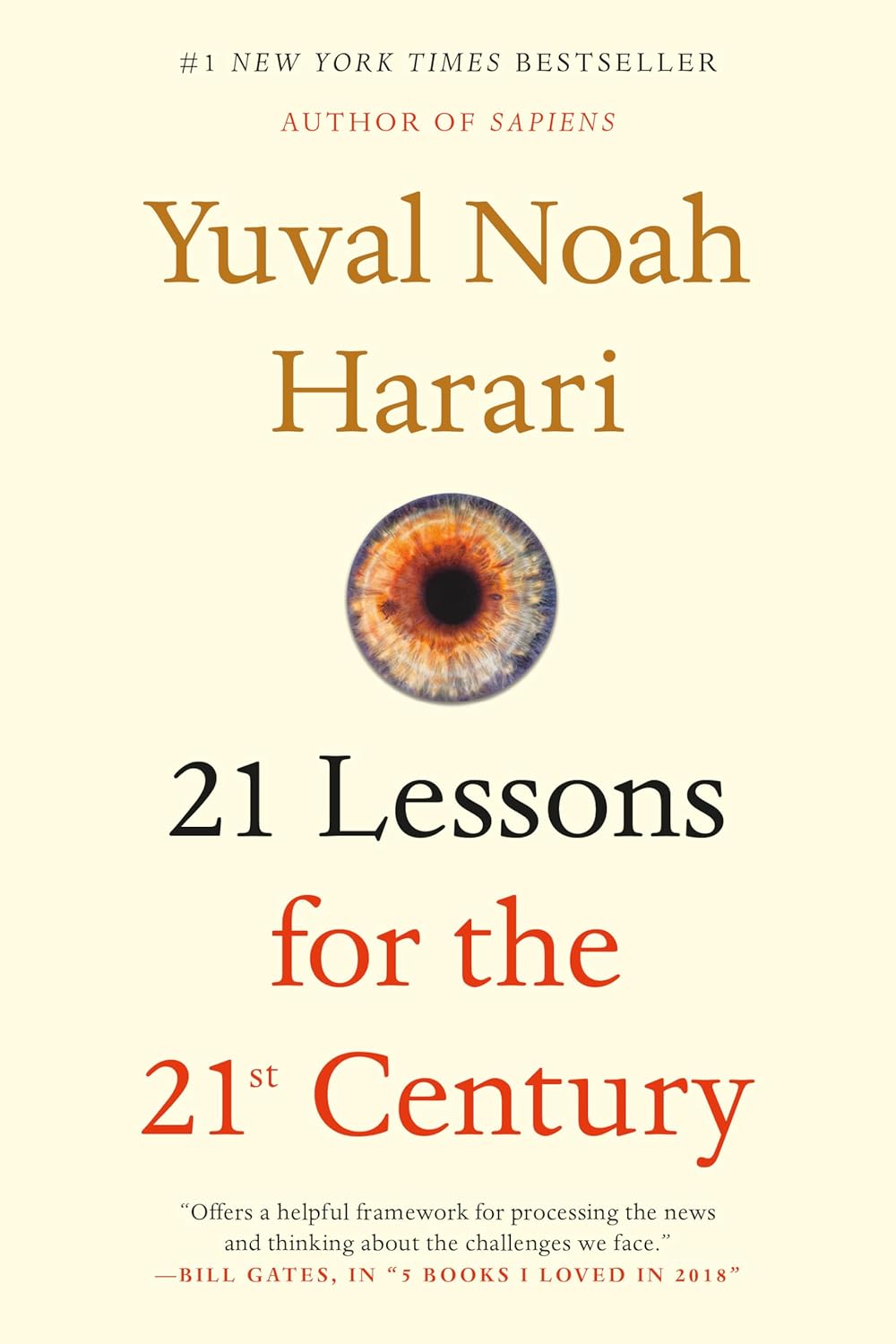
Image from amazon.com
Harari’s insight flips our usual hunger for certainty. We’re trained to chase answers, to feel secure in conclusions, to build identities around what we “know.”
Yet most transformative moments in life begin with a question that unsettles us — a question that stretches the mind, invites curiosity, and keeps us open.
An unquestionable answer, on the other hand, quietly closes doors, hardens beliefs, and limits growth.
Consider your health, relationships, or purpose. Are you living by inherited answers you’ve never examined?
Or are you willing to sit with better questions: questions that challenge, expand, and evolve you?
Growth lives in the spaces where curiosity outpaces certainty. That’s where real wisdom quietly begins to take root over your lifetime.
EXERCISE:
Consider reading Harari’s book- 21 Lessons for the 21st Century. It focuses on the urgent issues of the present, including truth, politics, work, identity, and meaning in a fast-paced and challenging world.
It encourages readers to think clearly in the face of information overload and uncertainty.

Image from Unsplash by Ana Municio
In our swipe-and-scroll world, we’ve become expert seekers, but poor questioners. Before you start scrolling for answers, pause.
Do you actually know what question you’re asking?
Most people don’t. They chase certainty before clarity, speed before understanding.
The truth is, an answer without the right question is like a key without a lock — it’s useless.
When you slow down to clarify your question, you sharpen your thinking and open doors you didn’t know existed.
Next time you reach for your phone to “look something up,” ask yourself: “What am I really trying to find?”
You might discover that wisdom begins not with Google or the latest AI app, but with awareness.
EXERCISE:
How can you better define what you’re really seeking? The right question changes everything.
Scroll less, think deeper and act with intention.
Consider reading A More Beautiful Question by Warren Berger to bolster creativity, innovation, and more meaningful change in your life.

Image from Unsplash by Julian Firmansyah
Today’s quote reminds us that curiosity is the key to a life that keeps expanding.
Too often we rush to lock the door with an answer — something neat, tidy, and final.
But growth happens when we resist that urge, when we dare to stand at the threshold and ask, “What else might be true?”
Questions breathe life into static routines, spark creativity, and deepen connection.
The best leaders, teachers, and coaches don’t claim to “know” — they inquire. So today, instead of declaring your certainty, knock on a few new questions. Let them open more doors you didn’t know were there.
EXERCISE:
One of my favorite coaching books is The Coaching Habit by Michael Bungay Stainer.
I find immense value in how its seven simple questions help unlock greater potential in us and others in our communities.
Image from Amazon
These two questions change everything!
The first asks how the world can serve us.
The second asks how we can serve the world.
One mindset seeks comfort; the other creates meaning. Often, we chase what we think we need — success, recognition, security — only to feel emptier once we find it.
But when we ask, “where am I needed?” we discover purpose beyond ourselves.
We see gaps waiting to be filled, people waiting to be helped, ideas waiting to be built.
True fulfillment does not come from what we take, but from where we choose to show up and give.
EXERCISE:
To dig deep into to today’s quote consider reading Adam Grant’s book Give and Take: Why Helping Other Drives Our Success.

Image from Unsplash by Vadim Bogulov
Learning to ask yourself and others the right questions is a powerful skill that can transform your thinking, relationships, and problem-solving abilities.
One effective approach is to start with “what” questions before jumping to “why.”
Asking What happened? or What can I do differently? encourages open-minded exploration and practical solutions.
“Why” questions, while sometimes useful, can feel accusatory or lead to defensiveness.
“What” questions, on the other hand, foster curiosity and clarity, helping you understand situations more deeply and objectively. Whether you’re reflecting on your own actions or working with a team, starting with “What” sets a constructive tone for growth and progress.
EXERCISE:
How can asking better questions improve your relationships and decision-making skills? How would mastering the art of questioning unlock new opportunities and insights in your life?
Two of my favorite books on this subject are “A More Beautiful Question” by Warren Berger, and “The Coaching Habit” by Michael Bungay Stanier.

Image from Unsplash by NASA
As a science buff growing up and even today, Carl Sagan has always been one of my heroes. He was a leading figure in popularizing science through his books and the television series Cosmos, which became PBS’s most watched show for decades.
Sagan was instrumental in researching the potential for extraterrestrial life, demonstrating amino acids production from basic chemicals. He designed the Pioneer Plaques and Voyager Golden Recording, intended as a universal message for any extraterrestrial intelligence.
Among his numerous accomplishments was his role as an inspirational mentor to notable scientists including Neil deGrasse Tyson and countless young people who chose to follow in his footsteps.
EXERCISE:
In what ways do you courageously question your place and purpose in life and dig for the answers to make your time here even more meaningful?

Image from Unsplash by Towfiqu barbhuiya
How do you demonstrate your sincere interest in others? A quick and easy coaching technique is to master your use of open-ended questions.
Placing the words who, what, where, when, why, or how at the beginning of these questions works magic because they cannot be answered with a simple yes or no.
To go a bit deeper and discover more about these people, layer with another open-ended question by using a piece of their initial answer. Doing so shows that that we are listening, and honor their views and perspectives.
Beneath these two approaches is the fact that you are showing genuine interest in their favorite subject, which for virtually all of us is ourselves.
EXERCISE:
If you are interested in more tools to enhance your relationship skills, please email barry@dempcoaching.com with the subject Communication Tools/ Masterful Relationships
How often do you question the things you hear or read? Here are a few related posts you may have missed.

“A prudent question is one-half of wisdom.”

“There is more than one right answer.”
“A wise man’s questions contain half the answer.”