“To belittle is to be little.”

“To belittle is to be little.”

—Author Unknown
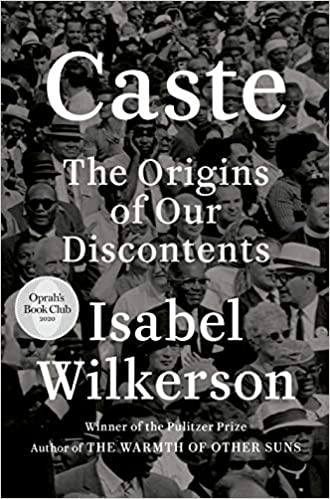
Image from Amazon

In her important book, Caste: The Origins of our Discontents, Isabel Wilkerson looks at the concept of the caste system and how it influences and shapes our lives and our nation.

Through vivid and specific examples and tragic stories from Nazi Germany, India, slavery, and the persecution of indigenous people in America, she brings light to the insidious undertow of caste and how it is experienced in both small and dramatic ways each day.

EXERCISE:

Where and how do you observe the belittling of others in your various communities? What words can you speak and what actions will you take to do far more be-bigging?

Consider reading this Oprah’s Book Club pick, and explore its importance and urgency with your family, friends, and colleagues.


“Broad ideas influence more people. Specific ideas influence people more.”

“Broad ideas influence more people. Specific ideas influence people more.”

—James Clear, author, entrepreneur, and photographer

Image from Unsplash by Mark Fletcher-Brown

On any give weekday it is possible for thousands of people to be influenced by this blog via email, LinkedIn, Facebook, and Twitter.

For the past ten years I have attempted to share daily nuggets of wisdom to influence many people with thought-provoking and/or motivational quotes, a coaching commentary, and an exercise to dig deeper and apply these ideas.

With many of us overwhelmed by far too much information from far too many sources, my efforts to have people invest five to ten minutes per week are not always successful.

During the same five days, four to six individuals invest an hour to engage me in a variety of specific ideas and approaches through one-on-one coaching, to impact and enhance aspects of their personal or professional lives.

EXERCISE:

What impact are you attempting to have with people in your various communities?

Where are specific — rather than broad — ideas the way to go to have the level of influence you intend?


“Consider how hard it is to change yourself and you’ll understand what little chance you have of trying to change others.”

“Consider how hard it is to change yourself and you’ll understand what little chance you have of trying to change others.”

—Jacob M. Braude, 20th Century Judge of the Illinois Circuit Court

Image from Unsplash by Edward Howell

How much time do you spend in your efforts to change others in your life? Consider your specific efforts with family members, friends, and professional colleagues. What is this process like, and how have these folks responded to your attempts to right their wrongs and see/do things your way?

Instead of putting all this effort into changing others, consider redirecting these energies into your own developmental pursuits to change yourself. Maybe your example of change and improvement will cause a positive ripple of change within others in your communities… or maybe not.

EXERCISE:

In what areas will you stop your efforts to change others in your life?

How and where can you then double down on your own efforts to change yourself for the better?


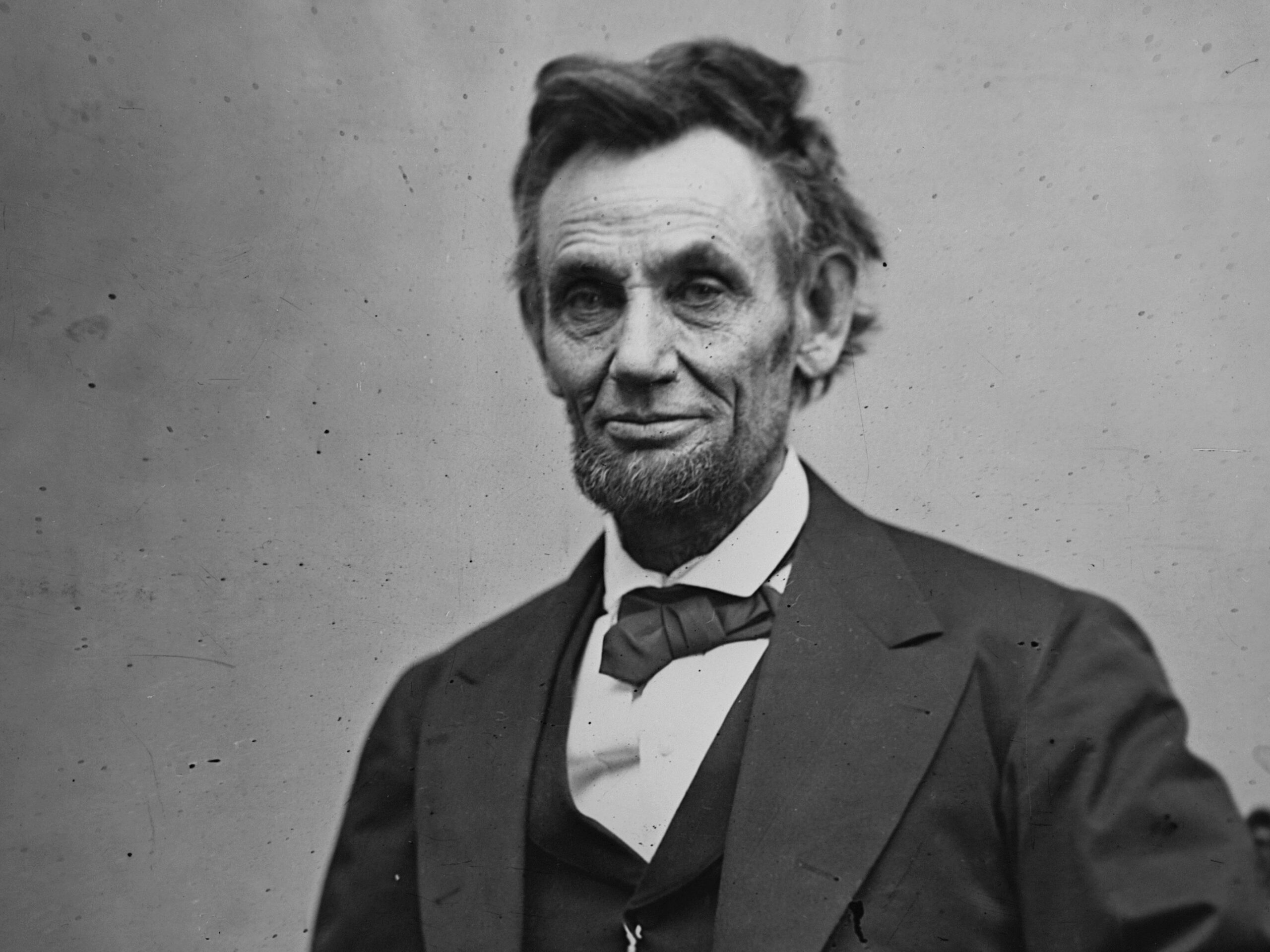
“With the fearful strain that is on me night and day, If I did not laugh I should die.”

“With the fearful strain that is on me night and day, If I did not laugh I should die.”

—Abraham Lincoln, 16th President of the United States

Abraham Lincoln, February 1865. Alexander Gardner/Library of Congress

Honest Abe, The Rail-Splitter, and The Great Emancipator were three nicknames given to Abraham Lincoln, the 16th President of the United States.

He is best known for his efforts to preserve the Union during the Civil War, and brought about the emancipation of enslaved people.

Unknown to many, Lincoln fought clinical depression all of his life, and if he were alive today, his condition would most likely be treated as a “character issue” and a finite political liability. Many believe that his own internal battle with many personal and political strains gave him the extraordinary character and will to accomplish all that he did.

EXERCISE:

Where and how does laughter and a sense of humor help you navigate your own fearful strains and rough seas of life?

How, like Lincoln, can you bring more of this essential resource into your own life, to help you achieve your own fullest potential?

“Do not allow idleness to deceive you; for what you give him today he steals tomorrow from you.”

“Do not allow idleness to deceive you; for what you give him today he steals tomorrow from you.”

—Alfred Crowquill, 17th Century British author

Image from Unsplash by Adrian Swancar

How much idleness have you embraced over the past 15 months? Where did you — perhaps through no fault of your own — have your life turned upside down, stopping many of the professional and personal activities that kept you progressing forward?

Where have you observed the impact of unemployment, health challenges, and simply our need to be physically distant, as thieves who seem to keep stealing our todays and tomorrows?

EXERCISE:

Where and how have you rebounded into significant action in your personal and professional pursuits? How can you keep out the thieves of excessive idleness and low effort to never misuse a single moment of your precious life?


“One day I would like to turn on the news and hear, There’s Peace on Earth.”

“One day I would like to turn on the news and hear, There’s Peace on Earth.”

—Author Unknown

Image from Unsplash by Dimitry Anikin

John Lennon’s “Imagine” is one of his best written and most powerful songs. Consider and contemplate the lyrics relative to today’s quote:

Imagine there’s no heaven / It’s easy if you try / No hell below us / Above us, only sky / Imagine all the people / Livin’ for today…

Imagine there’s no countries / It isn’t hard to do / Nothing to kill or die for / And no religion, too / Imagine all the people / Livin’ life in peace…

You may say I’m a dreamer / But I’m not the only one / I hope someday you’ll join us / And the world will be as one

Imagine no possessions / I wonder if you can / No need for greed or hunger / A brotherhood of man / Imagine all the people / Sharing all the world…

You may say I’m a dreamer / But I’m not the only one / I hope someday you’ll join us / And the world will live as one.

EXERCISE:

What peaceful thoughts and actions can and will you bring into your world today? How can and will you influence others in your communities to join us so the world will live as one. 

CLICK HERE to see the video and hear the song.

Friday Review: Winning

Friday Review: Winning

How do you define “winning”? Here are a few winning-related posts you may have missed.

“There is nobility in the struggle; you don’t have to win.”


“In order to have faith in his own path, a warrior does not need to prove that someone else’s path is wrong.”


“The man who runs may fight again.”


“When the eyes say one thing and the tongue another, a practiced man relies on the language of the first.”

“When the eyes say one thing and the tongue another, a practiced man relies on the language of the first.”

—Ralph Waldo Emerson, 17th Century American essayist, philosopher, and poet

Image from Unsplash by Austin Human

There are a number of stories and legends behind Missouri’s sobriquet, “The Show Me State.”

The slogan, although not official, is commonly used throughout the state and is on Missouri’s license plates.

The most widely known legend attributes the phrase to Missouri’s Congressman, Willard Duncan Vandiver. In an 1899 speech, he declared:

“I come from a state that raises corn and cotton cockleburs and Democrats, and frothy eloquences neither convict nor satisfy me. I am from Missouri. You have got to show me.”

EXERCISE:

How and in what ways can you be more of a practiced person who relies far more on the language of the eyes and not just those of the tongue?


“Always have old memories and young hopes.”

“Always have old memories and young hopes.”

—Arsene Houssaye, 17th century French novelist

Image from Unsplash by Jon Tyson

We are moving. After 34 years in beautiful Michigan, we are moving back to our hometown of Philadelphia, Pennsylvania, to be closer to family.

Recently, our two adult children — Daniel, 35, and Rachel, 33 — came to Wendy and my rescue for a week, helping us stage our home for sale. In the basement, we discovered tons of memories in the form of old toys, keepsakes, and virtually every homework assignment, report card, dance costume, and trophy they left behind.

Although a tear or two was shed reminiscing about the good times together, that week was filled with much youthful hope for the next phases of our lives.

EXERCISE:

Take some time this week to engage your family and friends in a trip down memory lane to rekindle some of your best times.

Open a dialogue about your individual and collective hopes for the future, which will provide you more happy times to reminisce over in the years ahead.