The Perfect Moment

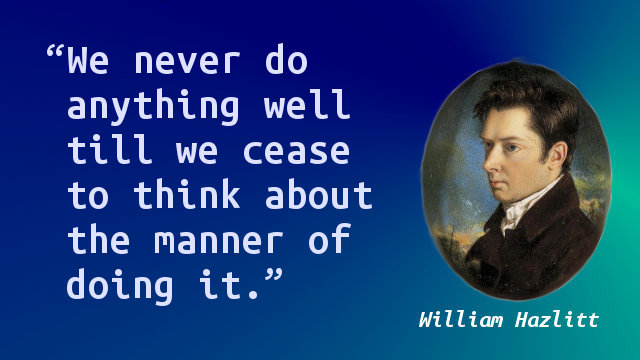
“Don’t wait for the perfect moment. Take the moment and make it perfect.”

—Author Unknown

meme about the perfect moment

Image from blogs.reading.ac.uk

In the past few months, I’ve read several blog posts on the topic of perfection and excellence, all focused on the debate between quantity and quality.

The real question is, how are you wired?

Do you go for perfection through extensive planning, strategizing, thinking, and rethinking?

Or do you jump in and get started making something that can be tweaked along the way?

Given many people’s desire to do it right the first time, some of us wait for the “perfect moment” to begin. Beginning, and the idea of doing many experiments from which we can learn seems to be the way things are headed. Albert Einstein said, “ How do I work? I grope.”

EXERCISE:

How and in what ways can you stop waiting for the “perfect” moment, and instead make more moments perfect?

Resolving Difficult Problems

“A difficult problem at night is resolved in the morning after the committee of sleep has worked on it.”

—John Steinbeck, American Novelist

Image of sleeping man

Image from Flickr by Or Reshef

A growing body of evidence demonstrates the ability of the unconscious mind to work on a problem that requires a creative solution. Similar results have been gleaned in studies on daydreaming, and its value in producing creative and more original ideas.

Turning inward mobilizes the right hemisphere of the brain. The sleeping or relaxed brain cuts out many distractions, which leads to greater capacity to solve problems.

EXERCISE:

How can you invest in a good night’s sleep, a power nap, or even a bit of daydreaming to more fully tap your creative problem-solving powers?

Museums are the custodians of epiphanies.

“Museums are the custodians of epiphanies.”

—George Lois, American Art Director and Designer

Image of two people walking in the woods

Image from Flickr by Gavin Clarke

How many of your most creative ideas come when you are working diligently at your desk?

Venturing to new and varied places could help you uncover potential incubators of future insights and epiphanies.

Consider a few ideas for places to get out of your “box” and think differently:

  • Take a long shower
  • Take a walk in nature
  • Meditate
  • Practice rhythmic exercise such as Yoga
  • Take a long, scenic drive
  • Visit a museum

EXERCISE:

Where and in what ways can you shift your perspective by shifting your physical position to enhance your creative capacities?

Feel free to reply to this post with your own epiphany-generating strategies.

Friday Review Inspiration

Friday Review: Inspiration

What inspires you? Here are a few inspiration-related posts you may have missed. Click on the link to read the full message.

QC #976a


“Your greatness is measured by your horizons.”


QC #1120b


“It’s choice – not chance – that determines your destiny.”


QC #1120c


“Inspiration usually comes during work, not before it.”


how would you like

“How would you like things to be different in your life?”

—Fran Peavey, Social Activist

Image of shapes with questions in them

Fran Peavey was a social activist who passed away in 2010. Through her travels across the globe, she developed a process she called “strategic questioning,” which is characterized by questioning with an open mind and a caring heart.

Using this open, curious, and often provocative but not judgmental style, she conducted thousands of interviews over the course of two decades. She believed that this approach put people at ease, lowered barriers, and helped them find common ground around shared concerns.

EXERCISE:

Take 3-5 minutes to ask and answer one of Fran’s favorite questions: “How would you like things to be different in your life?” Consider engaging others in your personal and professional communities in this inquiry, so you can help one another make changes.

Feel free to let me know what happens by replying to this post!

optimistic people

“What would an optimistic, confident person do?”

—A. S. Jacobs

Image of smiling man with two thumbs in the air

Image from quotesgram.com

One of the distinct benefits of working with coaches, mentors, and advisors is that they give their clients access to outside, mostly objective perspectives on matters of great importance.

One frequently used tool is the open-ended question, which encourages the exploration of new dimensions of thinking.

At times, almost all of us lack the sunny, confident view on issues that are not turning out as we would like. Asking “What would an optimistic, confident person do?” can lift the dark clouds and pessimistic perspective that often creeps into our thoughts.

EXERCISE:

Select an important issue or matter that is bringing you down. Shine the light of greater optimism and confidence on it, to move you forward to a more desirable outcome.

Healthy Wealthy Wise

“Early to bed, early to rise, makes a man healthy, wealthy, and wise.”

—Benjamin Franklin, American Founding Father

Image of Dean Norris portraying Benjamin Franklin

Benjamin Franklin portrayed by Dean Norris, www.history.com

Ben Franklin was one of the wealthiest men of his time. He lived 84 years, which was unheard of in those days, and credited part of his longevity and success to his adherence to today’s quote.

The need for rest and recovery is an often overlooked aspect of health and well-being. It is a time in which our bodies magically heal and repair themselves. Lack of sleep and the associated stress it places on our bodies has been proven toxic.

Early risers clearly get a head start on their days. How many races would you likely win if you were able to determine the amount of “lead time” you needed? What could you learn through study, and what masterful, valuable skills could you develop and contribute to the world?

EXERCISE:

Consider going to bed and rising 30-60 minutes earlier for at least a week, and see what you discover about following Ben Franklin’s coaching.

Plan your day work your plan

“Plan your day and work your plan.”

—Author Unknown

image of a daytimer planner

Image from daytimer.com

Many people find planning their day downright boring, preferring to simply go with the flow and see what the day brings.

The most successful and often most disciplined people, on the other hand, chart their course and prepare for their day before they venture out into the world.

Consider this statement from Alice in Wonderland by Lewis Carroll: “If you don’t know where you are going, any road can take you there.”

What payoff do you get for planning—or not planning—your own course? Some would say that unhappy people get to play the victim and blame other for their lot in life.

What does it cost you and others to abdicate opportunities and responsibility for planning your own course?

EXERCISE:

Consider posting today’s quote in several locations in your personal and professional environments. Take 3-5 minutes each day over this week to discover its benefits in creating a happier and more successful life.

Self-Improvement Review

FRIDAY REVIEW: IMPROVEMENT

How much attention do you give to self-improvement? Here are a few posts related to self-improvement you may have missed:

Image of achieving success through social capital book


“Don’t worry so much about knowing the right people. Just make yourself worth knowing.”


Rainy window with a note stuck on about kindness


“Everyone you meet is fighting a battle you know nothing about. Be kind. Always.”


Image of a room under construction


“The biggest room in my house is the room for improvement.”


the best story

“When I look back in five years, which of these options will make the best story?”

—John Hager, American Politician

Image from evollution.com

Image from evollution.com

Are you facing a major fork in the road in your professional or personal life?

Consider brainstorming all the possible options, and perhaps a few that are outside your current vision, to see where they lead in the near and distant future.

Which potential choice fits best with your vision, values, beliefs, skills, strengths, and personality? Pay attention to feelings stirred up by these hypothetical journeys.

What scares you?

What excites you?

What delights you?

EXERCISE:

Ask and answer the questions above, and begin telling the story you intend to write with your life.