“The purpose of life is a life of purpose.”

“The purpose of life is a life of purpose.”

— Robert Byrne, American author
#689

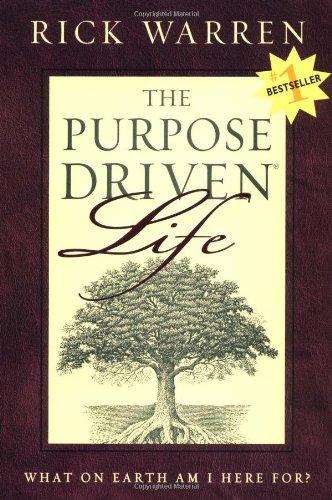
One of the most widely read books over the last decade was A Purpose Driven Life by Rick Warren. The author states that perhaps no single factor contributes more to happiness and fulfillment in life than purpose.

EXERCISE:

List all the key roles you play in your professional and personal lives.

Examine which of these roles provide you with the greatest level of satisfaction.

Ask yourself “How much meaning do I derive through his role, and what changes might I make to derive even more?”

Consider revisiting the core value exercise to provide greater perspective on what primary beliefs and commitments are fundamental for you to feel and experience a more purpose driven life.
“A bad attitude is like…”

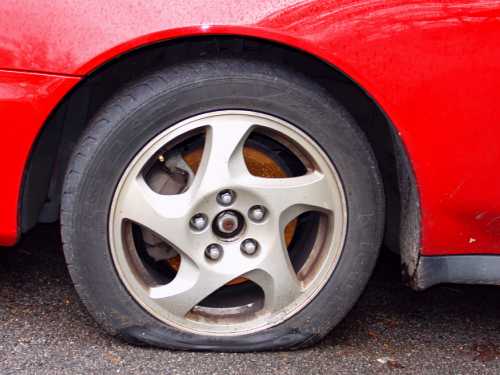
“A bad attitude is like a flat tire. You can’t go anywhere until you fix it.”

— Author Unknown

Photo from Flickr by Paul Chenoweth

Photo from Flickr by Paul Chenoweth

A not-so-funny thing happens when we have a bad attitude.  People will avoid us. If they can’t avoid us, they will eventually begin to judge and criticize us—which is, in some regards, our bad attitude rubbing off on them, and a “flat tire” in our lives and relationships.

The good news is that we can control our perspectives and perceptions, inflate our view of the world with a brighter outlook, and move forward with others who want to ride along.

EXERCISE:

Ask at least one person in your professional life and one person in your personal life for coaching about the fullness or flatness of your attitude. Explore with them what modifications or adjustments would make the biggest difference, and promise to change with their support.

Another possibility would be to offer feedback and coaching, if requested, to others who would like to make adjustments in their own lives.

Feel free to reply to this post and let me know what happens.

“Yesterday is but…”

“Yesterday is but today’s memories, and tomorrow is today’s dream.”

— Khalil Gibran, 20th century Lebanese artist, poet, and writer

#687-01

The human mind is a wonderful thing. It can be a calculator when it is in analytic mode, and it can also venture into wondrous arenas of creativity and innovation. The mind also has the ability to travel back and forth in time, from the beginning of the universe to the end of time.

EXERCISE:

How can you tap into the wondrous power of your mind to learn from the past, enjoy the experiences of today, and venture into the possibilities of the future? Consider doing this exercise with others within your professional and personal communities to explore what will likely be an even more remarkable experience.

“When nobody around you…”

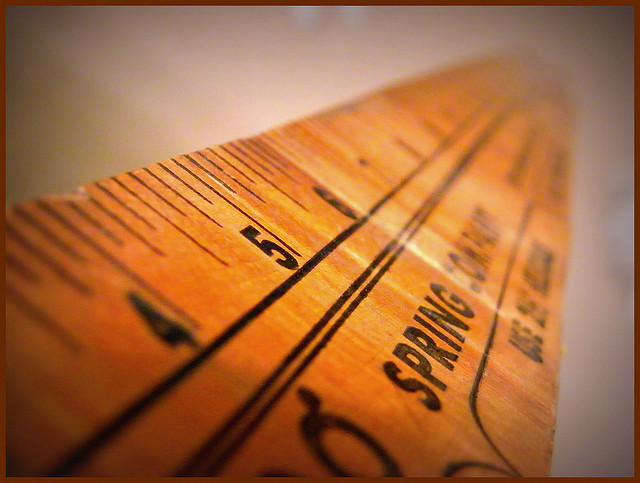
“When nobody around you seems to measure up, it’s time to check your yardstick.”

—Bill Lemley, Writer

Photo from Flickr by Melissa

Photo from Flickr by Melissa

How do you measure up against the standards that society sets for you in your professional and personal lives? What yardsticks do you use to define success or failure?

What standards do you set for yourself regardless of those set by others?

How do the people in your life measure up against these yardsticks, and if they happen to come up short, what ramifications does this have on your relationships?

EXERCISE:

The world where no one is good enough to please you has dreadful consequences. Spend some time answering the questions above and then take the necessary steps to modify your measures of success — particularly if you notice that nobody in your world measures up.

“It is always your next move.”

“It is always your next move.”

—Napoleon Hill, American writer one of the great writers on success

Photo from Flickr by Wyoming Jackrabbit

Photo from Flickr by Wyoming Jackrabbit

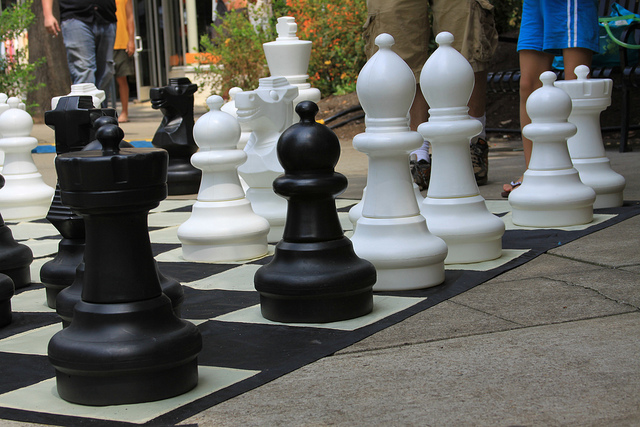
Do you play board games or video games? How about other types of games?

If you do, you know that what keeps us engaged is the goal of winning, and celebrating each achievement along the way.

What about the game of life, where professional or personal achievement is the goal? Sometimes when we feel stuck or stopped, when we become frustrated or discouraged, we forget that our next move might be the one that shifts the world for the better.

EXERCISE:

Notice where you are stopped, stuck, or plateaued in your professional or personal life. Explore and courageously choose to make your next move in at least one area, toward a more desirable future.

Feel free to reply to this post and let me know what happens.

“Fear doesn’t prevent death…”

“Fear doesn’t prevent death, but it certainly prevents life.”

—Darren Hardy, Publisher of Success Magazine

Photo from Flickr by Juan Pablo Gonzalez

Photo from Flickr by Juan Pablo Gonzalez

Many years ago, I attended a personal development seminar with about 150 people where the presenter asked the participants why most people get up in the morning. Following a variety of expected responses such as “to go to work and make a living,” he gave his own answer.

He said that most people get up in the morning because they did not die in their sleep.

The entire audience was shocked.

His perspective was that a majority of people navigate through their days a bit robotically without any level of excitement, vitality, or enthusiasm.

Fear, he suggested, was a primary reason many of us lower our sights and play it safe. Rather than not being dead, he asked us to look at the question: What does it mean to be fully alive?

EXERCISE:

In what way will you overcome a fear you may have by summoning the courage to be fully alive today?

“Even Socrates, who lived a very …”

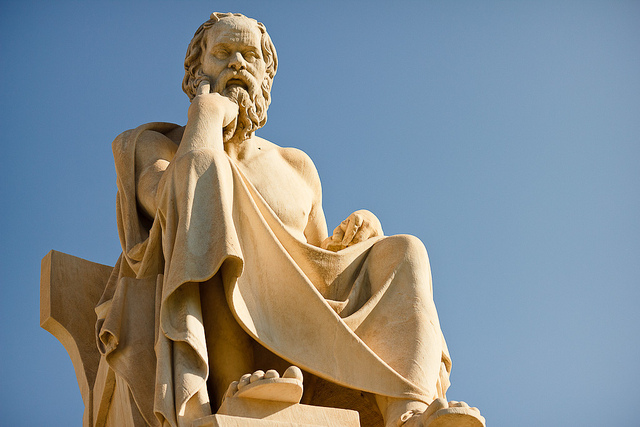
“Even Socrates, who lived a very frugal and simple life, loved to go to the market. When his students asked about this, he replied, ‘I love to go and see all the things I am happy without.’”

— Jack Kornfield, American author and Buddhist teacher

Photo from Flickr by Carlos Blanco

Photo from Flickr by Carlos Blanco

Nearly three years ago I began writing the Quotable Coach series. Six hundred and eighty-three posts later, I recall one of the very first quotes I selected: “The Best Things in Life are not Things.”

Consider exploring the nugget of wisdom by Jack Kornfield to examine the happiness Socrates found from leading a simple life.

EXERCISE:

What are your current sources of happiness? How might traveling lighter and living without some things make you even happier in the year ahead?

“Create each day anew.”

“Create each day anew.”

—Morihei Ushiba, founder of the Japanese martial art of aikido

Photo from Flickr by Kevin Simpson

Photo from Flickr by Kevin Simpson

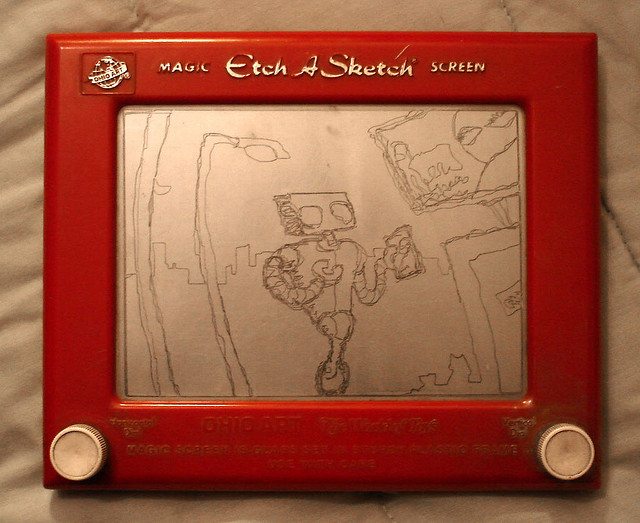
When I was a young child, Etch-a-Sketch was one of my favorite toys.

You could draw almost anything just by twisting the two knobs at the bottom.

Imagine for a moment that your professional and personal life was created anew each morning, and that overnight someone or some power would shake it to clean the slate for the new day.

I am sure that with today’s technology there are many far more advanced toys and tools to create whatever you wish—perhaps in color or three dimensions.

EXERCISE:

How can you design your commitments and vision for a better future for yourself and those around you, to live each day as a masterpiece?

“A year from now you may wish…”

“A Year from now you may wish you had started today.”

-Karen Lamb

Creative Commons photo

Creative Commons photo

Today’s post is to help you get a head start on your New Year, and not wait for the first, second, third, fourth, or even Monday the fifth.

EXERCISE:

Take five minutes to create a list of the top five things you must do the day you return to work after the holidays. Block out a chunk of time today to do just that.

For the greatest benefit, repeat daily.

Happy New Year!

“Patience is also a form of action.”

“Patience is also a form of action.”

—Auguste Rodin, French Sculptor

Photo from Flickr by Karen Neoh

Photo from Flickr by Karen Neoh

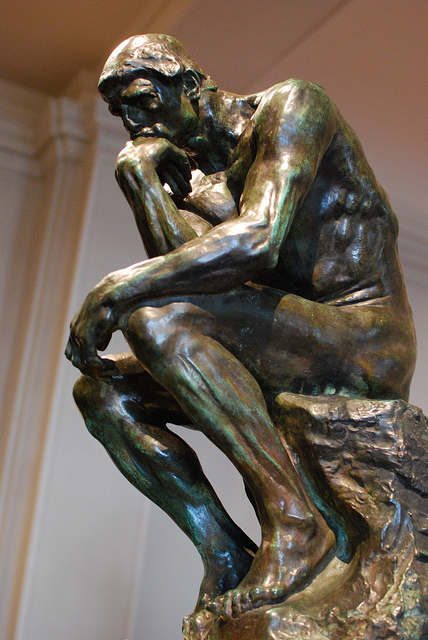
Rodin’s “The Thinker” is among the world’s most recognized works of art.

I wonder what Rodin would think about our 21st century, 24/7 world in overdrive.

Perhaps today his call for patience is an even more precious form of action that allows for better discernment, better decision making, and better actions.

EXERCISE:

With whom, and in what situations, would greater patience be the appropriate action in your life?

Please share your intention to expand your capacity for patience, to potentially reap greater benefits within your personal or professional communities.