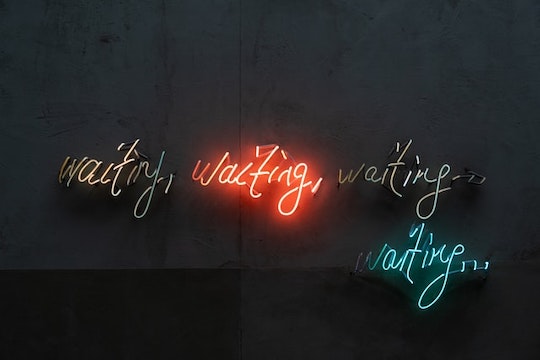
“It’s hard work to stick around long enough to get lucky.”

“It’s hard work to stick around long enough to get lucky.”

—Seth Godin, American author, marketing expert & entrepreneur

Image from Unsplash by Eyesteix Studio

Luck often wears overalls and shows up disguised as persistence.

We like to imagine fortune as lightning — instant, dazzling, completely out of our control. But real luck is usually slow-cooked.

It brews while you keep showing up, even when results lag and energy dips. The world quietly notices the ones who don’t quit in the eleventh hour.

Most people stop right before the ground starts to shake. The “lucky break” is usually a long chain of unglamourous days connected with patience and a bit of grit.

So, if you’re feeling overlooked by luck, keep swinging. The universe is notorious for rewarding endurance — it just takes its sweet time to notice who’s still standing when the lights finally come on.

EXERCISE:

Consider reading Angela Duckworth’s book Grit. In it she demonstrates how staying committed and resilient despite setbacks are the key drivers of the lucky ones we want to be.

Work is an expression of ourselves

“Work is an expression of ourselves, and a chance to find meaning as we make a difference and earn a living.”

Seth Godin, American author and marketing expert

Image from Unsplash by Belinda Fewings

Work is far more than a paycheck — it’s an expression of who we are and what we value.

Each task, interaction, and contribution allows us to reveal our skills, passions, and character.

When we see work not just as “what we do” but as “who we bring,” it becomes a pathway to purpose.

Through our efforts, we can make a difference for others, whether by solving problems, creating beauty, offering service, or inspiring growth.

At its best, work balances two essential needs: the practical need to earn a living and the human desire to find meaning.

When we align our work with our gifts and values, it transforms from obligation into opportunity — a daily chance to add value and leave a lasting mark on the world.

EXERCISE:

Take a few minutes each morning to notice your emotions, thoughts, and energy, and set your intentions of how you want to show up at work.

Each evening, reflect or journal how things went that day.

Working is one of the most dangerous forms of procrastination

“Working is one of the most dangerous forms of procrastination.”

Gretchen Rubin, New York Times bestselling author and speaker

Image from Unsplash by Magnet.me

Working can be one of the most dangerous forms of procrastination because it disguises avoidance as productivity.

Instead of tackling the most important tasks, we often busy ourselves with less critical work — like tweaking a website or organizing files — that feel productive but actually delay meaningful progress.

This hidden procrastination feels safe because it’s “work,” yet it prevents us from focusing on what truly matters.

The danger here lies in how easily these tasks can fill up our time, giving a false sense of accomplishment while priority tasks remain untouched.

Recognizing this pattern is crucial to breaking free and ensuring that our efforts align with our real goals, not just the illusion of productivity.

EXERCISE:

In what areas of your life is your work actually a form of procrastination?

How are these disguised efforts preventing you from focusing on what truly matters?

“The more I want to get something done, the less I call it work.”

“The more I want to get something done, the less I call it work.”

Richard Bach, American author

Image from Unsplash by Shawn Rain

Where do you draw the line between work and play?

Consider the activities that you want to, get to, and have to get done.

My grandchildren recently started 1st grade and preschool. At this early point in their lives, virtually everything is play and their enthusiasm and engagement is always ready to go.

About the only things that they don’t want to do is clean up their toys and go to bed, because of their own youthful FOMO.

EXERCISE:

In what areas of your life can you shift your views on your “have to do’s” to turn them into “get to do’s” and “want to do’s”?

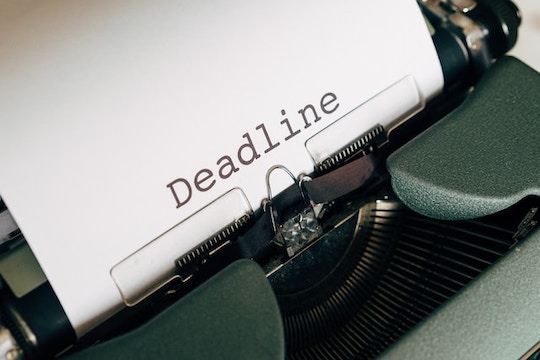
As soon as I have a deadline, I work much better

“As soon as I have a deadline, I work much better. Time unbounded is hard to handle.”

May Sarton, pen name of Eleanore Marie Sarton, 20th century novelist, poet, memoirist

Image from Unsplash by Markus Winkler

To what degree do you experience deadlines in your personal and professional lives?

How do time constraints impact your engagement and performance?

Where do they help you step up your game, or act as negative stressors that crush your spirit?

EXERCISE:

How does having unbounded time impact your life?

Where is the sweet spot between eustress and distress as it relates to setting deadlines for yourself?


Good things come to those who wait

“Good things come to those who wait — and work, and sacrifice, and maybe even suffer.”

Arthur C. Brooks, American social scientist, musician, and columnist

Image from Unsplash by Levi Meir Clancy

To what degree does today’s quote resonate with you?  Consider taking a closer look into your experiences of waiting, working, sacrificing, and suffering.

How much good has come to you through these attributes? How have these aspects of life influenced your values and shaped your character?

To what extent did you recognize beforehand that much good was on the other side during these challenging times?

How, with this hindsight, can you view and experience current and future difficulties to glean the lessons and value they offer far sooner?

EXERCISE:

Where in your personal or professional worlds can you acknowledge and embrace that many of the best things in life are worth the squeeze?

“Approach every task as though it were the moment that will define you.”

“Approach every task as though it were the moment that will define you.”

—Jol Dantzig, one of the founders of Hamer Guitars

Image from dantzig.com

What’s your brand?  How do you represent yourself to the world through your various efforts?

Jol Dantzig designs and builds guitars. Over the course of his career, he has designed instruments for many of the biggest names in music including John Lennon and George Harrison of The Beatles, three of the Rolling Stones, and members of the Pretenders, Def Leppard, and the Police.

His famous orange five-neck guitar—built in 1981 for Rick Nielsen of the band Cheap Trick—was exhibited at the Boston Museum of Fine Art, and some of his other designs have been exhibited at the Smithsonian Institute.

EXERCISE:

What are some of your most important tasks? How can and will you more fully express your very best work at this moment to make the impact you desire?

A place to start may be to examine how pleased you are with your efforts. Seeking constructive feedback from trusted friends, colleagues, and family before you deliver can also help you stay on brand and provide remarkable, defining work.

“Could this life be one level in a larger game?”

“Could this life be one level in a larger game?”

—Mo Gawday, Solve for Happy

Image from Unsplash by Leslie Lopez Holder

In physics, work is the energy to or from an object via the application of force along a displacement. For the sake of simplicity:

Work = Force x Displacement

How hard do you work? How much force do you put into your personal and professional activities? Where are you headed in your intended direction through your efforts?

How happy are you pursuing and pulling on the levers and ropes of your life?

EXERCISE:

What are your thoughts on Mo’s question regarding life being part of a larger game? Please consider replying to share your perspective.

“Works, not Words.”

“Works, not Words.”

—Seneca, ancient Roman Stoic philosopher

Image from BBC radio

Talk is cheap.
The road to Hell is paved with good intentions.
After all is said and done, more is said than done.

What other cliches do you know that make a similar point?

How about alternative phrases such as:

Put up or shut up.
Actions speak louder than words.
Do something about it.
What is your body of work?
Take a massive baby step.

EXERCISE:

How can and will you embrace Seneca’s three words and turn them into works today?