“Anything you’re good at contributes to happiness.”

“Anything you’re good at contributes to happiness.”

– Bertrand Russell, British philosopher

587Image from Flickr by Kool Cats Photography.

Make a list of the things you excel at. Most likely, just thinking of these activities will bring a smile to your face. You probably lose track of time while engaging in these pursuits, and have the experience of being “in the zone”.

On the other hand, creating even a shortlist of those activities where you struggle or perform poorly will usually involve avoidance, procrastination, and a pretty grumpy you!

Exercise:

How would playing even more to your strengths and reducing your time spent in your areas of weakness increase your overall life satisfaction?

Be careful to note that it took considerable effort and practice to get good at these things in the first place, and please continue to start and try new things all the time.

“You don’t live in a world all alone. Your brothers are here too.”

“You don’t live in a world all alone. Your brothers are here too.”

– Albert Schweitzer, German theologian and philosopher

Barry-Marvin-Rachel

(Me, my dad Marvin, and my daughter Rachel.)

My family and I recently had a vacation in the Pocono Mountains in Pennsylvania. This year, some additional friends came along to make it extra special. Of particular note were some of the many things we accomplished together to truly make our time a community affair.

In additional to numerous routine tasks, such as the preparation of meals and some cleaning and organizing projects, we supported my father Marvin (who is 88 today) on a three hour, six mile canoe ride down the Delaware river, and even took him to Camelbeach Waterpark where he experienced the adventure of some pretty thrilling water slides.

Exercise:

Where are you acting alone in the world and thus not achieving your fullest potential?

Where would supporting or working with others have you achieve even more remarkable things in your professional or personal life?

no matter where you go, there you are

“And remember, no matter where you go, there you are.”

– Confucius, Chinese philosopher

586

Image from Flickr by docoverachiever

As a positive, optimistic, and upbeat person most of the time, it troubles me to see a lot of negativity in the world. Two related negative traits I observe often are blaming and victimization. When people demonstrate these qualities, the focus is always on others as the cause of a problem, and themselves as innocent victims.

Confucius is suggesting, with this quote, that we are always present in these situations, and if you dig a bit deeper, a part of this current reality puzzle.

Exercise:

How can you take a larger percentage of responsibility for the events and circumstances that make up your world? Where would adjusting your perspective, attitude, or point of view provide a shift in the way that people and events affect you?

“Brevity is the soul of wit.”

“Brevity is the soul of wit.”

– William Shakespeare, English playwright

585Image from Flickr by Lincolnian (Brian).

The Quotable Coach series has been running for about two and a half years: this is the 585th quote. We now have well over 1,200 daily subscribers and I have been welcomed as a guest blogger on a number of well recognized blogs such as Pick the Brain, here: www.pickthebrain.com/blog/4-short-yet-powerful-quotes-abraham-lincoln-help-grow.

It wasn’t always this way. My first attempt at blogging was pretty much a complete failure. In spite of sharing what I thought was my best stuff, we rarely even had 50 people read it. I believe that one of the reasons for this failure was that each post took several minutes to read. The Quotable Coach series, though, has been “nuggetized” to be read in less than a minute.

Shakespeare, who I’ve quoted on numerous occasions, would hopefully have appreciated the brevity.

Exercise:

How can greater brevity in your written and spoken communication enhance your ability to reach and get through to others in a wittier way?

Interview with Doug Gfeller, Part Three: Building an Online Audience, and the Value of Coaching for Individuals and in Organizations

In this third excerpt (12 mins) from my interview with Doug Gfeller of The Coaching Perspective, we discuss:

  • My strategies for building an online audience, and the value of this, particularly in terms of impact.
  • How a book helps build credibility, even though it’s unlikely to make you a great deal of money.
  • The importance of being found through Google, and how a strong online presence helps with this.
  • How I help business leaders become coaches within their own institution, and how I work with professional coaches.
  • How having a coach and moving your life forward can help those around you, particularly family members.
  • The ways larger organizations are incorporating coaching into their processes.

Click “play” below to listen to this part of the interview:

You can listen to the full interview, and other interviews with me, on the Podcasts page of my coaching website.

schedule your priorities

“The key is not to prioritize what’s on your schedule but to schedule your priorities.”

– Stephen Covey, American self-help author

Image from Flickr by photosteve101.

Image from Flickr by photosteve101.

Stephen Covey is one of the best known pioneers in the field of personal development. His Seven Habits of Highly Effective People is one of the most popular personal growth programs of all time. Four of his habits directly deal with time management, efficiency, and effectiveness.

Please explore for yourself how the following habits relate to the issue of prioritization:

Habit 1: Be Proactive:  Suggests we need to take initiative and responsibility for the choices we make and the order in which we make them.

Habit 2: Begin with the End in Mind: Encourages us to prioritize and schedule what’s important and not simply schedule and prioritize what’s urgent.

Habit 3: Put First Things First: Pretty much says it all!!

Habit 7: Sharpen the Saw: Encourages us to make ourselves a key priority that will allow all other priorities to benefit.

Exercise:

Evaluate your calendar and any to-do lists you may be using to manage your day. How can you schedule your most important priorities and do less of what’s “on your schedule”?

You’re welcome to download a free copy of my time management workbook at:

www.dempcoaching.com/download-your-free-workbooks

Enter the password barrydemp (all lower case) to access the page.

Of course, I also recommend you read or reread The Seven Habits of Highly Effective People. If you want a quick refresher, you can find a brief explanation of each habit here.


When no one is watching

“The true test of a man’s character is what he does when no one is watching.”

– John Wooden, American basketball coach

583

mage from Flickr by Arlington County

I was enterprising as a young boy. At age 11, I mowed lawns during summer and shoveled snow during winter to earn money to purchase things I wanted. One winter day, I was headed out to shovel snow in our neighborhood, and my dad asked me to shovel our elderly next door neighbor’s sidewalk and not charge for the effort.

I must admit I hemmed and hawed, thinking this request unfair, and I remember my dad’s words, “It will build your character.” To this day, I can’t lift a shovel of snow without those words running through my mind.

Exercise:

What are the things you do or could do, without anyone knowing, that contribute to your character?

If you happen to be a coach, mentor, parent, teacher, or other service-oriented individual, how can you share today’s nugget of wisdom with the coach-able people in your life?

“Energy is contagious: either you affect people or you infect people.”

“Energy is contagious: either you affect people or you infect people.”

—T. Harv Eker, author, businessman and motivational speaker

Image from Flickr by Tree Leaf Clover

When was the last time you had a cold? I bet there was a good chance you know who passed it on to you. The energy generated by those around us can have a similar impact on our health, well-being, and overall disposition.

Which people in your life give you that pick-me-up feeling? Which ones seem to suck the life out of you and make you feel ill, due to their negativity?

Exercise:

Create a list of people in your personal and professional life that you would place on either the positive or negative ends of the energy spectrum. Make an effort to only allow yourself to be “zapped” and not “sapped” as you adjust whom you spend your time with.

Extra credit: A quick and easily read book on the subject, particularly in a business context, is Zapp! The Lightning of Empowerment. Reading it will also help you become more of a “zapper” and less of a “sapper” in the lives of others.

Interview with Doug Gfeller, Part Two: My Coaching Style and my Journey as a Writer

In this second excerpt (12 mins) from my interview with Doug Gfeller of The Coaching Perspective, we discuss:

  • What I do differently from other coaches, and how I aim to create “leveraged” coaching relationships.
  • How the idea of “givers gain” drives me in my work with my clients and gives me a sense of purpose.
  • Why I started my daily series The Quotable Coach (which Doug has shared with many friends and acquaintances) and wrote my book The Quotable Coach: Daily Nuggets of Practical Wisdom.
  • The way I use the quotes, adding a short, focused reflection and exercise, and how this has helped me send out a new email every day, Monday to Friday, for over two years.
  • My earlier experiences with writing, and particularly with corrections and feedback, which made me reluctant to put my work out there for many years.

Click “play” below to listen to this part of the interview:

You can listen to the full interview, and other interviews with me, on the Podcasts page of my coaching site.

If you haven’t yet got your copy of The Quotable Coach: Daily Nuggets of Practical Wisdom, you can find out more about the book here or buy it directly from Amazon here.

“Quotation is a serviceable substitute for wit.”

“Quotation is a serviceable substitute for wit.”

– Oscar Wilde, writer and poet

581Image from Flickr by quinn.anya.

How popular are you? How often do you find yourself at the center of attention?

If your answer happens to be less than you desire, Wilde might have a little coaching for you.

Exercise:

Begin exploring and even studying the great quotes of well-known individuals of today and the past. The selective use of quotes in your conversations will likely raise your popularity quotient in your personal and professional worlds.

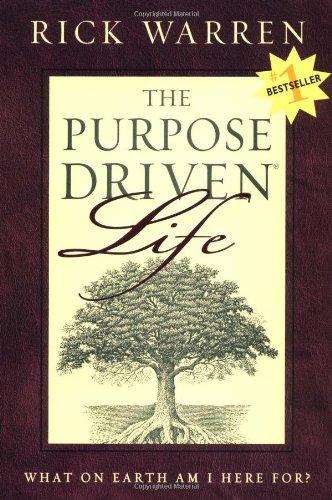
Consider purchasing a copy of my recently launched book, The Quotable Coach: Daily Nuggets of Practical Wisdom, and turn to the index, where you can select quotes in your area of greatest interest.

You can buy the ebook from Amazon:

http://amzn.to/1jboDX7

And the paperback from my CreateSpace eStore – use the discount code 42E47C9N to get 10% off:

https://www.createspace.com/4855547