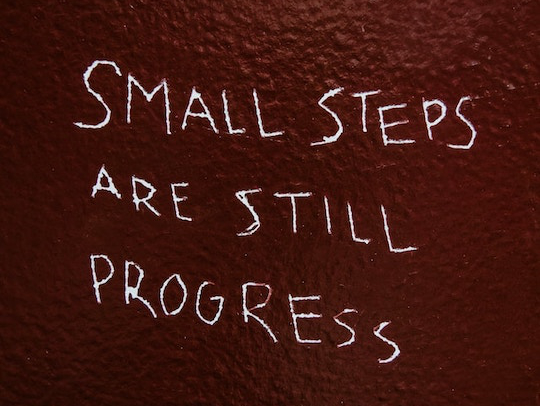
Complacency will not lead us where we want to go

Complacency will not lead us where we want to go. It is necessary to stretch to reach the upper shelves of life.

—Calm App Reflection

Image from Unsplash by Kelly Sikkema

Whether it’s their favorite toy, a snack, or a TV remote, placing items out of reach of our grandkids is no longer working so well. Our 22-month-old granddaughter and 5-year-old grandson have discovered all sorts of climbing strategies to reach the upper shelves mom and dad prefer to remain unexplored.

Our little ones are clearly stretching and reaching beyond previous limitations. Although we admire their initiative and creativity to reach new heights, we need to be ever more vigilant in our efforts to protect them from the downsides of gravity.

EXERCISE:

Where in your world are you currently stretching to reach the upper shelves of your life? Where have you become complacent in your world, accepting what is being offered within arm’s reach?
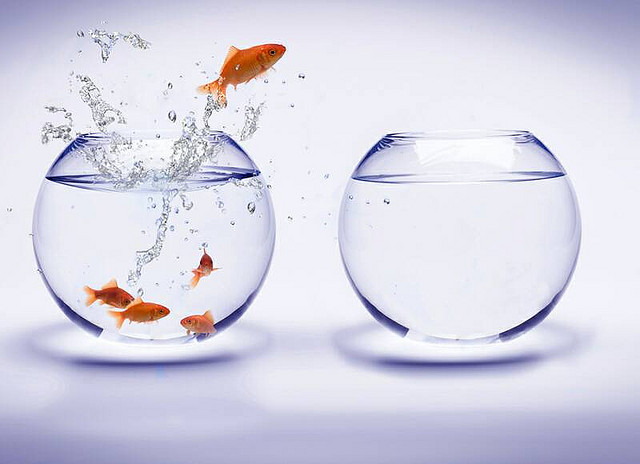
 

“What small step can you take today that will put you on the path toward something wonderful?”

“What small step can you take today that will put you on the path toward something wonderful?”

James Clear, Author of Atomic Habits

Image from Unsplash by Hayley Murray

Each morning I take a three mile walk with friends from my neighborhood. Our time together usually involves discussing current events, our lives, and our various interests.

We unconsciously take the same 8/10ths of a mile circuit walking in a counter-clockwise direction.

Although we sometime comment on the state of our landscaping and repairs being made by our neighbors, the path we take is unremarkable, with the same inclines and curves we never seem to notice.

The other day one of our fearless leaders dragged the rest of us outside our development to visit a local park which provided a nice change of pace to the path we usually take.

EXERCISE:

Where in your life are you going in circles and not noticing anything particularly wonderful?

In what ways can you step off this path to investigate aspect of your world previously unexplored?


“A rational person can find peace by cultivating indifference to things outside their control.”

“A rational person can find peace by cultivating indifference to things outside their control.”

Naval Ravikant, Indian-American entrepreneur and investor

Image from Unsplash by Maria Teneva

I’m not a big fan of the word indifference. When used to describe a person, it conveys someone cold and uncaring.  Few people would ever choose to be described this way.

Our current access to world events has all kinds of negative effects on our stress levels and sanity.

Examining which elements we control and those we don’t serves as a useful gatekeeper to dramatically reduce this onslaught.

EXERCISE:

Where would greater discernment and a healthy level of indifference help you create greater sanity and peace in your life?

Life begets life. Energy creates energy. It is by spending myself that I become rich.

“Life begets life. Energy creates energy. It is by spending myself that I become rich.”

Sarah Bernhardt, 20th Century French Actress

Image from Unsplash by The Tampa Bay Estuary Program

Today’s quote brings a lot to consider! Each sentence could easily be a post on its own. It’s the third sentence that captured my soulful interest today.

In economic terms, it is clear that when we spend our money we have less following our transactions.

The concept of spending oneself on matters of great significance is very different. Pouring ourselves into important matters and the people we love creates a richness money just can’t buy.

EXERCISE:

Which part of today’s quote sparks the greatest interest for you?

Please share your perspectives from your own rich experiences.

We aren’t stuck with our factory settings

We aren’t stuck with our factory settings.

—Calm App Reflection

Image from Unsplash by Mika Baumeister

What are your favorite digital distractions?

How much time do you spend on your computer, TV, or cell phone?

To what degree do you accept the factory settings installed on your devices? In what ways have you taken the time to customize the settings to your preferences?

Looking beyond technology, where else might there be “factory settings” within your world?

Consider all the programing installed without your knowledge throughout your personal world, including family dynamics and your schooling.

What about your work life including its culture, organizational rules and guidelines—not to mention the good old job description?

EXERCISE:

In what ways can you take a closer look at the factory settings established in your personal and professional communities?

What adjustments can you make to help you lead a more colorful and vibrant life?

Friday Review: Helping

Friday Review: Helping

How often do you offer help to others? How often do others help you? Here are a few related posts you may have missed.

“All kids need is a little help, a little hope, and someone who believes in them.”


“Don’t be smart, be helpful.”


“People who need help sometimes look a lot like people who don’t need help.”


“Why do we fall sir? So that we can learn to pick ourselves up.”

“Why do we fall sir? So that we can learn to pick ourselves up.”

—Alfred Pennyworth, to Batman

Image from Unsplash by Eugene Chystiakov

Falling and picking oneself up is essential to the human experience.

From the days of infancy and toddler-hood, the ups and down of our little ones are an excellent best example.

No parent or grandparent would ever suggest that crawling would be a sufficient long term way of getting around.

Encouraging our children to stand, walk, and run is at the heart of wanting them to succeed and thrive.

For some of us however, the process of falling down and getting up becomes too painful. “I’ll never do that again” creeps into our minds as the governor of our life engines.

EXERCISE:

What is your perspective on the process of falling and getting back up?

What valuable lessons and skills have you picked up in the process of rising again and again over the years?

There is greatness in doing something you hate for the sake of someone you love

“There is greatness in doing something you hate for the sake of someone you love.”

Shmuley Boteach, American Orthodox Jewish rabbi, author, and television host

Image from Unsplash by Bethany Beck

In my mind, there is perhaps no greater love than that of a parent for their children.

Consider everything a mom goes through including birth, sleepless nights, countless diaper changes, runny noses, potty training…. You get the idea.

Of course, fathers do their part, but moms are clearly the unsung heroes of the world.

Their influence in good times—and especially bad—have given all of us the enduring support to be who we are today.

EXERCISE:

In what ways can you and do you acknowledge the greatness of the moms of the world?

How can you also acknowledge others in your life who do things they hate because of their deep love for you and others?

Beauty does not linger, it only visits

“Beauty does not linger, it only visits. Yet beauty’s visitation affects us and invites us into its rhythm, it calls us to feel, think, and act beautifully in the world.”

John O’Donohue, 20th Century Irish poet, author, philosopher

Image from Unsplash by Avess

On a recent walk with friends, I pointed out what I considered a beautiful blue sky with wispy clouds. My friend Rich indicated that he had not initially noticed its beauty and said it also reminded him of the ocean rolling up on the shore.

How often do we miss the beauty around us? When we do see it, how long do we linger and allow its rhythm to carry us through our days?

EXERCISE:

How can you more fully experience the beauty in your world?

Consider noting these moments and point them out to others in your communities.

If this exercise proves to be of value, ask them to offer their experiences of beauty in return.