“Draw strength from others.”

“Draw strength from others.”

—Cheryl Strayed, Author of Tiny Beautiful Things
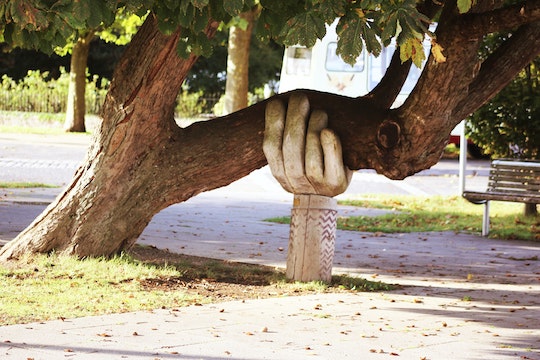
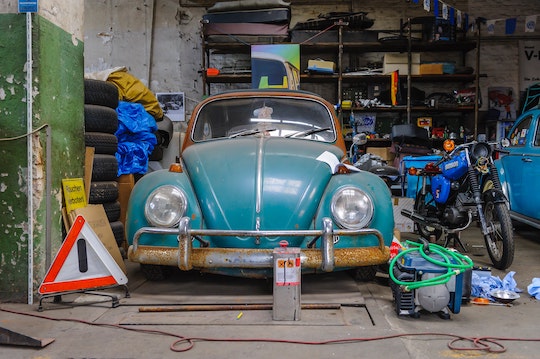
Image from Unsplash by Neil Thomas

To what degree do you consider yourself the rock in your family or community?

How often are you the one to come to the rescue or lend that helping hand in your personal and professional worlds?

About 20 years ago, I overextended myself through a rigorous workout, resulting in a significant case of sciatica. It caused severe back and leg pain, and I missed many days of work.

Beyond the physical pain, I took a very unfamiliar emotional ride, which included frustration, anger, and even a sense of worthlessness. My normal optimistic view on life was flipped, and I did a fair job of playing the “Why Me” victim card.

Surprisingly, letting others serve and support me through it was very difficult. Frequent thoughts of “That’s my job,” or “I’m supposed to do that,” ran through my head.

Eventually, someone must have turned on my gratitude switch, allowing me to more fully accept and embrace many acts of kindness and generosity from family and friends.

EXERCISE:

When in the past, or recently, have you been reluctant to seek the support of others?

How and in what ways may you more fully seek and draw on the strengths of others in your personal and professional communities?

Friday Review: Values

FRIDAY REVIEW: VALUES

What are the values that guide your life choices? Here are a few values-related posts you may have missed.


“Set your course by the stars, not by the light of every passing ship.”


“Keep out of the suction caused by those who drift backwards.”


“Values are critical guides for making decisions. When in doubt, they cut through the fog like a beacon in the night.”


“Trying to be happy by accumulating possessions is like trying to satisfy hunger by taping sandwiches all over your body.”

“Trying to be happy by accumulating possessions is like trying to satisfy hunger by taping sandwiches all over your body.”

George Carlin, late American Comedian

Image from Unsplash by Alexander Schimmeck

George Carlin’s comedy routine “Stuff” is a classic. If you haven’t seen it—or even if you have—give yourself a five-minute treat by clicking the link and watching.

Where do you and your family fit on the “Stuff Spectrum”—from essentialist to hoarder?

Take a walk around your home and do a quick inventory of just how many possessions you have, and how much space is needed to store them.

The “pursuit of more” appears to produce more pleasure in the wanting and initial receiving than any enduring joy provided by the longer-term having.

How many online purchases have you made in the past few months? How many of these items still put a smile on your face?

EXERCISE:

Where and in what ways could swapping out some extrinsic possessions for more intrinsically rewarding experiences satisfy your hunger for a more fulfilling life?

“Let others fill the blanks.”

“Let others fill the blanks.”

—Liz Wiseman, Author of Multipliers

Image from Unsplash by Ross Sneddon

There is at least one bright spot in our economy as a result of the pandemic having kept many of us home. Game sales of all types are rocketing!

What indoor, outdoor, high-tech, low-tech and even retro games from your youth have come off the shelf in your home?

For many families, the good old-fashioned jigsaw puzzle is making a comeback. Puzzle maker Ravensburger’s sales rose 370% in March!

Recall a time when you completed a puzzle with others, especially if those others were children. How did they act and react when you filled in the blank spaces compared to when they discovered the missing pieces on their own?

EXERCISE:

Where are you taking it upon yourself to fill in the blanks for others in your personal and professional communities?

Where would letting others fill in the blanks be the best strategy to take today?

“Perhaps we never really appreciate the here and now until it is challenged.”

“Perhaps we never really appreciate the here and now until it is challenged.”

—Anne Morrow Lindbergh, American Author and Aviator

How often do you count your blessings? The other evening, I found that I could not sleep, and trying harder wasn’t doing the trick.

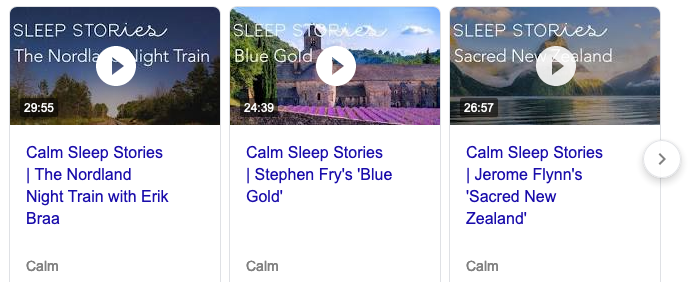
I remembered that my Calm Meditation App provides a wide variety of sleep stories to help when those zzz’s just won’t come.

While scrolling through the choices, I came upon a 30-minute gratitude story, read by Ann Acton. Her beautiful, calming voice and the guided journey she took me on transported me through memories and experiences I’ve had, and others accessible through her mindful and heartfelt imagery.

EXERCISE:

How can you more fully embrace and appreciate all the goodness and abundance of life?

How can and will this capacity help you live a much more richly rewarding life, regardless of the challenges that may face you?

Please listen to this snippet of the gratitude sleep story, and let me know what you think by hitting “reply” to this post.

“How will you put your mind and your time to good use?”

“How will you put your mind and your time to good use?”

—Author Unknown

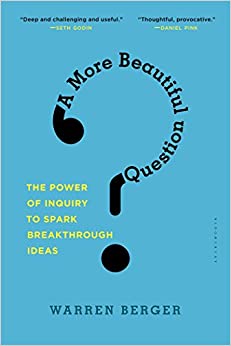
Image from Amazon.com

“Good Question!” is a fairly frequent response I receive from the people I coach.

It says, to me, that we have hit on an area where looking more carefully or digging deeper would prove useful or interesting.

Warren Berger’s book, A More Beautiful Question: the power of inquiry to spark breakthrough ideas is one of my favorites on this topic.

Breakthroughs in our mind and our use of time may be two useful places to start.

EXERCISE:

For the next week, be your own coach. Ask and answer questions like the one that is today’s quote. Consider exploring your answers with others in your personal and professional communities. Consider capturing this heavy lifting in a journal or note book.

Please reply to this post and let me know how you put your mind and your time to good use.

Friday Review: Curiosity

FRIDAY REVIEW: CURIOSITY

How curious are you about things beyond your immediate frame of reference? Here are a few curiosity-related posts you may have missed.


“Always keep your eyes open. Keep watching because whatever you see can inspire you.”


“A question is a magnet… it draws information to you.”


“Curiosity is the wick in the candle of learning.”


“Helping doesn’t always help.”

“Helping doesn’t always help.”

Anne Lamott, American novelist and non-fiction writer

Image from Unsplash by Wonderland

In his work, Meditations, Marcus Aurelius stated:

“Joy for human beings lies in proper human work and proper human work consists in: acts of kindness to other human beings…”

How have you been trying to help others in your various communities these past few months?

How have others accepted your acts of kindness and service?

How have your good intentions and efforts, on certain occasions, not helped or improved the situation?

It seems that despite our own best efforts to put forth what we perceive as our best human work, others in our world do not always see it as such and sometimes don’t seem to benefit.

At these times, your generous intentions and efforts can be replaced by far less pleasant emotions, leaving us clueless.

EXERCISE:

Consider the idea that you are speaking to a loved one or someone you care about in a new language that they do not understand or appreciate. What might be the benefit of listening for greater understanding and learning more about the language they are speaking?

“Don’t rush through moments to get to better ones.”

“Don’t rush through moments to get to better ones.”

—Author Unknown

Image from Unsplash by Dieter de Vroomen

Do you:

  • Drive faster than the speed limit?
  • Eat your meals on the run?
  • Speed read or scan e-mails?
  • Race from meeting to meeting?
  • Live for your weekend and dread Mondays?
  • Spend excessive time on social media?

Where else do you find yourself in a rush to get to some place else that appears better?

One possible reason may be due to the concept of “creative tension” described by Robert Fritz in his book, The Path of Least Resistance. He suggests that when we hold both a clear picture of current reality and a vision for a seemingly preferred future in mind, the vision will actually pull or attract us to it.

This concept can be highly useful to goal achievement and making progress toward what we desire. It can also leave us a bit empty and dissatisfied—always seeking something more or better.

EXERCISE:

Where and how would slowing down—mindfully and skillfully experiencing each moment—help you lead a happier and more satisfying life?

“You cannot teach a crab to walk straight.”

“You cannot teach a crab to walk straight.”

—Aristophanes, classic Athenian poet and playwright

Image from Unsplash by Chandler Cruttenden

Picture a crab scurrying across a beach, searching for food or a mate, or avoiding a predator.

With claws and legs of different sizes and functions, getting to their destination in a straight line is not the point for this creature—being a successful crustacean living from one day to the next is.

Perhaps our changing world has altered our own way of getting around. Many direct routes to our objectives are not open or have significant detours, causing us to adapt and adjust our course.

What can we learn from the crab? Perhaps if we took more lefts, rights, and zig-zags, would we not only survive, but thrive as we headed into the future?

EXERCISE:

Where in your personal or professional world is taking the straight path not working?

Where might a less direct path lead you to where you wish to be?