“Have patience. All things are difficult before they become easy.”

“Have patience. All things are difficult before they become easy.”

– Saadi, medieval Persian poet

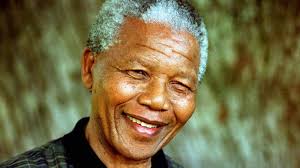
Photo by Tyler Milligan on Unsplash

A common characteristic of hard-driving “type A” people is impatience. Often, this quality leads to considerable success. It can, however, also often have a dark side.

I’m currently reading Quiet: The Power of Introverts in a World That Can’t Stop Talking by Susan Cain. There’s considerable evidence from her research that introverts often demonstrate greater patience and often greater mastery of tasks that require patience and persistence in practice.

Exercise:

In what areas of your personal and professional life would greater patience support greater success? Watch Cain’s “The Power of Introverts” TED talk or consider reading the book … if you have the patience.

“A bad habit never goes away by itself: it’s always an ‘undo-it-yourself’ project.”

“A bad habit never goes away by itself: it’s always an ‘undo-it-yourself’ project.”

– Abigail Van Buren, founder of the “Dear Abby” column

Many researchers would say that we are our habits. All we need to do is observe the over 95% failure rate of New Year’s resolutions to see how entrenched they are. Depending on your age, you have 20, 30, 40 or more years of practice engaging in these bad habits – no wonder they seem so resistant to change.

Exercise:

Begin your “undo-it-yourself “project by replacing a bad habit with a good one, using the following 4 steps:

Step 1: Select a bad habit you wish to break which is keeping you from a high-priority goal.
Step 2: Identify the new habit you desire by observing individuals who’ve achieved this goal.
Step 3: List the exact behaviors they consistently engage in and copy their effort as closely as possible for at least 3 weeks
Step 4: Enlist additional social and structural support to ensure your success.

Feel free to get back to me and let me know what you were able to achieve, by replying to this email.

“Every problem introduces a person to himself.”

“Every problem introduces a person to himself.”

– John McDonnell, coach

What are your current problems, challenges, or the places in your life where you are stopped in your tracks? What is your current situation that has you see these issues as problems? If some hypothetical super-person with capabilities and capacities beyond your own was faced with a similar situation, would these issues be a problem for them?

Exercise:

Consider your current problems as an opportunity to become more aware and clear about your own limiting beliefs, perspectives and perhaps capabilities.

Consider ways to expand your capabilities in your current view of yourself as a super-person who easily tackles such matters.

“Success in life comes not from holding a good hand but in playing a poor hand well.”

“Success in life comes not from holding a good hand but in playing a poor hand well.”

– Denis Waitley, motivational speaker and writer

Have you ever watched the World Series of Poker on television – you know, where the winners walk away with millions? If you have, a notable thing about these tournaments is that the viewer actually gets to see all the cards of all the players.

Rarely does the winner always get the very best cards. Almost always, the winner is the person who makes the best of the cards they are dealt.

Exercise:

If your life was a game of poker, where your five cards included such areas as work, family, health, faith and community, how could you make the most of these to always have a winning hand?

“The hallmark of excellence, the test of greatness, is consistency.”

“The hallmark of excellence, the test of greatness, is consistency.”

– Jim Tressel, football coach, author and educator

The pursuit of excellence is no accident. Greatness has never been achieved by anyone overnight. Explore the lives of people who demonstrate brilliance in their fields, and what you will find is people who passionately and committedly make consistent efforts towards their goals.

Every great journey begins with the first step, but we only arrive at our destinations by taking the next, and the next, and the next … you get the idea.

Exercise:

Read an autobiography of someone you admire and see what it took for them to succeed. Google your favorite business leader, athlete or performer to discover how they got where they are today.

Where could you be even more consistent in your effort to more quickly and completely realize your priority goals?

The Wise Man Questions

“The wise man questions himself; the fool, others.”

– Henri Arnold, cartoonist

question-mark

One of the greatest tools in a coach’s toolbox is the question. Answers to open-ended questions—those that begin with who, what, where, when, why and how—provide a level of depth and significance from well below the surface, often into new territories of awareness and insight.

I disagree with Henri Arnold’s statement that fools ask such questions of others: after all, I’d be calling all coaches fools! I do however believe that when coaches also ask these same questions of themselves, they often enhance their own development considerably. Arnold might say that a coach without their own internal or external coach is a fool.

Exercise:

Pay attention to the types of questions you and your colleagues, friends, and family members ask one another during the day. Which ones enhance your life journey, and propel you toward wisdom?

“Our job is the excuse through which we get to love people.”

“Our job is the excuse through which we get to love people.”

– Panache Desai, author of You are Enough

What percent of your life do you spend engaged in work? For the sake of today’s quote, I’m going to define work as our vocation, or the way we earn a living.

For the person working Monday through Friday, a minimum of 8 hours a day (who does that these days?) work represents approximately one fourth of our life. If the song lyrics from the Beatles tune are true, and all you need is love, or the old song love makes the world go round, then perhaps Desai is really on to something.

Exercise:

How can you view your daily work efforts as an act of love, contribution and generosity, instead of something to get through on the way to your weekend?

Don’t stumble over something behind you

“Don’t stumble over something behind you.”

– Seneca, Roman Stoic philosopher

Where do you live? I don’t mean your country,  city, or state. Ultimately, we all live in our thoughts, regardless of our physical location.

With this in mind, how often do your thoughts go to past events and experiences that were negative and upsetting? As humans, we have the ability to instantly travel back in time, to revisit and yes, stumble over these same events along with all their limiting feelings.

Exercise:

Imagine that you are born with a  factory-installed time machine with three settings: past, present and future. How can you, through greater self-awareness and intentionality, limit your negative journeys backwards to maximize your experiencing of the present?  Perhaps you could venture forward from time to time into the delightful possibilities of the future!

“People are anxious to improve their circumstances, but they are unwilling to improve themselves. They therefore remain bound.”

“People are anxious to improve their circumstances, but they are unwilling to improve themselves. They therefore remain bound.”

– James Allen, author and philosopher

Do you play the lottery? Are you a wishful thinker? Would you like many of your life’s circumstances to change for the better? Do you believe in luck? As a highly optimistic person, I tend to live on the sunny side of life, where I not only hope for the best but work quite diligently to create my own luck.

Exercise:

Consider picking up the book Outliers: The Story of Success by Malcolm Gladwell, to explore many surprising insights into the world of success and how the hard work of improving ourselves is a fundamental key to extraordinary living.

“You’re more likely to act yourself into feeling than feel yourself into action.”

“You’re more likely to act yourself into feeling than feel yourself into action.”

– Dr. Jerome Bruner, Harvard Psychologist

Do you remember being a child, when your own parents asked you to do something a bit unpleasant? You know, take out the trash, clean your room, do your homework… If you’re like many people, you probably said, “I don’t feel like it.”

Today, we experience numerous areas of our lives where the same words prevent us from eating healthy foods, getting proper exercise, and yes, doing those pesky chores.

As a coach for over 20 years, I’ve observed that people of action – deliberate, habitual, and massive action – seem to consistently feel better and have more energy than those who do their best to conserve their efforts.

Exercise:

For the next week, create multiple post-it notes with the famous Nike phrase “Just do it” and see if you catch the positive, energizing momentum available in an action-packed life.