“Perspective is worth 80 IQ points.”

“Perspective is worth 80 IQ points.”

—Alan Kay, American computer scientist
What would be the value of adding 80 IQ points in your professional or personal life?

What would be the value of being more focused and creative in your thinking?

What benefits would occur if you could significantly improve your communication skills and decision making?

If you would like to progress in these areas, challenging our habitual ways of thinking, which often limits us, is a good place to begin. For new worlds to emerge, perspective-shifting exercises and tools can open up far more possibilities and progress.

EXERCISE:

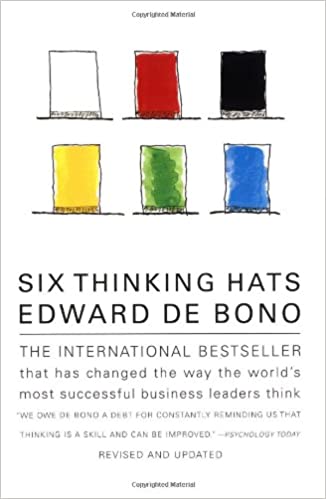
One of my favorite perception-shifting resources is the book, Six Thinking Hats by Edward DeBono. If you reply to this post, I will happily provide you with a one-page document to help you add a few more IQ points.


“Your fierce spirit and efforts will, in time, transform those boulders in your path into pebbles in the sand.”

“Your fierce spirit and efforts will, in time, transform those boulders in your path into pebbles in the sand.”

—Peg Streep, American author

Image from Unsplash by John Salzarulo

A respected fellow blogger, Rohan Ravi, who writes A Learning a Day, recently wrote a short commentary on the subject of values and virtues. His perspective was that although many of us espouse our values and heartfelt beliefs, quite often our actions do not fulfill these standards and become actual virtues.

EXERCISE:

Where is it most important for you to combine your fierce spirit with courageous actions in order to transform the boulders in your path into pebbles?

Who are the friends, colleagues, mentors, family members, or coaches that can support you in these efforts?

FRIDAY REVIEW: DETERMINATION

FRIDAY REVIEW: DETERMINATION

What is the basis for your determination in life? Here are a few determination-related posts you may have missed.


“To appreciate the beauty of a snowflake it is necessary to stand out in the cold.”


“The scariest moment is always just before you start.”


“A lot can happen in a year.”


“I’d rather have roses on my table than diamonds on my neck.”

“I’d rather have roses on my table than diamonds on my neck.”

—Emma Goldman, 20th Century Russian-American political activist

Image from Unsplash by César Abner Martínez Aguilar

Did you know that there are planets in our universe that are made of diamond?

These rocky worlds are composed primarily of carbon and the atmospheric pressure is so great, diamonds result.

Although fascinating – and one might consider a future occupation as a space miner – the more prominent focus of planetary scientists and astronomers is the search for life.

For this group, the inspirational possibility and beauty of life takes on far greater importance than any inanimate object, no matter how much it may sparkle.

EXERCISE:

What are the roses in your world? How can and will you more fully appreciate their value and beauty, to live an even more richly rewarding life?

“Where the spirit does not work with the hand there is no art.”

“Where the spirit does not work with the hand there is no art.”

—Leonardo Da Vinci

Image from Unsplash by Gary Tresize

One of my clients is a master fisherman. Last year, he kindly took me out on his boat to share his joy and the artistry of his passion. Over the course of our six-hour adventure, he coached me to catch a single fish – meanwhile, through his mastery of the skill, he brought in many.

Think of the times in your life you experienced a sense of flow, or a feeling of complete engagement.

Examine your personal and professional worlds for examples of times in which there is great satisfaction in the doing, and significant anticipation of upcoming activities.

EXERCISE:

Where and in what ways can you more fully engage your spirit in your personal and professional pursuits? How might this bring you a more beautiful and artistic life?

“He who knows best knows how little he knows.”

“He who knows best knows how little he knows.”

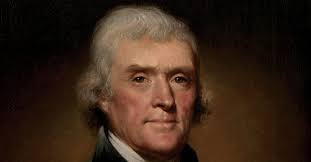
—Thomas Jefferson, Founding Father & 3rd President of the United States

Thomas Jefferson

Who are the “know it alls” in your personal and professional communities? Who are those who insist on showing everyone that they are the human version of Google?

How do you feel when you are around them? To what degree might you be on someone else’s “know it all” list?

Being interesting versus interested can only take us so far, and it almost always backfires. Wanting to be understood versus seeking to understand with more of a beginner’s mind seems like a wiser path to take.

EXERCISE:

Click on this link to explore more of Jefferson’s wisdom and learn more about his brilliance.

“Time is how you spend your love.”

“Time is how you spend your love.”

—Zadie Adeline Smith, Creative Writing Professor, New York University

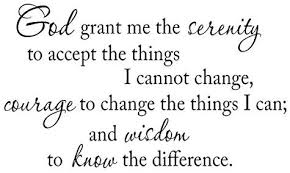
The Serenity Prayer

So much has changed in our personal and professional lives over the past months.

How we spend our time has dramatically changed, and the normal routines and momentum we previously expected have been thwarted.

How are these events impacting you and those you love?

What aspects of your world can you control and influence? Which can you not?

Revisiting the Serenity Prayer might prove useful as a mindful exercise. How you are spending your time with your head, hand, and heart?

Despite the hard realities presented by this global crisis, I am delighted to see the outpouring of love within and between communities at all levels around the world.

EXERCISE:

Where and in what ways can and will you spend your life and time today to make a difference in your communities?

“Common sense is the collection of prejudices acquired by age eighteen.”

“Common sense is the collection of prejudices acquired by age eighteen.”

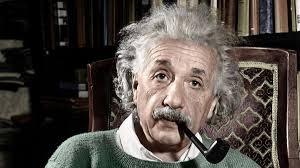
—Albert Einstein

Image of Albert Einstein from Public Domain

When we think of great minds, few people top the list more often than Albert Einstein.

If you investigate his life through a wide variety of sources, you will see that he was fond of what he called “thought experiments.”

I guess you could say that he thought a lot about thinking!

What about your own mind?

How much do you think about your own thoughts and how they influence your view of others and life in general?

What prejudices, biases, mental models, and paradigms have you ingrained that support and in many cases limit what’s possible for you?

EXERCISE:

How can and will you conduct some of your own expanded thought experiments to realize a less common and more extraordinary life?

“Hope is like the sun, which, as we journey toward it, casts the shadow of our burden behind us.”

“Hope is like the sun, which, as we journey toward it, casts the shadow of our burden behind us.”

—Samuel Smiles, 19th Century Scottish government reformer

Image from Unsplash by Martino Pietropoli

Given our turbulent times, it is clearer than ever that hope is not a good strategy to right our world.

Wishful thinking and turning a blind eye to the objective truth has delayed the full mobilization of our world to come together as one.

Hope is, however, very powerful in that it can and will inspire our individual and collective efforts to cast the shadows of our challenges behind us.

EXERCISE:

How and in what ways can and will you mobilize your most hopeful energies and committed actions as we journey together to better our world?