“Striving for success without hard work is like trying to harvest where you haven’t planted.”

“Striving for success without hard work is like trying to harvest where you haven’t planted.”

– David Bly, American politician and member of the House of Representatives

Photo from Flickr by Tim Buss

Photo from Flickr by Tim Buss

The world is filled with “get rich quick” schemes, like the miracle diet that will let you lose weight effortlessly, and many other supposedly low-effort, high-result strategies. The problem with just about all of them is that they simply do not work.

I really like the word “striving.” It causes me to think of pursuing a noble and passionate cause when I’m “all in” and won’t stop until the goal is reached.

For me, though, it is not simply the goal that is the source of this striving. My passion, inspiration, and fundamental purpose for being mobilized into action are also essential.

Exercise:

What are the important goals and hoped-for harvests in your professional and personal life that inspire you to strive and do the hard and challenging work required of you today?

 

“Out of your vulnerabilities will come your strength.”

“Out of your vulnerabilities will come your strength.”

-Sigmund Freud, Austrian neurologist and founder of psychoanalysis

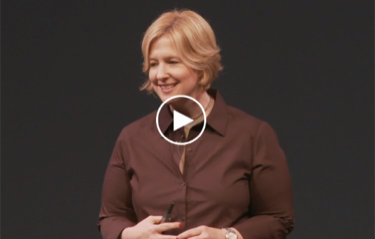
Brené Brown, from her TED talk (see link below).

Brené Brown, from her TED talk (see link below).

In recent years, the subject of “vulnerability” has received a great deal of media coverage due to the work of authors such as Brené Brown.

In two of her recent books, The Gifts of Imperfection and Daring Greatly, which are based on considerable research, she clearly debunks the idea that vulnerability is weakness and indicates that it is far more correlated with courage and strength, as Freud suggests.

Exercise:

Where would being vulnerable in either your professional or personal life demonstrate the strength of your commitment to something of great importance to you?

Consider watching Brené Brown’s TED talk, The Power of Vulnerability

“The best way to succeed in this world is to act on the advice you give to others.”

“The best way to succeed in this world is to act on the advice you give to others.”

– Author Unknown

Photo from Flickr by Paleontour

Photo from Flickr by Paleontour

The quote above has many brother and sister quotes. Do either of the following sound familiar?

•  Practice what you preach
•  Walk your talk

Imagine your words of wisdom and advice are like boomerangs. When you throw them toward others, with the intention to help and serve, they will always return to you, so you can apply their lessons to yourself.

Exercise:

Pay particular attention to the suggestions and guidance you offer others today, and see how impeccably you follow your own advice and counsel.

Feel free to share any similar brother or sister quotes to the ones above by replying to this message.


Never Quit

“Age wrinkles the body. Quitting wrinkles the soul.”

—Douglas MacArthur, American five-star General and Field Marshal

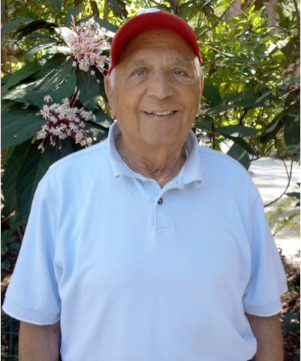
My Dad, Marvin Demp

My Dad, Marvin Demp

I recently spent some time with my extended family in the Philadelphia area, due to the passing of my brother-in-law Arthur. One benefit of this sad time was the gathering of everyone to celebrate his remarkable life and to reconnect with one another.

During this time we visited with family from the age of one  – little Noah –  to my dad Marvin, age eighty-eight. Some of the discussions we had related to the changing phases in all of our lives, including a few wrinkles, an extra pound or two, and a little more grey hair.

I was delighted to see everyone still fully engaged in life — not a wrinkled soul in the bunch!

Exercise:

How can you stay fully engaged in your life, avoid wrinkles of your soul, and remain forever young – no matter what your age?

“How wonderful it is that nobody need wait a single moment before starting to improve the world.”

“How wonderful it is that nobody need wait a single moment before starting to improve the world.” – Anne Frank, diarist and Holocaust victim

Photo from Flickr by Symphony of Love

If you happen to watch the news these days, it sure looks like the world could use some improving. You might ask yourself, “Who am I to tackle such a matter? I am only one person in the world and its challenges seem infinite.”

One strategy that comes to mind is related to that old saying, “How do you eat an elephant?” If you’ve never heard this before, the answer is, “One bite at a time.”

Exercise:

Examine the areas of your own life, including your health, your family, your local community, your workplace, and others that come to mind where you can seize this moment to take a small or big bite and improve your piece of the world.

If we all did this together each day, imagine how much the whole world would improve.

“There is a great difference between worry and concern. A worried person sees a problem and a concerned person solves a problem.”

“There is a great difference between worry and concern. A worried person sees a problem and a concerned person solves a problem.”

—Harold Stephens, American Author

595

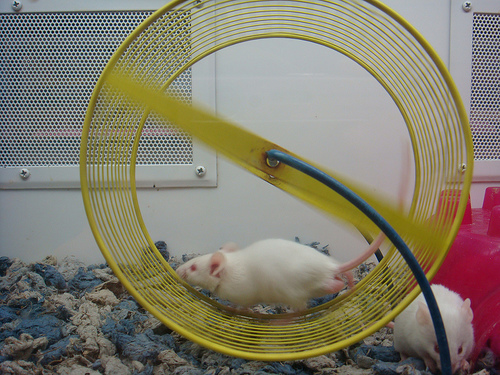
Image from Flickr by Debs

Have you ever watched a mouse racing around one of those circular wheels, never getting anywhere? They run and run and always end up in the same place. Alternatively, think about running on a treadmill. We get all worked up and sweaty, but find ourselves in the same place.

Worry is like that. In this case, the treadmills are in our minds. Concern, on the other hand, seems to have more of a mobilizing quality that takes us out of our heads and off those treadmills so we can set out on a journey to an eventual solution.

Exercise:

Where would a shift from worry to concern mobilize your thoughts and actions toward a successful solution in some important professional or personal issue today?


“The man on top of the mountain didn’t fall there.”

“The man on top of the mountain didn’t fall there.”

– Vince Lombardi, American football coach

Image of a man standing on a mountain top

Image from Flickr by Matty Bishwam

When I think of mountain climbers, I think of people pursuing adventures and challenging themselves to achieve a new level of greatness or accomplishment.

Take a look at your own progress towards the summits of your professional and personal goals.

Exercise:

Are you getting where you want to go? Have your mountains recently been more like molehills?

What planning is required and what people or gear will you need to achieve the satisfaction of reaching the top of your most important life summits?

“You don’t live in a world all alone. Your brothers are here too.”

“You don’t live in a world all alone. Your brothers are here too.”

– Albert Schweitzer, German theologian and philosopher

Barry-Marvin-Rachel

(Me, my dad Marvin, and my daughter Rachel.)

My family and I recently had a vacation in the Pocono Mountains in Pennsylvania. This year, some additional friends came along to make it extra special. Of particular note were some of the many things we accomplished together to truly make our time a community affair.

In additional to numerous routine tasks, such as the preparation of meals and some cleaning and organizing projects, we supported my father Marvin (who is 88 today) on a three hour, six mile canoe ride down the Delaware river, and even took him to Camelbeach Waterpark where he experienced the adventure of some pretty thrilling water slides.

Exercise:

Where are you acting alone in the world and thus not achieving your fullest potential?

Where would supporting or working with others have you achieve even more remarkable things in your professional or personal life?

no matter where you go, there you are

“And remember, no matter where you go, there you are.”

– Confucius, Chinese philosopher

586

Image from Flickr by docoverachiever

As a positive, optimistic, and upbeat person most of the time, it troubles me to see a lot of negativity in the world. Two related negative traits I observe often are blaming and victimization. When people demonstrate these qualities, the focus is always on others as the cause of a problem, and themselves as innocent victims.

Confucius is suggesting, with this quote, that we are always present in these situations, and if you dig a bit deeper, a part of this current reality puzzle.

Exercise:

How can you take a larger percentage of responsibility for the events and circumstances that make up your world? Where would adjusting your perspective, attitude, or point of view provide a shift in the way that people and events affect you?

schedule your priorities

“The key is not to prioritize what’s on your schedule but to schedule your priorities.”

– Stephen Covey, American self-help author

Image from Flickr by photosteve101.

Image from Flickr by photosteve101.

Stephen Covey is one of the best known pioneers in the field of personal development. His Seven Habits of Highly Effective People is one of the most popular personal growth programs of all time. Four of his habits directly deal with time management, efficiency, and effectiveness.

Please explore for yourself how the following habits relate to the issue of prioritization:

Habit 1: Be Proactive:  Suggests we need to take initiative and responsibility for the choices we make and the order in which we make them.

Habit 2: Begin with the End in Mind: Encourages us to prioritize and schedule what’s important and not simply schedule and prioritize what’s urgent.

Habit 3: Put First Things First: Pretty much says it all!!

Habit 7: Sharpen the Saw: Encourages us to make ourselves a key priority that will allow all other priorities to benefit.

Exercise:

Evaluate your calendar and any to-do lists you may be using to manage your day. How can you schedule your most important priorities and do less of what’s “on your schedule”?

You’re welcome to download a free copy of my time management workbook at:

www.dempcoaching.com/download-your-free-workbooks

Enter the password barrydemp (all lower case) to access the page.

Of course, I also recommend you read or reread The Seven Habits of Highly Effective People. If you want a quick refresher, you can find a brief explanation of each habit here.