Be There for Others

“Be there for others, but never leave yourself behind.”

-Dodinsky, New York Times bestselling author

QC #925

Some of the most frequent coaching assignments I engage in are focused on leadership development. The volume of resources on this subject is staggering, which points to the universal desire and need for this very important skill.

Much has been written in recent years about servant leadership, in which a high priority is placed on serving key stakeholders such as customers and of course, employees. Sometimes so much attention is placed on others that the leader can overlook or completely miss their own needs. Yet, they must attend to themselves if they are to serve others at the highest level.

EXERCISE:

In what way do you need to satisfy your own needs so that you can serve others in your personal and professionals lives?

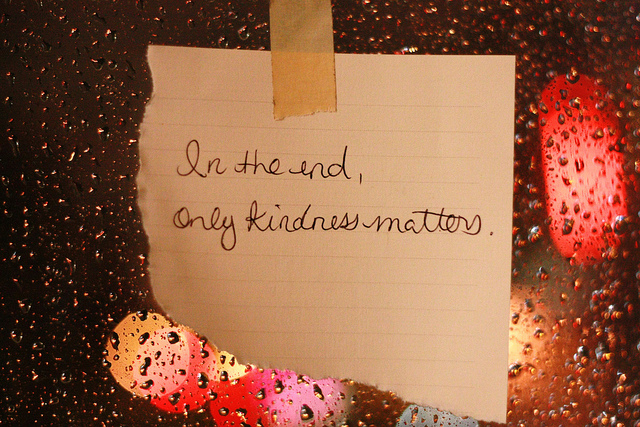
What You Want Most

“Don’t give up what you want the most for what you want right now.”

-attributed to Peter Rossomando, Head Football Coach at CCSU

Image from wtvr.com

Image from wtvr.com

A characteristic shared by many of the most successful people is their ability to delay gratification in order to achieve their most highly desired objectives.

In the late 60s/early 70s Stanford University psychologist Walter Mischel did a study in which children ages four to six were given the choice between one marshmallow provided immediately, or two marshmallows if they waited for 15 minutes. In follow-up studies, the researchers found that those who were able to wait longer for the preferred rewards tended to have better life outcomes.

EXERCISE:

What disciplined actions, behaviors, and habits must you develop in order to resist short-term wants so that you can realize your most cherished and valued priorities?

Everyone you meet

“Everyone you meet is fighting a battle you know nothing about. Be kind. Always.”

-Wendy Mass, Author

Image from flickr by Jennifer

Image from flickr by Jennifer

One of the great honors of being a coach is the fact that people open up far more completely than in your typical daily discussions. It is not uncommon for clients to share some of their most difficult and challenging issues, because they realize a greater likelihood of progress is possible when they acknowledge their difficulties.

My experience of over 20 years and well over 1,000 clients points to the fact that virtually everyone has battles and burdens.

EXERCISE:

How would bringing greater kindness and compassion to your interactions today bring greater strength and capacities to those around you, who are fighting battles of which you are not aware?

Be a Zapper

“Be a Zapper, not a Sapper!”

—William Byham, Ph.D.

QC #922

Over my many years of coaching, I’ve found that the more simple an idea or behavior is, the more likely it is to be understood, applied, and habituated. When it comes to relationship development and creating empowering successful organizational cultures, today’s quote packs a ton of value in only six words.

The act of Zapping involves interaction with others in an energizing and positive manner. Examples are:

  • Being genuinely interested in others
  • Listening carefully and completely to what others are saying
  • Being open and receptive to the point of view of others
  • Looking for value in what others say and do
  • Saying Please and Thank You
  • Acknowledging the contribution of others

The act of Sapping involves the opposite behavior, in which others experience draining and energy-reducing interactions. Examples are:

  • Being judgmental and critical of others’ ideas and behaviors
  • Not listening to others, or ignoring them
  • Taking credit for others ideas or achievements
  • Interrupting, or not allowing others to express their views
  • Gossiping
  • Betrayal of confidences
  • Lying or being unethical

EXERCISE:

Create a Zapping/Sapping log book in which you can capture these daily energy boosters or drainers.

Request feedback from those around you. Work to increase your Zapping, and reduce your Sapping.

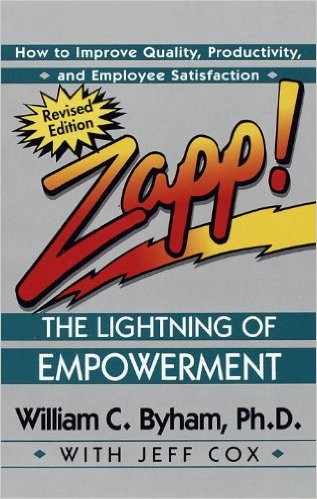
Consider picking up a copy of Zapp! The Lightning of Empowerment by William Byham, and consider sharing this resource with others in your communities.

Seminar in a Sentence

“A quote can be a seminar in a sentence.”

-Author Unknown

QC #921

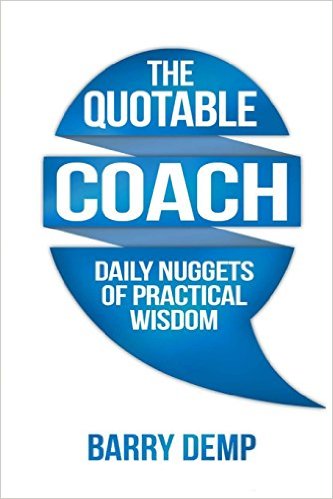
About a year ago, I published my first book, based on the Quotable Coach series. It was subtitled “daily nuggets of practical wisdom,” based on the votes and recommendations of our loyal readers.

In our time-crunched lives, the idea of getting a seminar in a sentence has a great deal of appeal to many. I am pleased to report that we now receive over 6,000 monthly hits on the Quotable Coach website, and have well over 1,500 daily subscribers worldwide, because of kind readers like you.

EXERCISE:

Please reply to this post with your favorite “seminar in a sentence,” and feel free to share its value and importance in your life.

Consider purchasing a copy of The Quotable Coach book for yourself or as a holiday gift to others. Thank You!

Look for Rainbows

“When it rains, look for rainbows. When it’s dark, look for stars.”

-Author Unknown

photo from Flickr by Matthew Paulson

photo from Flickr by Matthew Paulson

I often recommend Six Thinking Hats by Edward Debono to my coaching clients. This book can help them become more effective and successful in their personal and professional communities.

Based on today’s quote, the rain and the dark would represent the wearing of a black hat, which points to the negative, and why things are not working.

Wearing a yellow hat, which is represented by the rainbows and stars, points to the positive, optimistic, and constructive perspective relative to one’s circumstances.

Looking for and perceiving the good and workable possibilities in things is without question a skill that will bring you far greater results and life satisfaction than walking around in the dark, all wet.

EXERCISE:

Share this post with one person in your professional and personal worlds. Ask them for feedback regarding how often — or not — you look for the beauty of the rainbows and stars above. If they are open to your coaching, you may offer your view of which hats they wear, as well.

Don’t stray from yourself

“Don’t ever stray away from yourself to get closer to someone else.”

—Author Unknown

Image from www.scribendi.com

Image from www.scribendi.com

Imagine you are shopping for a new pair of shoes, a suit, or an outfit. In the process, you consider color, style, price, and of course, the fit of each item. When all the factors are optimized, we usually make the purchase. If the factors don’t fit, we usually save our money and keep looking.

What does it mean to stray away from yourself? Who are the people that best fit with your most authentic self? How often do you experience relationships with others that, on a gut level, seem to miss that genuine connection?

EXERCISE:

Where, currently or in the past, have you strayed from your values, beliefs, and priorities to get closer to others, even when your gut raises a red flag?

How can you use the same values, beliefs, and priorities to attract and engage the people who are the best “fit” in your personal and professional lives?

Raise Your Words

“Raise your words not your voice. It is rain that grows flowers not thunder.”

-Rumi, 13th-century Persian poet, theologian, and Sufi mystic

Image from www.stuckindc.com

Image from www.stuckindc.com

A fundamental conversation I have with each new coaching client involves the qualities and characteristics of effective leaders.

The characteristics describing effective leaders include: visionary, passionate, inspiring, empowering, service-oriented, having integrity, and being approachable. The words these leaders use to speak about their views of a better future are like the rain to a flower. They help people and organizations grow.

Alternatively, we have all seen the “Thundering Taskmaster” types who repress and suppress those around them and often create environments of fear, intimidation, and retribution.

EXERCISE:

What can you do to be the kind of leader that attracts followers by raising your words rather than your voice?

A Little Help

“I get by with a little help from my friends.”

—Lennon & McCartney, co-founders of The Beatles

image from crwi.wordpress.com

image from crwi.wordpress.com

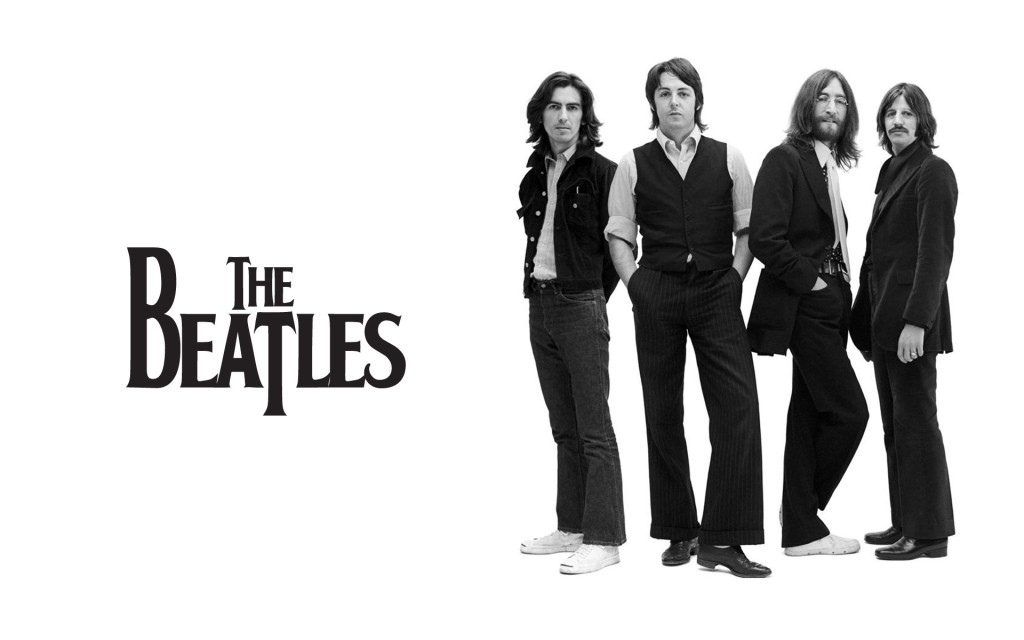
About a month ago, my wife Wendy and I had an opportunity to attend a Beatles tribute concert. As members of the Baby Boom Generation, it definitely took us on a trip down memory lane.

Of particular note were some of the quote-worthy lyrics by the Beatles, including today’s message. In a way, I think they were actually understating the extraordinary value provided by our most cherished and genuine friends.

EXERCISE:

How can you do far more than simply “get by” with a little help from your friends? In what ways can you return this gesture in kind?

Threshold of your Mind

“The teacher who is indeed wise does not bid you to enter the house of his wisdom, but rather, leads you to the threshold of your mind.”

-Kahlil Gibran, Lebanese-American artist, poet, and writer

image from itu.edu

image from itu.edu

Take a moment to get into an imaginary time machine and go back to your youth.

Specifically, I’d like you to visit your grammar school, middle school, high school, college, and if you had them, post-graduate educational experiences.

As you explore each of these periods in your life, take note of the teachers who have made the most memorable and lasting impact on your life. How many of them challenged your thinking and encouraged greater personal inquiry, rather than simply pouring their reservoir of knowledge into you?

EXERCISE:

Who are the current teachers, mentors, and coaches that lead you to expand the threshold of your mind? How can you be such a resource for others in your personal and professional communities?