“Excelling at any job is…”

“Excelling at any job is about doing the things you weren’t asked to do.”

—Mary Egan – founder of Gathering Table and Former Senior VP at Starbucks

Photo from www.soccer-daily.net

Photo from www.soccer-daily.net

What does it take these days to be extraordinary, exceptional, and remarkable? Notice how often you require events in your personal or professional world to meet those definitions in order to gain even a few moments of your valuable attention.

I recently saw a film titled “Dope,” which involved an ambitious, intelligent, and creative main character living in an undesirable Los Angeles neighborhood. He was pursuing his dream of attending Harvard, where straight “A’s” and top SAT/ACT scores are the bare minimum to even be considered.

The audience was taken on an amusing romp in which the character clearly demonstrated his capacity, creativity, and courage to do what was extraordinary, exceptional, and remarkable, and to excel and stand out.

EXERCISE:

How can you and the organization with which you associate foster an environment where people do the things they were not asked to do, to explore new levels of excellence?


“It is better to prevent than to cure.”

“It is better to prevent than to cure.”

—Peruvian Proverb

Photo from Flickr by Phossil

Photo from Flickr by Phossil

Many years ago, there was a TV commercial for Fram oil filters, using the marketing slogan, “you can pay me now, or pay me later.” The premise of this campaign was to garner the support of auto mechanics. The mechanics, in turn, would suggest that you could do one of two things:

Invest a small sum in protecting your car’s engine with a new Fram oil filter right now, or pay for an expensive engine repair or replacement down the road.

EXERCISE:

Where would an ounce of prevention be worth more than a pound of cure in your professional or personal life? What actions will you take today to invest a little, for far greater value or savings in the future?

“People are like tea bags…”

“People are like tea bags. You find out how strong they are when you put them in hot water.”

—Eleanor Roosevelt, former First Lady of the United States of America

Photo from Flickr by Eric Jusino

Photo from Flickr by Eric Jusino

Other than water, tea is the most popular drink in the world—so popular that its consumption is equal to that of coffee, soft drinks, and alcohol, combined!

Most of us have experienced pouring a cup of hot water over a bag or two, and watching it release its flavor within a few minutes. If you are a bit impatient, you may have even tried dunking the tea bag up and down to release its flavor even faster.

EXERCISE:

Consider the challenges, obstacles, and barriers you are facing today in either your personal or professional life. See them as hot water that brings out your greatest strengths, and your capacity for personal excellence.

How will you share your cup of life tea with others? How might you offer a little “hot water” to others, to help them discover their own inner strength?

“Figure out what it is…”

“Figure out what it is in life you don’t do well, and then don’t do it.”

—Doug Copeland, former president and publisher of the Triad Business Journal

QC #820

As I observe individuals and organizations pursuing success in our increasingly dynamic world, I see a great deal of frustration and stress.

Our collective drive, intelligence, and creativity has never been greater, yet it still feels as if something is missing.

Our efforts to have it all, do it all, and be it all seem possible when we look to the media.  In the real world, this formula for the perfect balance is elusive, if not improbable.

Navigating today’s world requires more filters and focus, to design our own imbalanced yet more workable, satisfying, and fulfilling lives.

EXERCISE:

Take a personal inventory of all the things you don’t like doing or that you don’t do well. Stop doing them as soon as possible. This should make more room in your world to focus on your strengths, so you can do the thing you are good at and love to do.

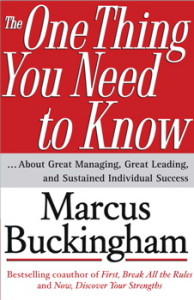
Consider reading Marcus Buckingham’s “The One Thing You Need to Know” for more insights into great leading, great managing, and sustained individual success.

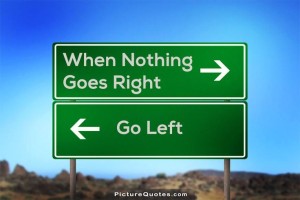
“When nothing goes right, go left.”

“When nothing goes right, go left.”

—Author Unknown

Image from www.picturequotes.com

Image from www.picturequotes.com

Not long ago, I attended two separate conferences with almost 500 coaches from around the world. One common quality among many, if not most coaches, is a positive attitude and the ability to influence their world for the better.

Common to many coaching sessions are situations where the client’s professional and/or personal worlds are off track, or headed that way. Many times a shift of perspective or a view through a more useful lens is all it takes to make things right again. Other times we must choose a more dramatic course of action by going outside our usual “go to” strategies.

EXERCISE:

Select a single area in your professional or personal life that is not going right at this time. Consider some alternative, “left turn” strategies or actions that you can—and will—take to set things right.

Consider posting one of my favorite quotes in a place where you will see it frequently, to remind you of this concept:

“When patterns are broken, new worlds will emerge.” (Tuli Kupferberg)

“Never judge a book by its movie.”

“Never judge a book by its movie.”

—Don DeLillo, American novelist

image from icezen.com

image from icezen.com

Reading a book takes effort. Watching a movie, not so much. More often than not, many if not most movies fall short of their books.

Tens or hundreds of millions of dollars are invested in movies based on books because the characters and stories amaze readers. It is in these stories and characters that our visions of these works of art are envisioned and portrayed by producers and directors. Unfortunately, even with brilliant actors and special effects, the images on screen rarely capture what our own creativity and imagination can create from the words of a masterful storyteller.

Books allow us to pace ourselves and literally savor each bit of dialogue or image painted, if we choose to do the work the writer intended. Phrases like “I couldn’t put it down,” or “page turner” are familiar to all of us who have been fortunate to get our hands on great books.

These works also tend to have a lasting impact in that their messages and images penetrate deeply, due to the active role the reader must play.

Perhaps a picture does not always paint 1,000 words, and the words found in books allow us to paint more masterful pictures in our hearts and minds.

EXERCISE

Consider reading the book upon which a current film has been made, either before or after attending a screening.

Determine which you enjoyed the most, or felt had the greatest impact.

“The will to win, the desire…”

“The will to win, the desire to succeed, the urge to reach your full potential… these are the keys that will unlock the door to personal excellence.”

—Author Unknown

Image from blog.builddirect.com

Image from blog.builddirect.com

Every two years the athletes of the world come together to participate in either the summer or winter Olympic Games. There is perhaps no other global spectacle that demonstrates the will to win, the desire to succeed, and the urge for these special athletes to realize their potential.

Few of us have ever competed on a profession or Olympic level in sports. Each of us, however, plays and competes each and every day in the game of life, in which professional and/or personal success is the goal.

EXERCISE:

What would a “Gold Medal Life” look like to you? How would establishing this goal in your heart and mind foster greater will and desire to more fully unlock your doors to personal excellence?

“Answers are closed rooms…”

“Answers are closed rooms; and questions are open doors that invite us in.”

—Nancy Willard – American novelist and poet

image from sanfranciscoaudiophilesociety.com

image from sanfranciscoaudiophilesociety.com

Much of our current educational system has focused on students getting the correct answer. How else will you earn a perfect score on tests, the ACT and SAT exams, get into a good college or university, and achieve success?  And whose definition of success is it?

A more recent form of education tends to be far more focused on inquiry and experience-based learning. In this method, powerful questions open many different doors, inviting the learner to be an integral part of the educational process.

EXERCISE:

Identify a handful of powerful questions that will engage people more fully, professionally and personally. Share them with your family, friends, and colleagues.

Consider visiting the work of Michael Bungay Stainer, and many of his professional colleagues at http://www.boxofcrayons.biz/category/best-question/. There, you will discover some engaging and provocative questions to open more doors in your life.

“Coasting only happens when …”

“Coasting only happens when you are going downhill.”

—Mike Rayburn, one of the youngest inductees in the Speaker Hall of Fame

Photo from dimitri.co.uk

Photo from dimitri.co.uk

When was the last time you took a bike ride outdoors? Try to remember a specific ride with many hills. Close your eyes and visualize the effort and “burn” it took to climb the steepest and longest hills. Experience the relief of going over the crest, when you began coasting, allowing gravity to make your journey far easier.

EXERCISE:

Examine some of the current professional or personal hills you are on, or intend to climb. How will the pursuit of reaching the top make you even stronger for future challenges?

If you happen to notice that there are very few or no hills ahead, perhaps you are coasting, and headed downward. Make a point, once you have relaxed or recovered, to find the next hill worth climbing.

Primary Choices in Life

“There are two primary choices in life: to accept conditions as they exist, or accept the responsibility for changing them.”

— Denis Waitley, American motivational speaker and writer

image from http://www.faithingyourblueprint.com

image from http://www.faithingyourblueprint.com

When I read today’s quote, I felt a bit troubled. Observing the world around me, I notice many people making a third, and yet very undesirable choice in life: the choice to be the victim. This is where individuals, organizations, and sometimes even nations, blame others for their current conditions.

Waitley points to two better choices for us to consider as we journey through our days. As the serenity prayer suggests, it is often helpful to simply accept those things we cannot control or influence, and of course, accept and take responsibility for those situations about which we can do something.

EXERCISE:

What choices are you currently making in your professional and personal life? Where would greater acceptance of your responsibility to change for the better make the biggest difference?