“Nobody ever drowned in his own sweat.”

“Nobody ever drowned in his own sweat.”

—Ann Landers, Chicago Sun-Times Advice Columnist

Photo from Flickr by Venture Minimalists

Photo from Flickr by Venture Minimalists

The “Fountain of Youth” is a spring that supposedly restores the youth of anyone who drinks or bathes in its waters. The legend became particularly prominent in the 16th century, attached to the Spanish explorer Juan Ponce de Leon’s travels in what is now Florida.

In an April 2014 Time Magazine article titled, “9 Secrets to Living Longer,” author Alexandra Sifferlin points out that good, old-fashioned work plays a critical role in not only the quantity but also the quality of life.

EXERCISE:

Consider working up a bit of a sweat and adding to the length of your life by…

  • Working out and doing some form of exercise daily
  • Working on your diet – you are what you eat
  • Working on your relationships
  • Engaging fully in vocation and avocational activities that you enjoy and that will make a difference in the world
  • Working on your mind by participating in life-long learning

Please reply to this post with some of your own sweat-inducing activities that make your life more rewarding.


“My Sun Sets to Rise Again.”

“My sun sets to rise again.”

—Robert Browning, English poet and playwright

Photo from Flickr by Tomas Penalver

Photo from Flickr by Tomas Penalver

A student named Julio, asked to interpret Browning’s quote, said, “The sun sets to lay to rest what is done, and rises to give way to what is to come.”

That this quote begins with the word “my” causes me to focus within, to examine and reflect on the experience of my day, as well as the level of initiative I bring to it as I bound out of bed in the morning.

I find Julio’s interpretation beautiful and poetic. I also feel that Browning was challenging each of us to play a more active role in manifesting each day to the best of our abilities. He asks us to bask in the satisfaction of being an integral part of the rhythmic flow of our lives and the world.

EXERCISE:

Spend a few morning and evening minutes in thought, to capture your intention for the day to come, and reflections on the day that is done.

“If time were to take on…”

“If time were to take on human form, would she be your task master or freedom fighter?”

—Richie Norton, author, entrepreneur, strategic advisor

Photo from Flickr by Gioia De Antoniis

Photo from Flickr by Gioia De Antoniis

Each of has the same 24-hours in our day. Some view this “life capital” from a constraining, scarcity perspective, thinking there is never enough. This often reflects on their attitudes and their level of fulfillment and engagement.

Others view time with an attitude of abundance. They champion and make the most of every moment, fully embracing the gifts each day can bring.

EXERCISE:

What adjustments can you make to your views about time to become more of a “freedom fighter” and less of the “taskmaster”?

“Your mind is for having…”

“Your mind is for having ideas, not holding them.”

—David Allen, American productivity consultant & author

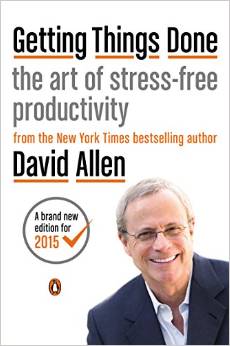
QC #756Among the books I recommend most often to clients who are challenged with managing their professional and personal time is Getting Things Done by David Allen.

One of the critical insights I derived from his work was the idea that too many people use their minds and memories to hold too much information. It turns out that doing so makes most of us far less productive and also causes overwhelming feelings and considerable stress. Perhaps that is why the subtitle of this valuable book is “the art of stress-free productivity.”

EXERCISE:

Please pick up and study Getting Things Done, and do whatever you can to “have” ideas, but “hold” them in memory-keeping or commitment-keeping technologies, where they will be available to you in the moments you plan to work on them.

“sometimes you win…”

“Sometimes you win, sometimes you learn.”

-John Maxwell, American author, speaker, and pastor

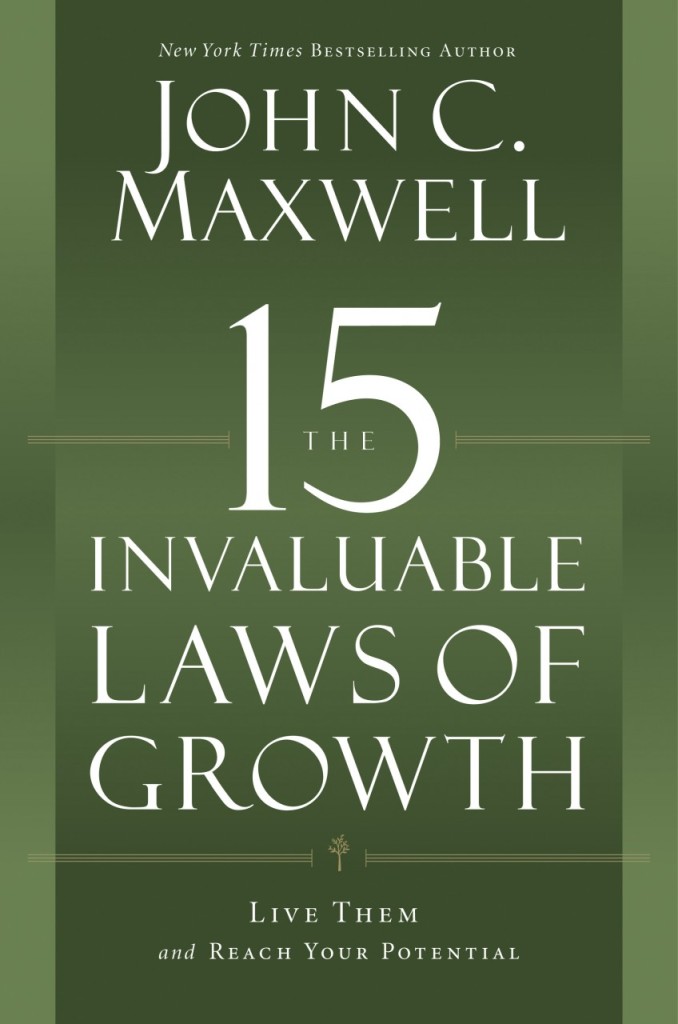
QC #755One of my favorite books by John Maxwell, which I hope you will consider reading, is The 15 Invaluable Laws of Growth.

John has been a pioneer in the fields of leadership and coaching for many years. Today, at age 68, he is doing his best work ever, by building an enterprise that trains and coaches trainers, coaches, and speakers from around the world.

Who doesn’t want to win in life? Who would prefer not to lose?

One of the characteristics I most admire about John is his passion for his own growth and development. He definitely walks the talk daily, in his life-long learning adventure.

EXERCISE:

How can you pursue winning today in all your efforts, and even if you fall, make sure you pick up the lesson on your way up?


“Managers light a fire…”

“Managers light a fire under people. Leaders light a fire in people.”

—Kathy Austin, Management Consultant

Photo from freehdw.com

Photo from freehdw.com

Leadership and Management are two of the most highly valued skills necessary to be truly effective in our professional and personal lives.

I feel strongly that these skills, along with masterful communications and effective supportive coaching, are the four legs of the solid foundation of soft skills that support our success.

When asked, most professionals usually view leadership as the more “evolved” and enlightened of the two, in that leadership involves the articulation of an inspired future for an individual or group. Conversely, management—particularly old-school management—is perceived as pushy, aggressive, and often domineering, in order to achieve desired results.

I’d suggest that they can actually work together in an empowered way with inspired leadership as a foundation for effective alignment and a desirable form of self-management. This involves the individual or group sharing a strong commitment with the leaders, willingly promising to give and keep their word to take the actions necessary for eventual success.

EXERCISE:

How can you develop and master inspired leadership and empowering management capacities to move yourself and others forward, professionally and personally?

“Instead of wondering when…”

“Instead of wondering when your next vacation is, maybe you should set up a life you don’t need to escape from.”

-Seth Godin, American author, entrepreneur, marketer, and public speaker

photo from addictedtosuccess.com

photo from addictedtosuccess.com

The point of today’s quote is the main reason I am a coach today. Over 23 years ago, when I was working in sales and marketing for a well-known pharmaceutical company, I realized my inner voice was saying things like:

  • Thank God it’s Friday!
  • I don’t want to wake up and go to work!
  • When will this be over?
  • I can’t wait to go on vacation!
  • Oh, No! Monday is coming!

Of course, I’m being a bit dramatic. Still, as many as 70% of working professionals feel and say similar things to themselves and perhaps to others in their lives.

EXERCISE:

Should you see yourself or others in the thoughts above, find the courage to challenge yourself to redesign your life and career. You may find yourself looking forward to getting home from vacation, so you can get back to the exciting life you have designed.

Feel free to reach out to me if I can be of assistance. Write to me at: barry@dempcoaching.com

“Never give up on a dream…”

“Never give up on a dream just because of the time it will take to accomplish it. The time will pass anyway.”

—Earl Nightingale, American self-help speaker and author

photo from Flickr by kerolic

photo from Flickr by kerolic

Some say that a vision is a dream with a deadline. Nightingale points out that this “time thing” is a primary cause of many people giving up on their dreams and visions. Of course many, if not most, rewarding futures take considerable time. That is what makes the accomplishment worthwhile.

Another interpretation of today’s quote is the saying, “It’s more about the journey than the destination.” Each small step toward your dream can be a source of satisfaction on its own, without your having to see the mountain you have to scale as unachievable or not worth the time it will take.

EXERCISE:

What dream or personal vision for the future will you commit to today, knowing that every day lived with enthusiasm and passion is what the journey is all about?

“My Life is my message.”

“My Life is my message.”

-Mahatma Gandhi, leader of Indian independence movement in British-ruled India

Mahatma Gandhi

Mahatma Gandhi

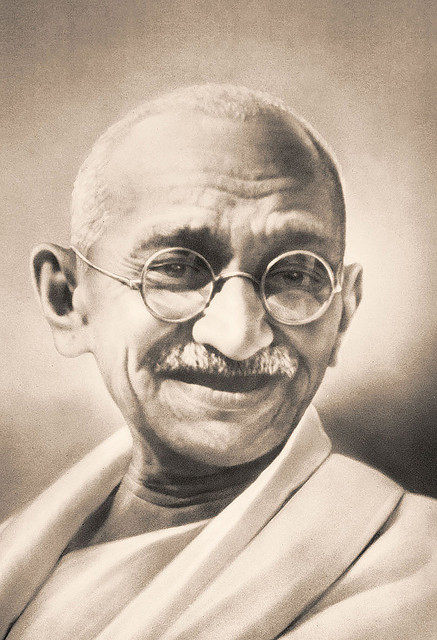
Mahatma Gandhi was always helping and concerned about others. His aims in life included truth, non-violence, spirituality, honesty, discipline, and loyalty. His name, Mahatma, means “a great soul.” He was chosen as “Man of the Millennium” by the BBC.

Once, while Gandhi’s train was pulling out of a station, a European reporter ran to his compartment window. “Do you have a message I can take back to my people?” he asked. It was Gandhi’s day of silence, a vital respite from his demanding speaking schedule, so he didn’t reply. Instead, he scrawled these words on a scrap of paper and passed it to the reporter: “my life is my message.”

EXERCISE:

If your life were your message, what would the people around you say about you? Given, hopefully, many successful and meaningful years ahead, what new or different messages would your legacy include?

Please consider reviewing the links below to examine Gandhi’s extraordinary message in greater detail.

http://www.biography.com/people/mahatma-gandhi-9305898
http://www.history.co.uk/biographies/mahatma-gandhi
http://www.mkgandhi.org/

“By Doing What You Love…”

“By doing what you love you inspire and awaken the hearts of others.”

—Satsuki Shibuya, painter, artist, spiritual teacher

Photo from Flickr by Chattgd

Photo from Flickr by Chattgd

Most coaches I know have their own coaches, supporting them on their professional and personal journeys. They consider striving for their own definition of success and fulfillment of great value and importance.

This behavior is one of the most important characteristics that attract clients to a particular coach. People see that their potential coach walks the talk and has made considerable progress in their own life journey. This makes them credible as a supportive partner in helping clients realize their goals.

EXERCISE:

Who do you know that truly loves what they do, and awakens your heart to pursue your own passions and purposes? How can you do more of what inspires you, to have the same influence on those around you?