making successful human beings

“It is not what you do for your children but what you have taught them to do for themselves that will make them successful human beings.”

– Ann Landers, famous advice columnist

502

Image from Flickr by EWULibraries

Consider for a moment that effective parenting is like coaching. Instead of simply pouring ourselves into our children or our clients, we take an inside-out approach to help them discover the wisdom within – and thus help them discover who they truly are. Lessons learned in this manner seem to have a far greater influence and impact.

Just five minutes ago, I received a call from my daughter Rachel, who was finishing her workday serving her clients at 9.30 p.m. on a Friday night. Listening to her go the extra mile to serve others was a very satisfying moment for me as a proud dad.

Exercise:

How can you use your coaching skills to bring out the best in your children, colleagues, friends and even clients?

“Words empty as the wind are best left unsaid.”

“Words empty as the wind are best left unsaid.”

– Homer, Greek poet

501

Image from Flickr by goldberg

To say that we live in an over-communicated world is an understatement. Homer, who lived around the eighth century BC, suggests through this quote that some words are full of value while others are empty and worthless.

If you had to pay the people you met and spoke with today for the value of what they shared, what would that value be? Take a moment to review some of these interactions to assess their worth. Which were of least or even negative value, and would have been better left unsaid?

Exercise:

Consider your communication with others in your world. How often are you sharing pearls of wisdom and value? How often should your inner thoughts be left unsaid? Imagine the impact on the world if everyone did this.

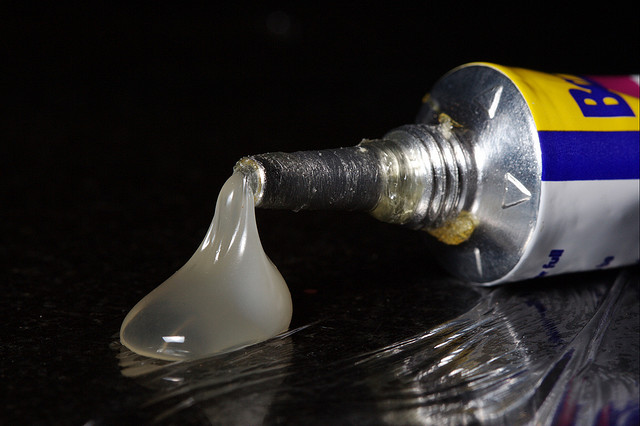
Trust is the glue of life

“Trust is the glue of life. It’s the most essential ingredient in effective communication. It’s the foundational principle that holds all relationships.”

– Stephen Covey, American self-help author

496

image from Flicker by Sam Catch

Trust is not something built with a quick-fix technique. It is developed through consistent habits in your personal and organizational interactions.

Exercise:

On a 1to 10 scale (1 = low 10 = high), how well do you exhibit the following behavior patterns, gluing your relationships together?

1. You avoid hidden agendas and are seen as open and transparent in your interactions.

2. You are sincere, honest, and demonstrate integrity through your words and actions.

3. You focus on giving versus getting, with the best interest of others in mind.

4. You invest your time in others and make their interests your interests.

5. You treat others with respect, dignity, and honor.

6. You take responsibility for mistakes (without making excuses) and clean things up quickly.

7. You are open and receptive to the feedback and contributions that others offer to you.

EXERCISE:

To dig a bit further into the issue of trust, consider taking my “Trust-o-Meter” assessment

Do a Little More

“Do a little more each day than you think you possibly can.”

– Lowell Thomas, American journalist

492

Image from Flickr by Jessa9

Exploring our limits is a useful exercise in a coaching relationship. By doing more, we usually achieve more.

I attend a local fitness center called Lifetime Fitness – which is a great name and an excellent example of branding. Among the staff are 25 personal trainers who support thousands of individuals to achieve their personal fitness goals. With physical and sometimes mental coaches by their side, people discover that they are able to do a little more each day than they think they can.

Exercise:

In what areas of your personal or professional life are you capable of one more rep, one more mile, or a little more of something than yesterday?

Select a friend, family member, mentor or coach in your life to push or pull you to be your very best each and every day.

You can even be your own coach by establishing a “one more …” Post-it note reminder in strategically placed locations in your environment.

the risk to remain tight

“And the day came when the risk to remain tight in the bud was more painful than the risk it took to blossom.”

– Anaïs Nin, author

SONY DSCImage from Flickr by Matt Brittaine.

Safety and security are strong values for many people. They represent part of our collective comfort zones that play an important part in who we are. Unfortunately, there is often a very limiting and sometimes painful consequence to this “better safe than sorry” approach to life.

Exercise:

If a flower misses the rain and sunshine by not blooming, what are you potentially missing by not summoning the courage to blossom into your full expression of yourself? What actions will you take today to blossom?

Please reply and let me know what happens.

“Values are critical guides for making decisions. When in doubt, they cut through the fog like a beacon in the night.”

“Values are critical guides for making decisions. When in doubt, they cut through the fog like a beacon in the night.”

—Robert Townsend (attrib.)

486

Image from Flickr by briant87

I am reading A Lapsed Anarchist’s Approach to Building a Great Business, by Ari Weinzweig. He is the co-owner of Zingerman’s, located near the University of Michigan’s campus in Ann Arbor.

This book contains a wide variety of essays that show how Zingerman’s became what Bo Burlingham from Inc magazine refers to as “the coolest small company in America.”

Townsend’s quote speaks to the very heart of what makes Zingerman’s, with now over 500 employees, a great place to eat and work.

Exercise:

Google Zingerman’s to do a bit of research into how their values guide their decisions and why they are famous for “the Zingerman experience.” You can even use their mail-order business at zingermancommunity.com to get a literal taste for yourself.

“We are always the same age inside.”

“We are always the same age inside.”

– Gertrude Stein, American writer

Image of mother and daughter jumping

Image from Flickr by mikebaird

As I write this, I’m  in Florida with my dad and wife. I can’t believe how much self-reflection I’m doing as I observe everyone going about life as seniors and in many cases super-seniors.

Social clubs and activities abound, and I feel as if I’m in what my wife Wendy refers to as “winter camp”! Of particular note is the level of youthful spirit I see in those around me as I go to the gym, play golf, go out for meals with friends, attend shows and even go out for frozen yogurt at my normal bedtime back home!

These people are still very much the same age inside – and though time has provided a number of bumps that may slow them down a bit, their youthful zest for life keeps them looking forward to each new day.

Exercise:

Examine how your own external image of yourself reflects of your internal age. What thoughts do you have daily that reflect a significantly younger you?

Consider taking the Real Age test to compare your chronological age to what they describe as your “real age.”

“When furious, get curious.”

“When furious, get curious.”

– Author Unknown

480

Image from Flickr by isforinsects

It seems like there is a lot of anger in the world these days. Consider what you observe each day in such areas as our roadways, parking lots, social media, television – especially news programming – politics, the workplace, and even in our own homes.

How often are you the direct recipient of this anger? How often might you be a contributor to it?

Anger can be seen as the outcome of some triggered portion of our comfort zones, based on past experiences or events. The quote above is suggesting that instead of allowing the trigger to automatically generate an anger response, we enter a state of inquiring and curiosity to see what is behind this response – thus resulting in a more workable and peaceful solution.

Exercise:

Pay particular attention today when you observe yourself (and others) getting angry. Ask yourself one or more of the following questions to engage your inquiring mind and observe what happens:

  • What emotions and feelings am I experiencing right now?
  • What is occurring that is triggering these emotions?
  • When else has that occurred in the past, and what was the end result of my response?
  • What alternative responses are possible that will result in a more satisfactory outcome?

Consider picking up a copy of Susan Scott’s book Fierce Conversations to explore additional techniques that can assist you in similar situations.

Take Another Step

“If you take another step, and another, you will be surprised to know how far you can go from the point you thought was the end.”

– Marc and Angel, personal development writers

477

Image from Flickr by Bods

Whether it’s taking one more step or going the extra mile, the power of persistence is without question a key to success. Being persistent helps build self-confidence. Once you know you can make it through one struggle, you’re more likely to take that next step in other areas of your life.

A good friend once told me that what stops most people is … stopping. What if we simply didn’t buy in to a life of ease and convenience, and tapped into our own personal grit and character to keep going, stay the course, and finish strong on those things that matter most?

Exercise:

What issues, challenges or struggles are you currently facing that would most benefit from taking the next step and then another until you arrive victorious?

“Sometimes in the winds of change, we find our true direction.”

“Sometimes in the winds of change, we find our true direction.”

—Author Unknown

474

Image from Flickr by epSos.de

Here in Michigan we pay particular attention to the weather. January was the snowiest in history and the temperatures were as cold as I’ve ever experienced. The weather forecast includes a metric called “wind chill” or “the wind chill factor, which is a combination of the actual temperature along with the wind speed, to provide a measure of how cold it actually feels.

Today we are all experiencing the winds of cultural and political change at a far brisker pace – personally, professionally, and perhaps even globally.

Exercise:

In the coming days, how can you either lean into or go with the winds of change to find your true direction? Consider the possibility of adding your own breeze to sweep you toward your destiny.