“To strengthen the muscle of your heart the best exercise is lifting someone else’s spirit when you can.”

“To strengthen the muscle of your heart the best exercise is lifting someone else’s spirit when you can.”

—Author unknown
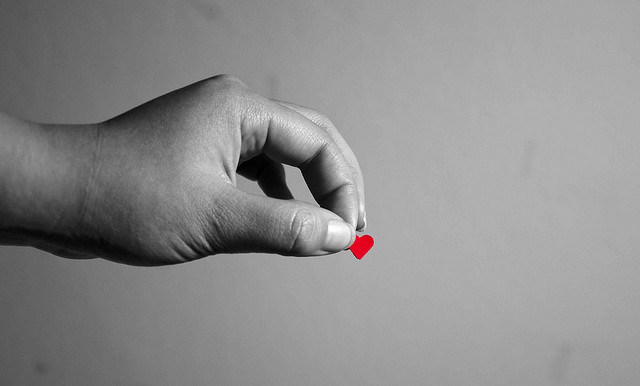
Photo from Flickr by tiff_ku1

Photo from Flickr by tiff_ku1

Did you know that your heart beats over 100,000 times in one day, and over 35 million times in a year? If you live an average lifetime, your heart will beat more than 2.5 billion times.

Each beat of your heart has about the same force as giving a tennis ball a hard squeeze. This force circulates approximately 5.9 quarts of blood through your body, three times every minute.

Through this constant effort the heart pumps the equivalent of about one million barrels of blood during an average lifetime, which is enough to fill more than three super tankers.

EXERCISE:

How can you exercise your heart today by being a coach, mentor, or friend to others, and lift their spirits higher?
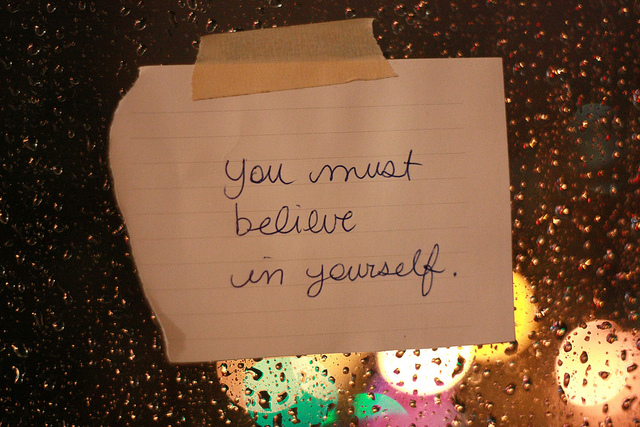

“You have to believe in yourself.”

“You have to believe in yourself.”

– Sun Tzu, Chinese military general, strategist and philosopher

Photo from Flickr by Jennifer

Photo from Flickr by Jennifer

I am writing this post on a Sunday – the day many people practice their faith by attending church or another religious institution.

Many faiths believe that God created man and at the same time gave us free will and the ability to create our own lives through our beliefs and actions.

Central to our ability to manifest our world, Sun Tzu might suggest through this quote that a deeply held faith and belief in ourselves is essential.

EXERCISE:

Take note of the areas in your life where you have the strongest belief and faith, and notice what results you have achieved.

How would an even greater belief in yourself make the biggest difference in your personal or professional life?

“Patience is the ballast of the soul, that will keep it from rolling and tumbling in the greatest storms.”

“Patience is the ballast of the soul, that will keep it from rolling and tumbling in the greatest storms.”

– Charles Hopkins, Irish poet and dramatist

Photo from Flickr by

Photo from Flickr by Mary Harrsch

I went grocery shopping with my dad Sunday morning. The store was packed with shoppers. We chose the shortest checkout line, with the intention of making a quick exit. Our strategy was thwarted by the very nice lady ahead of us, who had about 50 small items in her cart, one of which required a price check that took what felt like a century to complete.

Fortunately, dad and I knew this experience was simply an exercise in patience. We took it in stride, smiled at one another, and were amused in watching others work through their issues with the delay.

EXERCISE:

Where would demonstrating greater patience help you sail through the big and little storms of your soul, to enhance your personal or professional life today?

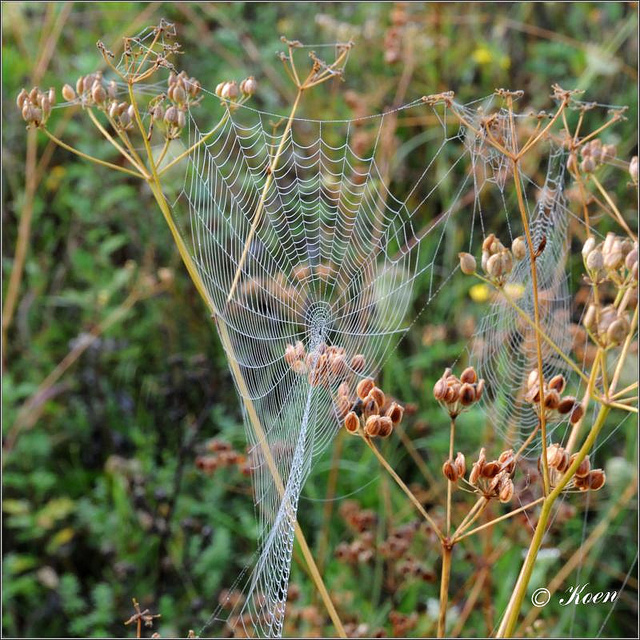
“Habits are first cobwebs, then cables.”

“Habits are first cobwebs, then cables.”

– Spanish Proverb

Photo from Flickr by Koen

Photo from Flickr by Koen

As a new year approaches, many people make resolutions to achieve various personal and professional goals. Research points out that well over 90 percent of their objectives never come to pass.

Most experts tell us it takes three to six weeks to create a habit. A new attempt at exercise, diet, and getting into better shape is like the first filament in a cobweb – delicate, unsupported, easily torn.

If, however, we continue the positive behaviors over longer periods of time, the filaments become cables that hold our lives together, strong enough to endure the challenges that might pull the weaker filaments apart.

EXERCISE:

Do a personal assessment of both your most positive and negative habits.

What will you need to do to support and strengthen those that serve you best?

What is necessary to break the strong cables of your undesirable habits, and replace them with the cobwebs – and eventually cables – of the behaviors you most desire?

To Conquer Ourselves

”It is not the mountain we conquer but ourselves.”

– Sir Edmund Hillary, the first climber to reach the summit of Mount Everest.

Photo from Flickr by Popeyed

Photo from Flickr by Popeyed

Sir Edmund Hillary is one of the world’s most famous mountain climbers. His adventures to the top of Mount Everest, the tallest mountain in the world, are legendary.

Hillary knew that we must first face and climb our internal mountains if we are ever to surmount the challenges we face in our outer worlds.

EXERCISE:

What external mountains do you need to face or climb? How will you summon the courage to conquer the internal barriers that appear to keep you safe and limited at base camp?

“It is the mark of an educated mind to be able to entertain a thought without accepting it.”

“It is the mark of an educated mind to be able to entertain a thought without accepting it.”

– Aristotle, Greek Philosopher & Student of Plato

Photo from Flickr by RasMarley

Photo from Flickr by RasMarley

For centuries, people believed the world was flat. Aristotle himself considered that “fact” long and hard before he accepted the spherical shape of the Earth on empirical grounds around 330 BC. Today “flat earth” thinking won’t get the job done.

Aristotle suggests that the ability to think through an issue without the issue having a good/bad, true/false, yes/no perspective is an indicator of educated intellect. In some regards, an open mind is an access point to creativity and invention.

EXERCISE:

Consider, as you go through your day, how quickly you accept or reject a thought, a statement, a request, without “entertaining” the possibility of its validity. What can you learn about yourself and your life by being willing to let go of immediate judgments or decisions?

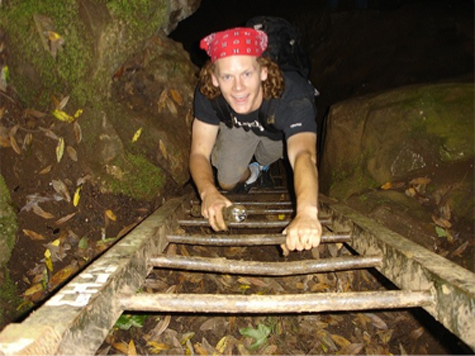
“Success is a ladder that cannot be climbed with your hands in your pockets.”

“Success is a ladder that cannot be climbed with your hands in your pockets.”

—Author Unknown

Image from Flickr by Travis Hornung

Image from Flickr by Travis Hornung

The spring and fall seasons here in Michigan require a “clean-up process” of leaves and other plant-related debris. This includes the need to climb up ladders and clear out the gutters on our roofs.

Imagine taking on this task and being told you had to leave your hands in your pockets as you climbed. Would you do it? Of course not!

Notice when, in your personal or professional life, you take on tasks half-heartedly, thereby leaving your hands in your pockets.

Exercise:

Where would grasping the ladder of success with both hands make the biggest difference for you today?

“There’s plenty of room at the top, but there’s no room to sit down.”

“There’s plenty of room at the top, but there’s no room to sit down.”

– Helen Downey (attrib.)

Photo from Flickr by Horasis

Photo from Flickr by Horasis

Look at the people you most admire in your professional and personal life.

How did they reach the top of your list? My guess is because of their values, their character, and the way they take a proactive approach to life.

Exercise:

Where would a “stand up and step forward” attitude help you take your rightful place among the people at the top of their game?

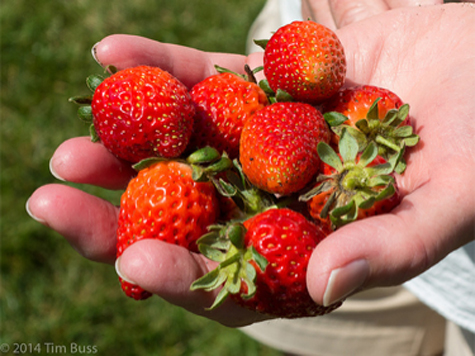
“Striving for success without hard work is like trying to harvest where you haven’t planted.”

“Striving for success without hard work is like trying to harvest where you haven’t planted.”

– David Bly, American politician and member of the House of Representatives

Photo from Flickr by Tim Buss

Photo from Flickr by Tim Buss

The world is filled with “get rich quick” schemes, like the miracle diet that will let you lose weight effortlessly, and many other supposedly low-effort, high-result strategies. The problem with just about all of them is that they simply do not work.

I really like the word “striving.” It causes me to think of pursuing a noble and passionate cause when I’m “all in” and won’t stop until the goal is reached.

For me, though, it is not simply the goal that is the source of this striving. My passion, inspiration, and fundamental purpose for being mobilized into action are also essential.

Exercise:

What are the important goals and hoped-for harvests in your professional and personal life that inspire you to strive and do the hard and challenging work required of you today?


“Out of your vulnerabilities will come your strength.”

“Out of your vulnerabilities will come your strength.”

-Sigmund Freud, Austrian neurologist and founder of psychoanalysis

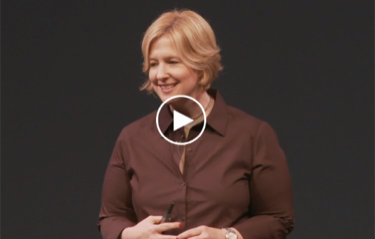
Brené Brown, from her TED talk (see link below).

Brené Brown, from her TED talk (see link below).

In recent years, the subject of “vulnerability” has received a great deal of media coverage due to the work of authors such as Brené Brown.

In two of her recent books, The Gifts of Imperfection and Daring Greatly, which are based on considerable research, she clearly debunks the idea that vulnerability is weakness and indicates that it is far more correlated with courage and strength, as Freud suggests.

Exercise:

Where would being vulnerable in either your professional or personal life demonstrate the strength of your commitment to something of great importance to you?

Consider watching Brené Brown’s TED talk, The Power of Vulnerability