Whether to say it

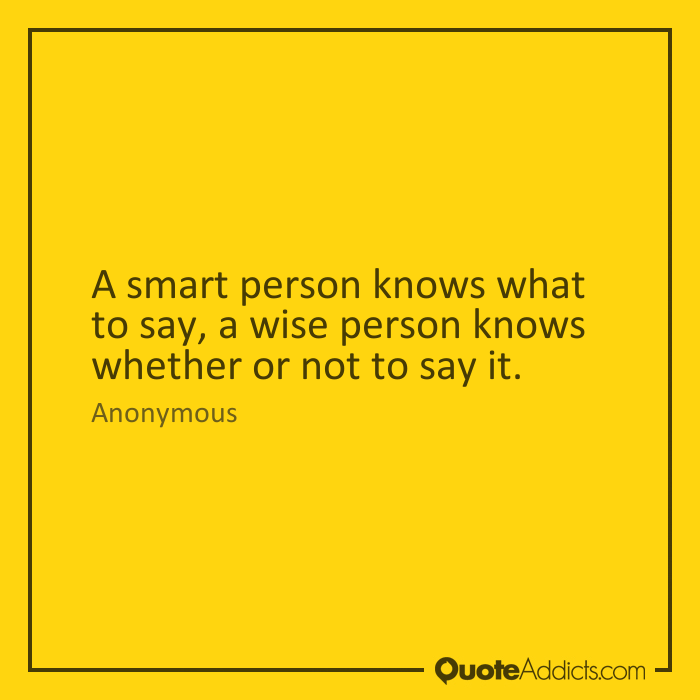
“A smart person knows what to say. A wise person knows whether or not to say it.”

—Author Unknown
When can less be more? How often do you find yourself giving others advice or sharing your wealth of knowledge and experience, only to find that it is unwanted?

Were you ever that kid in school who raised their hand saying “call on me!” so you could share the right answer and show how smart you were? If so, what reaction did you receive from the other students? If not, how did you feel about your classmates who did?

I have found it very useful, in recent years, to restrain my exuberance to share what I know in order to more fully allow others to share and contribute their thoughts and ideas. Not surprisingly, I learn far more when my mouth is shut and my ears are open!

EXERCISE:

Where can less from you and more from others be a wiser recipe for your future success?
Invest in Knowledge

“If a man empties his purse into his head, no one can take it from him. An investment in knowledge always pays the highest return.”

—Benjamin Franklin, American Founding Father

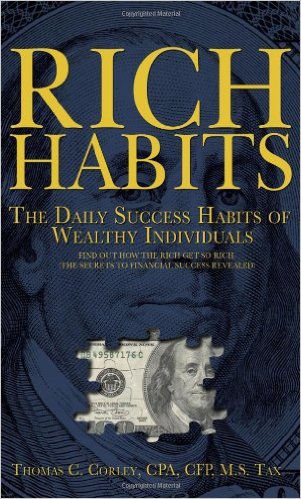
A client recently shared with me a book titled Rich Habits: The Daily Success Habits of Wealthy Individuals by Tom Corley.

From Corley’s years of research into hundreds of rich and poor people, I learned that of the wealthiest people:

  • 88% read for 30 minutes or more each day.
  • 63% listen to audio-books during their commute.
  • 94% read about current events.
  • 50%+ read biographies of successful people.

In contrast, only about one in fifty of those struggling financially engaged in daily self-improvement reading.

EXERCISE:

How can and will you invest the time and resources in your personal and professional development efforts to lead an even more richly rewarding life?

Friday Review Relationships

FRIDAY REVIEW: RELATIONSHIPS

We have many different relationships in life. Here are a few relationship-related posts you may have missed. Click the links to read the full message.

“Kind words can be short and easy to speak, but their echoes are truly endless.”


“A true friend never gets in your way unless you happen to be going down.”


“Our fingerprints don’t fade from the lives we’ve touched.”


a wise man’s questions

“A wise man’s questions contain half the answer.”

—Solomon ibn Gabirol, 11th Century Jewish Philosopher

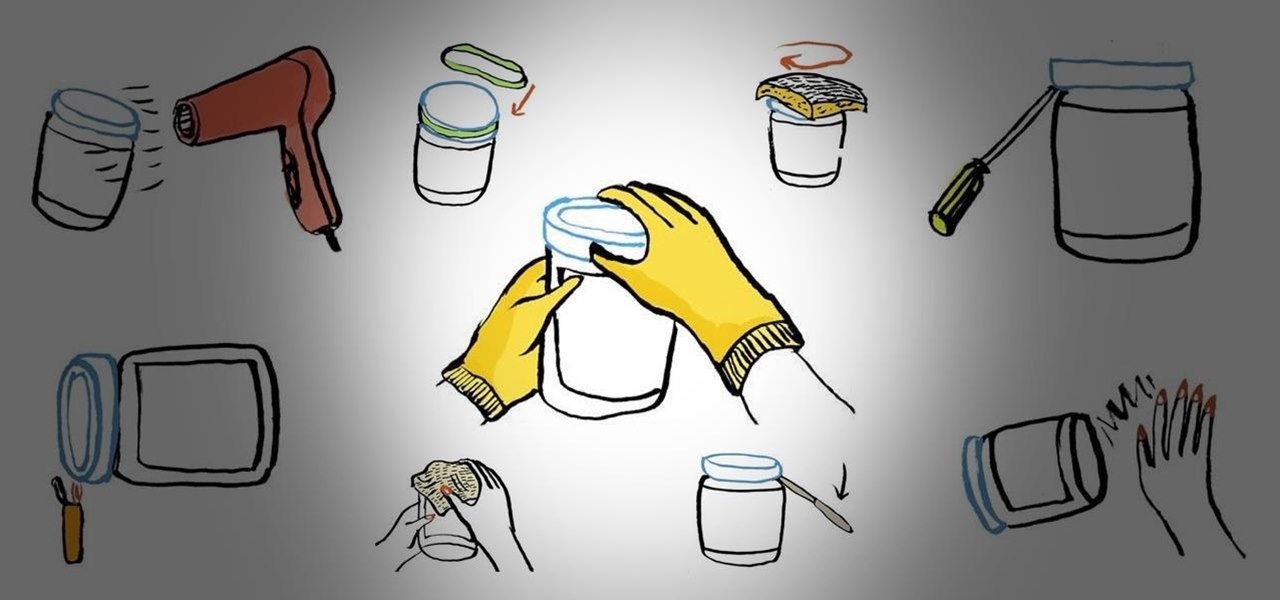
Image from The Secret Yumiverse

When was the last time you wrestled with a jar that would not open? Whatever was inside was just on the other side of that pesky lid! Eventually, I’m sure, you found a stronger person, tapped the jar against the counter, or maybe ran it under hot water to get access to the contents.

In many ways, wise and thoughtful questions are like jar openers, giving us access to answers, valuable opportunities, and important discoveries.

The ability, skill, and mastery of knowing what questions to ask of ourselves and others is, as today’s quote suggests, half the battle.

EXERCISE:

How can you more fully discover what’s inside yourself and others by enhancing your curiosity and ability to formulate provocative, deeply probing questions?

how you interpret the world

“Be careful how you interpret the world: it is like that.”

—Erich Heller, 20th Century British Essayist

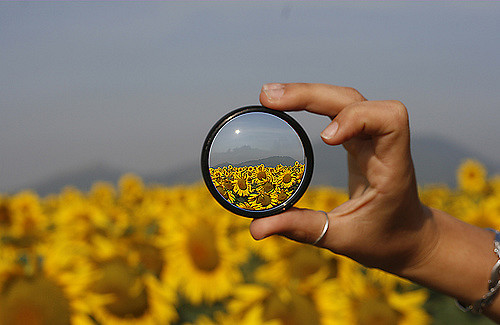
image of flowers through a magnifying glass

image from Flickr by marco magrini

We humans are interpretation and opinion machines. As we navigate our worlds, we continually assess our environments and relationships through special filters we have created. Our perceptions really do create our reality and our experience of the world.

As talk show host Dr. Phil often says, “How’s that workin’ for you?”

What is your level of fulfillment, satisfaction, and general happiness with things as you see and interpret them?

EXERCISE:

Make an effort to expand your filter choices as you view your world today. Consider trying on a more hopeful, optimistic, open, forgiving, or creative perspective and see what happens.

The Things We Know Best

“The things we know best are things we haven’t been taught.”

—Luc de Clapiers, 18th Century Marquis de Vauvenargues

My first career, fresh out of college, was as a teacher. It was my belief at the time that it was my job to literally pour my knowledge of life science into the minds of 25 sixth grade students. What I discovered was that very little got in, and even less of my brilliant lessons stuck for more than a week or two.

One of my fascinations over the years, and particularly since I began my career in coaching, is what some call the “stickiness” factor. It turns out that most of life’s greatest and enduring lessons occur through experiential learning, in which the student is fully engaged, even lost, in their own inquiry.

EXERCISE:

What areas of personal or professional development are you and others in your world most open, interested, and excited about? How can you structure a deep and meaningful learning experience in these areas?

Want to Forget

“To want to forget something is to think of it.”

—French Proverb

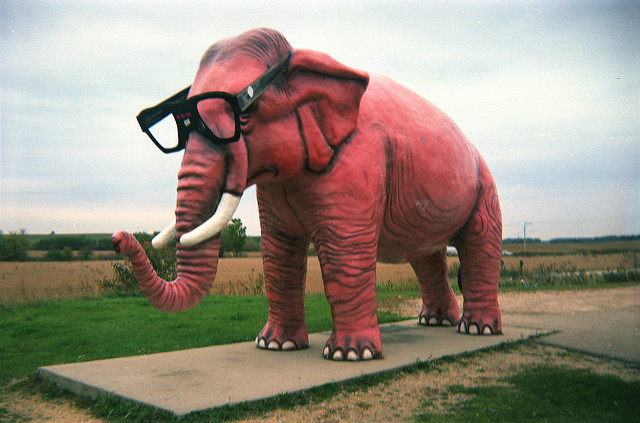
Image of pink elephant with glasses

Image from Flickr by Eric Wilcox

Did you know that there is a perpetual motion machine? Not necessarily in the physical world, since energy is always required, but in terms of our minds.

Consider past events and memories of negative or bad things that have happened in your life. What happens when you make the effort to forget these events and leave these thoughts in the past? You might even say to yourself, “Don’t think about X,” and in doing so, X is all you think about.

A common example of this is when we try to fall asleep, when our active minds keep us from getting the rest we need and crave. Sadly, this is the norm for many people.

EXERCISE:

Rather than trying to forget something you don’t wish to think about, consider how you can replace those thoughts with more desirable and intentionally relaxing ideas.

Friday Review: Beliefs

FRIDAY REVIEW: BELIEFS

How often do you review and reorganize the beliefs you hold? Here are a few belief-related posts you may have missed. Click on the links to read the full messages.

“A great many people think they are thinking when they are merely rearranging their prejudices.”


“When I let go of what I am, I become what I might be.”


“Reality is the other person’s idea of how things should be.”


We never do anything well

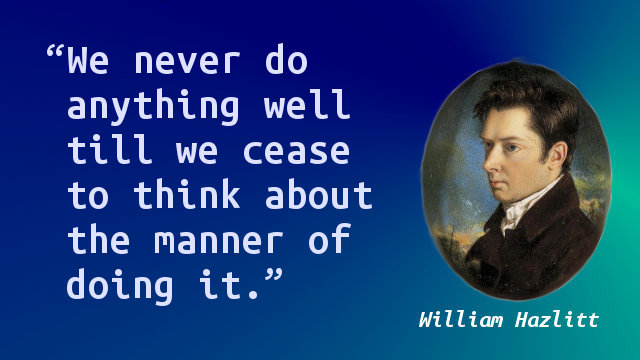
“We never do anything well till we cease to think about the manner of doing it.”

—William Hazlitt, 19th Century British Social Commentator

Meme of today's quoteHow many activities in the following list have you engaged in over the past year?

  • Giving a speech or major presentation
  • Writing a book or significant article for publication
  • Interviewing for a new job or promotion
  • Playing golf, poker, or a game of chess
  • Building a piece of furniture or other handy-person activity

If at least one of these activities occurred this past year, how well did you do? How competent, skilled, or masterful were you? How much effort, struggle, or ease and flow did you experience?

Hazlitt’s quote points to the fact that when we are so focused on doing things correctly we often diminish our own ability to do things well because of our preoccupation with our potential to make mistakes.

EXERCISE:

How and on what activity might a more playful approach, without much thought about doing things perfectly, help you enjoy the process and perhaps do far better than you might have imagined?

drowning in information

“We are drowning in information and starving for knowledge.”

—Rutherford D. Rogers, Deputy Librarian of Congress

Image of keyboard, hands, coffee, and watch

Image from Unsplash by Catheryn Lavery

Did you know that the average person has five social media accounts, and spends one hour and forty minutes browsing their networks each day?

The average adult also spends more than twenty hours online, and watches over thirty hours of television per week.

How does your usage compare to these statistics? To what degree are you drowning in information?

Unfortunately, many of us simply assume that is “the way things are,” and that we simply need to keep up with the pace of life and swim for our lives.

EXERCISE:

Estimate what percent of the information you take in through social media and other sources is truly valuable and worth knowing.

Begin today, through a more discerning perspective, to remove or eliminate at least one such source until your head is fully above water.