“Common sense is the collection of prejudices acquired by age eighteen.”

“Common sense is the collection of prejudices acquired by age eighteen.”

—Albert Einstein
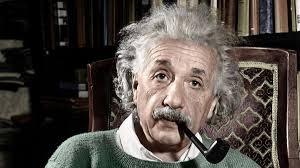
Image of Albert Einstein from Public Domain

When we think of great minds, few people top the list more often than Albert Einstein.

If you investigate his life through a wide variety of sources, you will see that he was fond of what he called “thought experiments.”

I guess you could say that he thought a lot about thinking!

What about your own mind?

How much do you think about your own thoughts and how they influence your view of others and life in general?

What prejudices, biases, mental models, and paradigms have you ingrained that support and in many cases limit what’s possible for you?

EXERCISE:

How can and will you conduct some of your own expanded thought experiments to realize a less common and more extraordinary life?

“Hope is like the sun, which, as we journey toward it, casts the shadow of our burden behind us.”

“Hope is like the sun, which, as we journey toward it, casts the shadow of our burden behind us.”

—Samuel Smiles, 19th Century Scottish government reformer

Image from Unsplash by Martino Pietropoli

Given our turbulent times, it is clearer than ever that hope is not a good strategy to right our world.

Wishful thinking and turning a blind eye to the objective truth has delayed the full mobilization of our world to come together as one.

Hope is, however, very powerful in that it can and will inspire our individual and collective efforts to cast the shadows of our challenges behind us.

EXERCISE:

How and in what ways can and will you mobilize your most hopeful energies and committed actions as we journey together to better our world?

“The secret of prolonging life consists of not shortening it.”

“The secret of prolonging life consists of not shortening it.”

—Ernst, Baron von Feuchtersleben, 19th Century Austrian physican/philosopher

Image from Amazon.com

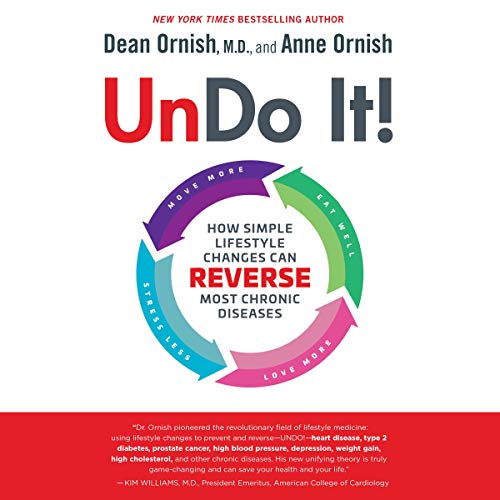
Undo it: How Simple Lifestyle Changes Can Reverse Most Chronic Disease by Dean and Anne Ornish is a worthy read for anyone wishing to live a longer and healthier life.

As pioneers of lifestyle medicine, Dean and Anne demonstrate – with substantial scientific evidence – that diseases such as cancer, diabetes, heart disease, and even the aging process itself can be impacted.

His 72-hour program, which includes exercise, nutrition, stress-reduction, and what he refers to as loving more, has been so successful that it is now covered by Medicare and other major insurance companies.

EXERCISE:

Please watch this short video by Dr. Des Harrington, and consider upgrading your own efforts to put more years in your life and life in your years.

“Sometimes the door closes for us so we might turn and see an open gate to a wider opportunity.

“Sometimes the door closes for us so we might turn and see an open gate to a wider opportunity.”

—Brendon Burchard, NYT best-selling author & high-performance coach

Image from Unsplash by Shane Rounce

Countless doors are closing in response to the global pandemic. To what extent have these efforts to contain and combat this crisis impacted your professional world?

What obstacles are in the way of you living life and conducting business as usual?

In what ways have you and your communities been forced to find other means of pursuing and achieving the outcomes you desire? In what way are closed doors forcing you outside your comfort zone, to see alternative open gates of wider opportunity?

EXERCISE:

Consider discussing today’s quote with members of your work and personal communities, to discover what new gates you can open together.

Friday Review: Adaptation 4/10/20

FRIDAY REVIEW: ADAPTATION

How good are you at adapting to change? Here are a few adaption-related posts you may have missed.


“Every success story is a tale of constant adaptation, revision, and change.”


“Human nature is like water. It takes the shape of its container.”


“Things do not necessarily happen for the best, but I can choose to make the best of things that happen.”


“Deal with the faults of others as gently as your own.”

“Deal with the faults of others as gently as your own.”

—Chinese Proverb

Image from Unsplash by Matt Collamer

Fault-finding is something we humans do best. The media, in its many forms, feeds on stirring up drama, playing off our desire to be right and making those who think and act differently wrong.

What is the payoff of such a perspective? More importantly, what is it costing us physically, mentally, and emotionally?

How might a gentler approach generate more harmony, acceptance, and unity?
Consider making a positive intention, demonstrating greater openness, and looking more closely for the good and value in others.

EXERCISE:

Where and in what ways can and will you bring your very best self in word and deed to others in your communities?

Where would simply being nicer make the biggest difference today?

“Look not at the vessel, but at what it contains.”

“Look not at the vessel, but at what it contains.”

—Rabbi Meir, ancient Jewish Sage

Image from Unsplash by Sharon McCutcheon

In recent weeks, the subject of death has become more prominent than usual in my personal and professional communities.

The focus on being sincerely interested and seeking to fully understand others results in numerous deep and meaningful conversations.

Of particular interest were the beautiful and soulful discussions of how the passing of certain individuals with hearts of gold and other wondrous virtues has impacted the lives of so many.

EXERCISE:

How often do you look beyond the surface of the people you meet?

What value and beauty would you potentially discover by doing so, starting with those closest to you?

“Sometimes changing the game is as simple as finding a few people who play by the same rules you do.”

“Sometimes changing the game is as simple as finding a few people who play by the same rules you do.”

—Curtis Tyrone Jones, Author of Guru in the Glass

Image from Unsplash by Christopher Paul High

Imagine you are about to play a new board game. Although you want to begin playing immediately, you must first read the rules.

What if your current life was actually a board game in which the rules – and even the players – were already established without your knowledge? How much do you enjoy playing your current game, and how often do you experience that winning feeling?

Upon opening the box to your new game, you are surprised to see that instead of being highly detailed and specific, the rule sheet offers a number of provocative questions for you to create your own set of rules.

You have the power to guide your play and who you invite to join in the fun.

EXERCISE:

What questions could you ask yourself to reveal a set of rules that would most fully resonate with your most closely held values and guiding principles?

Which people in your world that live by these rules can and will you invite to take their turn rolling the dice?

Forgiveness is a funny thing. It warms the heart and cools the sting

“Forgiveness is a funny thing. It warms the heart and cools the sting.”

—William Arthur Ward, 20th Century inspirational author

Image from Unsplash by Lina Trochez

Many people are suffering these days. Without question, life comes with ups and downs, making our journeys bumpy and filled with twists and turns.

Forgiveness is a quality we admire and appreciate in people we respect and wish to emulate. Many of us find forgiveness quite difficult to express on a consistent basis despite the fact that it truly “warms the heart and cools the sting.”

What is it in our wiring that can make forgiving others and even forgiving ourselves so difficult?

EXERCISE:

How often do you make yourself and others wrong for their mistakes, shortcomings, and acts that hurt others?

What would be the value of finding greater compassion, empathy, and forgiveness within yourself to travel life’s road a bit more smoothly?

Friday Review: Fear

FRIDAY REVIEW: FEAR

How often do you let fear stop you from achieving your goal? Here are a few fear-related posts you may have missed.


“Everyone is a moon and has a dark side which he never shows to anybody.”


“There are plenty of obstacles in your path. Don’t allow yourself to become one of them.”


“What is the cost of getting it wrong? What are the payoffs of getting it right?”