FRIDAY REVIEW: CHOICES
What sort of life are you choosing? Here are a few choice-related posts you may have missed. Click on the link to read the full message.


“Words empty as the wind are best left unsaid.”

“Easy Street is a blind alley.”
What sort of life are you choosing? Here are a few choice-related posts you may have missed. Click on the link to read the full message.


“Words empty as the wind are best left unsaid.”

“Easy Street is a blind alley.”

Image from brainfodder.org
When was the last time you visited a big-box supermarket? It has been estimated that the number of food products in these megastores are in the tens of thousands. Clearly it is impossible to get everything in our shopping cart, so we all go through some process of elimination. We use criteria such as healthiness, value, shelf life, and taste as factors to make our choices.
What criteria do you currently use in your personal and professionals worlds to filter out unhealthy or undesirable options that do not serve your highest priorities?
How could being more selective improve your world?

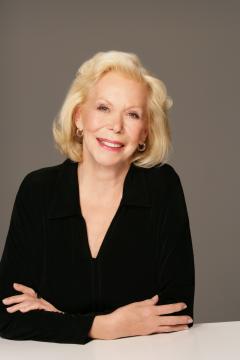
Image from acelebrationofwomen.org
Louise Hay is an American Motivational Author and the founder of Hay House. Through her healing techniques and positive philosophy, millions have learned to create more of what they want in their lives.
Hay House has published about 300 books and 350 audio programs by authors who align with Louise’s positive self-help perspective, and are supportive of healing our planet.
What actions will you choose to take today, and in the future, to make the rest of your life the best of your life?
How can you support and inspire others in your personal and professional communities to do the same?
As a small gesture, please consider forwarding this post to at least one person who would most appreciate its message.
Do you sometimes feel life has passed you by?
Do you tell yourself you will have time – on the weekend, on the vacation, when you retire – to get to the things that matter?
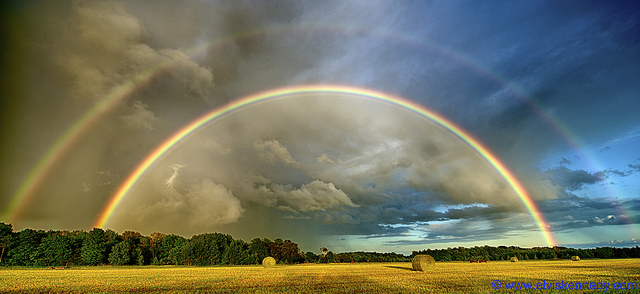
Are you missing too many rainbows?
We cannot schedule the rainbows of our lives – we must seize precious moments as they occur.
How can you be more intentional and tuned into your world, so that you can find greater joy and fulfillment in life’s special moments?

Image from Joomlaworks.net
The ancient Greek mathematician Archimedes once said that if he were given a lever long enough and a fulcrum on which to place it, he could move the world.
Consider, today, your most deeply held commitments for a better future as your long lever, and your most important and foundational values as the fulcrum on which to place them.
One of my other favorite quotes is, your commitment supersedes your comfort.
How and in what ways can you experience the world-moving changes you desire by living each day more consistently with your most cherished commitments and values?

Image from nxtlvlc.com
Actions speak louder than words. They are all we really have to turn our dreams of a better future into a reality.
Consider a business leader whose behavior is inconsistent with the core values and corporate vision he claims to follow. Consider the individual who constantly brings up his interest in health and wellness, yet makes unhealthy choices and rarely engages in physical activity.
Where in your life can you bring greater alignment between your words and your actions?
To whom, beside yourself, will you make the promises? What added support will be required to ensure this new level of personal responsibility?

Doing work I love is one of the greatest joys I know. Who wouldn’t want to wake up each day – especially Mondays – to a vocation or career that utilizes their strengths and unique abilities? Who wouldn’t want a career that makes a meaningful difference in the lives of others and the world around them?
I was inspired by the 1992 Barcelona Olympic Games to start my career as a coach. In that ten-day span, 5,000 athletes worked with about 2,000 coaches, producing gold medal performances. I thought I’d bring this idea to the business world to help people pursue even greater levels of performance in their professional and personal lives.
The challenge was that business coaching wasn’t considered a “profession” at that time. Still, the idea seemed to be such a great fit for me, and I had gained a great deal from studying the few people who were beginning to be known as coaches. I resigned from my 12-year career as a pharmaceutical industry sales and marketing professional, and created a coaching career for myself. That was 24 years ago – and the best career decision I ever made!
Where in either your personal or professional worlds do you need to create something for yourself so that you can be a part of it?

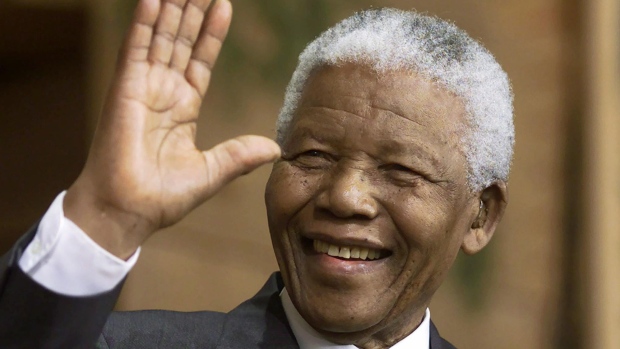
image from www.cbc.ca
There are two primary schools of thought regarding what spurs people into action. The first is what I call the “avoiding pain” strategy, in which people examine the bad things that may occur if they don’t take action. Some sales methods take advantage of this approach by turning up the level of pain in order to compel people to buy a product or service.
The alternative strategy, suggested in Nelson Mandela’s statement, could be called the “pleasure strategy.” Here, a compelling and hopeful objective mobilizes us to choose certain actions and behaviors that will help us realize our desirable future.
What will you do to make the majority of your life choices—personally and professionally—from a more hopeful perspective?

Image from openculture.com
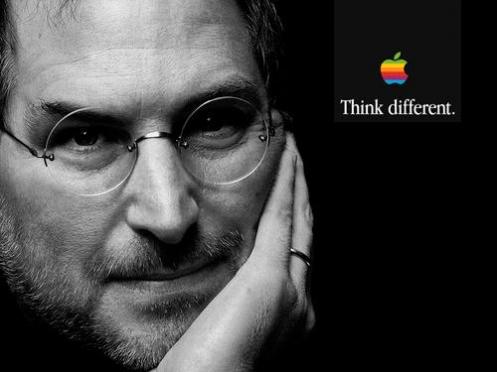
My wife and I recently saw the new Steve Jobs movie. Regardless of your views about him as a person, he sure did exemplify today’s quote, and the Apple mantra of “Think Different.”
Perhaps much of the controversy about his life and leadership style was about how he always pushed the limits of what was possible, which sometimes involved pushing many of those around him out of their comfort zones.
Throughout my coaching career, I have encouraged my clients each and every day to be prepared to break their current patterns if they want new worlds to emerge.
To do otherwise would be insane.
Where in your personal or professional world would embracing a “There has got to be a better way” philosophy actually make things better?
During the very early stages of a new coaching relationship, I often give my clients the assignment to describe their best future self. This exercise forces each individual to look deeply at the qualities and characteristics they wish to develop and expand upon during the course of our relationship and beyond.
We employ a strategy in which they examine past and current role models they admire and respect, knowing that if others could act and achieve such remarkable things, it is possible for them as well.
Upon your passing, what would you like others in your personal and professional worlds to say about you?
What adjustment will you make in the way you live today to guarantee this as your legacy?