The best thing for being sad, replied Merlin, is to learn something

“The best thing for being sad, replied Merlin, is to learn something.”

T.H. White, Author of The Once and Future King

Image from Unsplash by Dan Dimmock

Research has shown that when we do the same things day after day we fire and wire our neurons to generate consistent and ingrained patterns of thinking and acting. If we happen to be sad over extended periods of time, changing things up can alter our brain chemistry, improve our overall well-being, and strengthen our social connections.

Engaging in new physical activities, taking a creative class, and even learning new recipes and cooking techniques are just a few ways to break your patterns so that a more positive outlook on things can emerge.

EXERCISE:

How can and will you embrace Merlin’s wisdom and engage in some new learning effort to magically boost your mood and chase some clouds away?  Feel free to reply to this post with what new learning efforts work best for you.
We are more like a breathing puzzle, a living bag of pieces, and each day shows us

“We are more like a breathing puzzle, a living bag of pieces, and each day shows us what a piece or two is for, where it might go, how it might fit.”

—Mark Nepo, Author of The Book of Awakening

Image from Unsplash by Ross Sneddon

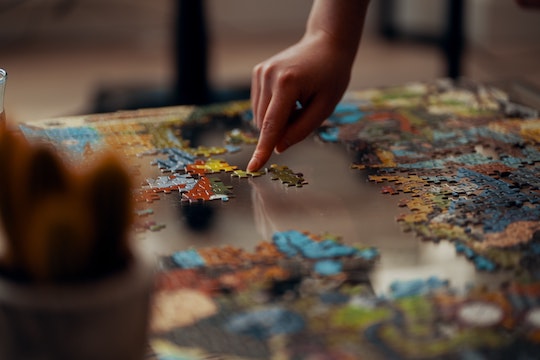
I used to believe that puzzles were something you only did to pass the time on vacation or on a rainy day where there was seemingly nothing to do. These days puzzles are an almost daily activity with my grandson Weston. He keeps graduating to increasingly more challenging images with more and more pieces. Matching colors, finding the straight edges, and of course securing those all-important corners are all part of his increased mastery.

Take the metaphoric leap to view your own life as an 80,000-piece effort. How can you be more focused and intentional about flipping, sorting, and placing your living, breathing pieces to build your own less puzzling masterpiece?

EXERCISE:

What parts of your personal and professional puzzles are you piecing together? Who are the people sitting around the tables of your life that can help and support your efforts?

Contemplate your monk mind instead of your monkey mind

Contemplate your monk mind instead of your monkey mind.

—Calm App Reflection

Image from youtube.com

Jay Shetty of the CALM Daily Jay meditation series recently offered today’s quote as a twist on a common theme to mindful awareness.

We all wrestle with chaotic thoughts from time to time, much like distractible hyperactive monkeys playing in the trees and jumping from branch to branch. Unless they are sleeping or grooming one another, their kinetic energy is often off the charts.

Shetty, a former Hindu monk, suggests we develop a monk mind of calm self-reflection and awareness that we can access during times of both calm and chaos.

EXERCISE:

Bring to mind your own vision of a mindful monk. How can and will you develop and practice these attributes to calm the rambunctious monkeys that often scurry around in your head? Click here to learn more about Jay.

Shape behaviors instead of shaming them

“Shape behaviors instead of shaming them.”

Sam Horn, CEO of The Intrigue Agency

Image from Unsplash by Lea L

How do you go about getting the things you want? How do you influence and persuade the people in your life to act in ways that you desire?

What are your current strategies and approaches with family members, neighbors, and your professional colleagues? As parents, grandparents, and other influencers of young impressionable minds, today’s quote is particularly relevant.

I recently attended an engaging webinar on Ethical Persuasion by Sam Horn, in which she introduced many practical and creative ways to gain attention and buy in to our ideas and intentions.

She shared what she called “words to lose” and “words to use” when we want to transform resistance into rapport. Here are just a few of her suggestions:

Words to Lose: but —should — you’ll have to
Words to Use: and — next time — If you would please

EXERCISE:

What are some of the words you use that are shaping or shaming the people in your life?

Wisdom is like the rain. Its source is limitless, but it comes down according to the season

“Wisdom is like the rain. Its source is limitless, but it comes down according to the season.”

—Jalāl al-Dīn Muḥammad Rūmī, 13th-century Persian poet

Image from Unsplash by Alejandro

When do you receive the most rain where you live?

Just as water is essential to life, Rumi suggests that wisdom is water for our spirits. Unfortunately, we do not always receive rain when we need it throughout the year.

What season of life are you in? Look back over the years to see how you have benefited from the wisdom of others and become the reservoir for members of your communities who thirst for its refreshing and renewing properties.

EXERCISE:

Where in your world are people experiencing a drought of wisdom and a thirst for growth?

How can we tap the aquifers and sprinkler systems that are often out of sight to soak and refresh our souls?

I am as all mortals are unable to be patient

“I am, as all mortals are, unable to be patient.”

—Pablo Neruda, 20th Century Chilean Nobel Prize Poet

Image from Unsplash by Julien L

My grandson Weston loves to watch TV, especially when he is learning something new. The options for both learning and entertainment these days seem limitless. I find his ability to keep a laser focus on most occasions remarkable.

Many of his favorite programs are found on YouTube, which inserts ads if you are not a premium customer. Upon seeing these ads, he promptly says “Skip It,” not wanting to wait even the 5 seconds to hit the link for the show to resume.

Where in your personal and professional worlds do you find yourself edgy and impatient with the pace of things? How do you behave when you desire to get back to the good stuff of what you consider important and urgent?

EXERCISE:

What are the payoffs and benefits of your impatience?

Where is there a cost or some considerable downside to skipping things that are truly important in your life?

Tap into a sense of pure possibility

Tap into a sense of pure possibility. What are your hopes and dreams?

—Calm App Reflection

Image from Unsplash by J. Balla Photography

Over the past several months, I’ve been finding it more difficult sleeping through the night. I usually wake between 4 and 5 a.m., still tired but with an active mind that makes falling back to sleep difficult.

After about 20 minutes of tossing and turning, a visit to the facilities, a drink of water, and maybe a visit to the kitchen for a nibble to calm my growling stomach, I try again.

One sleep strategy that often works is listening to the sleep stories on my Calm app. These guided journeys take me on a variety of adventures and back to dreamland, well before the stories are ended. Upon rising refreshed, I do my best to keep this hopeful state of possibilities throughout my day.

EXERCISE:

What hopes and dreams do you want to realize today?

What possibilities can and will you turn into reality with your imagination and creative intentions?

FRIDAY REVIEW: PLEASURE

FRIDAY REVIEW: PLEASURE

What things in life bring you the most pleasure? Here are a few related posts you may have missed.

“The test and use of man’s education is that he finds pleasure in the exercise of his mind.”


“Do not bite at the bait of pleasure till you know there is no hook beneath it.”


“The first step towards getting somewhere is to decide that you are not going to stay where you are.”


What’s the best small thing I can do right now

“What’s the best small thing I can do right now?”

—James Clear, Author of Atomic Habits

Image from Unsplash by Photos by Lanty

How energetic do you feel? What levels of energy and vitality do you experience throughout your typical day? What do you notice about your general energy during each season of the year?

What are your levels of productivity and overall life satisfaction as you ponder these questions?

Generally, winter is a time of lower energy for many of us. Darker days and colder temperatures have us seek comfort and much of our get up and go wants to go back to bed.

What do you notice about the relationship between activity and productivity now that winter has passed? Most of us feel greater satisfaction and a sense of overall well-being when we are getting things done.

EXERCISE:

Free yourself today from any grand plans and monumental tasks.

Simply look at the best small thing you can do right now and repeat as often as you wish.