Changing Us

“Sometimes the things we can’t change end up changing us.”

—Author Unknown

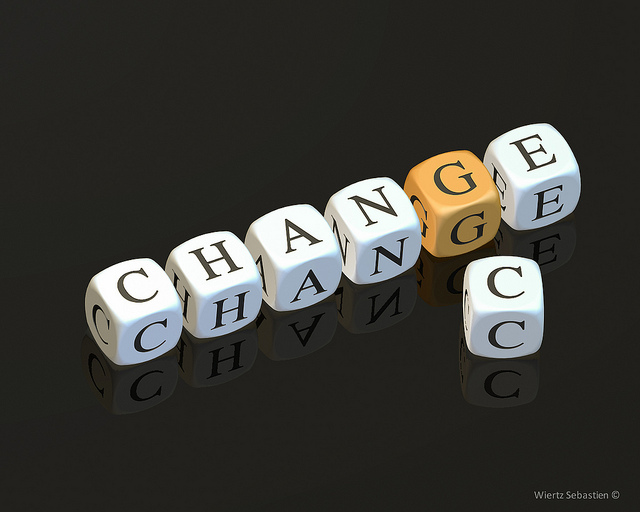
Image from Flickr by Sebastien Wiertz

Image from Flickr by Sebastien Wiertz

A topic that comes up fairly frequently in my coaching sessions these days is aging. As someone in the middle of the Baby Boom Generation, I see that most of my contemporaries are also experiencing the “grayification” of our society. We’re dealing with aging parents and our own health and fitness related issues.

Despite all of our best efforts to eat better, exercise more, and get much-needed rest to renew and recharge, we are heading toward an entropy of life, where things begin to break down and stop working optimally.

There happens to be a new form of coaching called “Eldering.” One of its tenets is to assist people in navigating these years with more grace, dignity, and life mastery.

EXERCISE:

How can you adjust, adapt, or change yourself in relationship to those issues and situations that are unchangeable, to more fully experience a life of greater happiness and fulfillment?

“Life has no remote…”

“Life has no remote. Get up and change it yourself.”

-Mark Cooper, author of Edelweiss Pirates, Operation Einstein

Image from Flickr by Keith Williamson

Image from Flickr by Keith Williamson

If you were to walk through your family room, den, entertainment area, basement, or home theater, collecting all your remote control devices, how many would you have?

In many ways, we have developed into a remote control society, frequently looking for the simplest and least effort necessary to change things for the better. It’s so easy to delete, fast forward, or hop over commercials to get to the sporting event, sitcom, or drama that interests us.

Our lives, however, usually play one show, entitled “Our Lives,” and we cannot click a button to change it easily.

EXERCISE:

Where in your personal or professional life is it time to get out of your chair and make the necessary changes you desire?

“Every success story…”

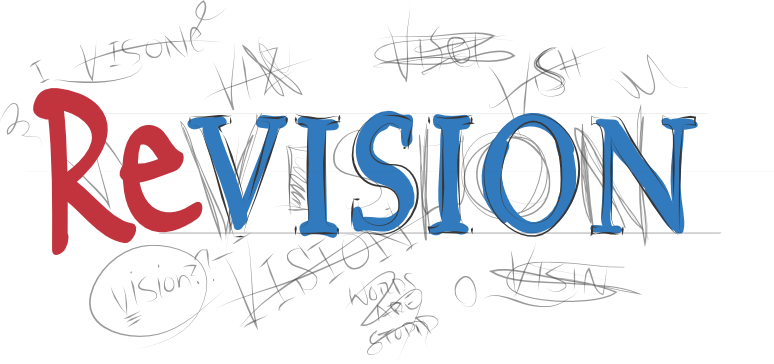
“Every success story is a tale of constant adaptation, revision, and change.”

—Sir Richard Branson, KBE, founder of Virgin Group

Image from www.64ouncegames.com

Image from www.64ouncegames.com

We all know that the shortest distance between two points is a straight line. Life in general, and our journey toward success, never really works that way.

To navigate our world we must, as Sir Branson suggests, adapt, revise, and change our approach moment to moment. This iterative process works very much like an internal GPS system, constantly informing us of where we are, and where we wish to go. It helps us plot the alternative routes we can take to progress toward our desired destination.

EXERCISE:

Where is it necessary to adapt, revise, or change your approach to tell a more successful tale in either your personal or professional life?

“The world is full of…”

“The world is full of magic things, patiently waiting for our senses to grow sharper.”

—W.B. Yeats, Irish poet and one of the foremost figures of 20th century literature

Image from freger.weebly.com

Image from freger.weebly.com

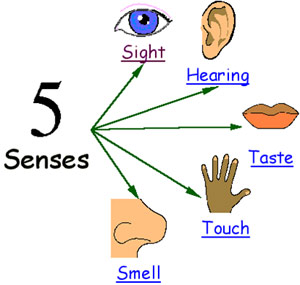
Take a moment to examine your current ability to see, hear, feel, taste, and smell.

Did you know that:

      • A Silvertip Grizzly Bear can smell you from 18 miles away?
      • Jumping spiders can see four primary colors versus the three that humans see?
      • Some birds have an internal GPS that acts as a compass, to help them find their way home?
      • The bat uses echolocation to navigate and catch its supper?
      • Catfish have 10 times more taste buds than humans (100,000 versus 10,000)?

EXERCISE:

How can you capture more of the magic life has to offer by sharpening and focusing your senses? One way to develop these capacities is to focus on each sense separately, whenever possible.

“People change and forget…”

“People change and forget to tell each other.”

—Lillian Hellman, American dramatist and Broadway screenwriter

Photo from onthejob.45things.com

Photo from onthejob.45things.com

Coaching as a profession has been around for over 20 years, and is estimated as a two billion (or more) dollar industry. Fundamental to the coaching process is the desire for both individuals and organizations to change for the better.

Rooted in this change process is the strong desire for a better future, and in particular, a high level of social support by friends, family, colleagues, and of course, coaches.

Open communication and clarity around this desire, along with some description of what behaviors are to be expected, are critical for optimal success.

EXERCISE:

Where are you currently trying to change something in either your professional or personal life? How can you communicate this intention to those around you to rally the social support necessary for this change to occur and be sustained?

“You can’t start the next…”

“You can’t start the next chapter if you keep re-reading the last one.”

—Author Unknown

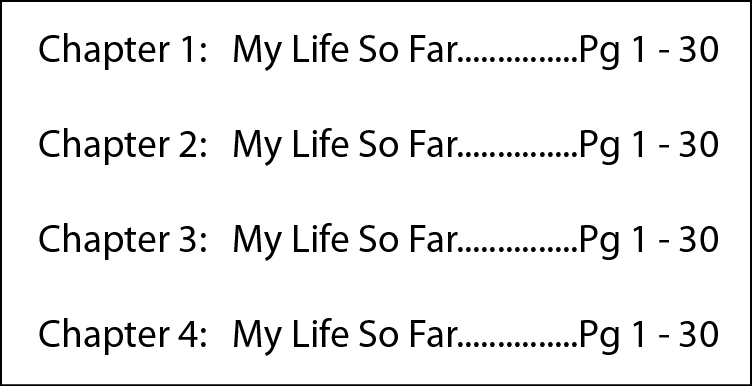
Imagine a book based on  your life, with a Table of Contents that looks like this:

QC #826How likely would you be to keep reading the same chapter over and over again?

Although the answer seems obvious, many people live their lives this way, where “today” looks a great deal like many of their yesterdays.

EXERCISE:

If today’s scenario is even a bit familiar, consider telling a new life story by using Stephen Covey’s “Begin with the End in Mind” habit. Work your way backwards to write about the page-turning journey that got you there. I hope it is a best seller!

“The life you have led doesn’t…”

“The life you have led doesn’t need to be the only life you have.”

—Anna Quindlen, American author and journalist

QC #788photo from www.lionsroar.com

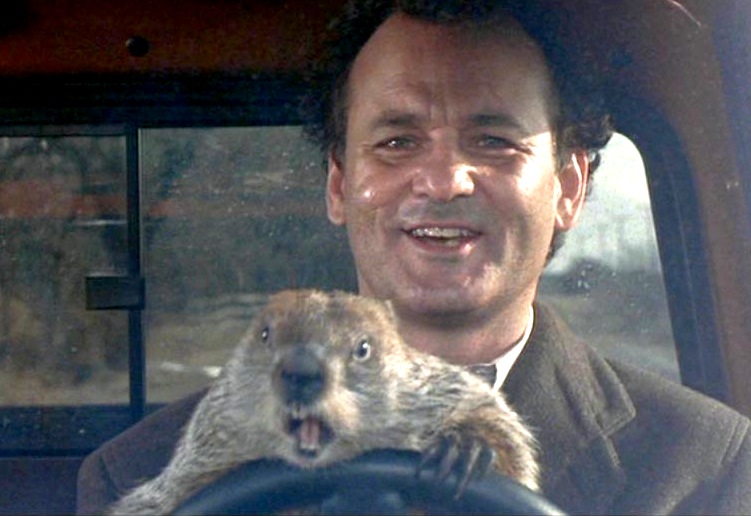
One of my favorite movies is Ground Hog Day with Bill Murray. I always laugh as he lives February 2nd over and over again.

Through countless chances, he tends to make many of the same mistakes over and over, which leaves him in the same place as the previous day.

Eventually, he learns that his future can be altered for the better.  By choosing actions that are consistent with his commitment, he takes new and better actions that lead him to a different future, where in the end, of course, he “gets the girl.”

EXERCISE:

Take the time today to examine the life you have lived and determine what you wish to continue and what you wish to change. Select a close friend, family member, mentor, or coach to examine what you discover. Consider developing a plan over at least 90 days, to make the coming years more fulfilling and remarkable.

“Awareness is the greatest agent for change.”

“Awareness is the greatest agent for change.”

-Eckhart Tolle, Canadian Author and Spiritual Leader


Photo from Flickr by Miguelanger Guedez

Photo from Flickr by Miguelanger Guedez

Although we live in a world that is constantly changing, I would suggest that much of our internal worlds remain the same.

Examine your own attitudes and beliefs about the world around you and you will likely notice that most have remained relatively constant for years, and perhaps throughout your entire life.

Examination and internal exploration are key in enhancing our journey of self-awareness. This  allows us to determine if and to what extent our long-standing beliefs and perspectives serve us optimally.

In the event they do not, this new awareness can act as an agent of change as Eckhart Tolle suggests.

EXERCISE:

What daily habits, rituals, behaviors, and practices can aid you in the development of your awareness muscles, that support positive change in your professional or personal life?

Here are some strategies to consider:

  • Journaling
  • Meditating
  • Prayer
  • Reflective walks in nature
  • Reflective forms of exercise, such as Yoga
  • Deep Breathing

Feel free to reply to this message to share your own self-awareness practices.

“How wonderful it is that nobody need wait a single moment before starting to improve the world.”

“How wonderful it is that nobody need wait a single moment before starting to improve the world.” – Anne Frank, diarist and Holocaust victim

Photo from Flickr by Symphony of Love

If you happen to watch the news these days, it sure looks like the world could use some improving. You might ask yourself, “Who am I to tackle such a matter? I am only one person in the world and its challenges seem infinite.”

One strategy that comes to mind is related to that old saying, “How do you eat an elephant?” If you’ve never heard this before, the answer is, “One bite at a time.”

Exercise:

Examine the areas of your own life, including your health, your family, your local community, your workplace, and others that come to mind where you can seize this moment to take a small or big bite and improve your piece of the world.

If we all did this together each day, imagine how much the whole world would improve.

we are challenged to change ourselves

“When we are no longer able to change a situation, we are challenged to change ourselves.”

– Victor Frankl, Austrian psychologist and Holocaust survivor

Image from likesuccess.com

Image from likesuccess.com

 This has been a particularly challenging week for a number of my clients, colleagues, friends and even family members. Unfortunately many of the situations they found themselves in were not within their control.

As Ari Weizweig, the CEO of Zingerman’s said, we’re not always living on “planet fair.” Feeling the upset and acknowledging it is a key first step to experiencing freedom from anger that could continue to poison our perceptions, attitudes and relationships.

Assuming the responsibility to change yourself in such situations means you are going to move forward and work toward a positive value-centered future as quickly as possible.

Exercise:

Acknowledge at least one upsetting event in your personal or professional life where you are not able to change the situation.

Determine how you will change your perception, attitude or behavior and regain the freedom to move confidently forward in your life.