The mind is like a garden

“The mind is like a garden. Plant flowers, you get flowers. Plant weeds, you get weeds. Plant nothing, you get weeds.”

—Author Unknown

Image of a greenhouse full of weeds

Image from Unsplash by Sandis Helvigs

The garden metaphor has been overused in describing the fertility of our minds to grow whatever is planted there. Today’s quote provides a special twist in the event we decide to take a “bench-sitter” or laissez-faire approach to life.

Imaging driving through an area in which no lawn service or landscaper has been seen for years. What do you see when you examine the grounds surrounding the buildings in this area?

Although I prefer to see the beauty of all living things, sometimes the winds of change bring unwanted forms of growth, things which we would prefer to live without.

EXERCISE:

How and in what ways can you take an ongoing, proactive approach to planting only the most beautiful thoughts in your head?  What do you think will bloom?

He Who Trims Himself

“He who trims himself to suit everyone will soon whittle himself away.”

—Raymond Hull, Canadian Playwright and Lecturer

Image of a person whittling on a piece of wood

Image from Unsplash by Nathan Lemon

In the best selling book, Give and Take by University of Pennsylvania professor, Adam Grant, we learn the pros and cons of being a “giver.”

Grant divides givers into two groups:

The first group have high other-interest and low self-interest. This can work against their giving nature; they burn out, or as put in today’s quote, whittle themselves away.

Conversely, the group Grant calls “other-ish,” maintain high self-interest along with high other-interest. This keeps them on an even keel and provides optimal results for themselves and others.

EXERCISE:

How can you more fully maintain your own self-interest and well-being while generously contributing to others in your professional and personal worlds?

Friday Review Success

FRIDAY REVIEW: SUCCESS

How do you define Success?  Here are a few success-related posts you may have missed. Click on the links to read the full message:

qc-1140a


“Every wall is another fence that thins the herd.”


qc-1140b


“Your best teacher is your last mistake.”


qc-1140c


“Great leaders don’t blame the tools they’re given. They work to sharpen them.”


highest success levels

“The slogans ‘hang on’ and ‘press on’ have solved and will continue to solve the problems of humanity.”

—Ogwo David Emenike, Nigerian Author and Speaker

image of a man on a mountain top with a flag that reads "Keep Exploring"

Image from Unsplash by Justin Luebke

Are you familiar with the word grit? There has been a media frenzy over this buzzword, which some claim as the key to success.

Believers in this concept suggest that if one is to reach the highest levels of success, talent must be combined with hard work, determination, and perseverance.

Angela Duckworth, author of Grit: The Power of Passion and Perseverance, emphasizes the importance of passion. She stresses that without passion, dogged determination, and tenacity, hard work simply becomes drudgery without direction.

EXERCISE:

In what way does your passion fuel personal or professional projects, giving you the energy and desire to “hang on” or “press on”?

The Darkest Nights

“The darkest nights produce the brightest stars.”

—Author Unknown

Image of the Milky Way

Milky Way Image from NASA.gov

If you enjoy viewing the night sky, or are an avid stargazer, you’re probably somewhat disappointed these days. The thousands of stars we were once able to see each night are now obscured by the glare of city and industrial lighting and the haze of pollution.

Sometimes life’s difficulties, challenges, and setbacks—our darkest nights—can provide a high degree of illumination on brighter possibilities.

EXERCISE:

In what ways do you block the lessons available to you through your darkest nights? How can you view those moments through a new lens, finding brightly shining lessons to light your path in the future?

Avoiding Problems

“Avoiding a problem doesn’t solve it.”

—Bonnie Jean Thornily, Illustrator

Image of an ostrich with its head in the sand

Image from www.dailymail.co.uk

The ostrich doesn’t really bury its head in the sand —it wouldn’t be able to breathe! But the female ostrich does dig holes in the dirt as nests for her eggs. Occasionally, she’ll put her head in the hole and turn her eggs.

People, on the other hand, often “bury their heads in the sand,” ignoring problems for long periods of time, hoping they will simply go away.

EXERCISE:

What issue or problem have you been avoiding, professionally or personally? Where would summoning the courage to take this issue “head on” make the biggest difference?


Friday Review on Thinking

FRIDAY REVIEW:  THINKING

How much time do you give to the art of thinking? Here are a few thinking-related posts you may have missed. Click on the link to read the full message:

qc-1135a

“No man can think clearly when his fists are clenched.”


qc-1135b


“From the errors of others, a wise man corrects his own.”


1135c


“The teacher who is indeed wise does not bid you enter the house of his wisdom, but rather, leads you to the threshold of your mind.”


Things you do for yourself

“The things you do for yourself are gone when you are gone, but the things you do for others remain as your legacy.”

—Kalu Ndukwe Kalu, former NFL Defensive End

Image of hands, one giving a flower to the other

Image from Unsplash by Evan Kirby

A few weeks ago I had the opportunity to speak at an Optimist Club meeting here in southeast Michigan. Part of their meeting was given to announcements about a half-dozen public service and fundraising projects with which the group is involved.

It was inspiring to see how engaged, enthusiastic, and full of life the club members were as they put others first. They are clearly building a legacy through their passionate, contributory efforts.

EXERCISE:

Who in either your personal or professional worlds could benefit most from what you have to give? How will you both feel when you do?

Feel free to let me know what happens if you choose to take on this exercise.

The Day Must Be Saved Early in the Morning

“The day must be saved early in the morning.”

—Laurent Carrel, author

Image of a sunrise

Image from Flickr by Peter Harris

What time do you wake up in the morning? What is your morning routine? How productive do you feel at various times throughout your day?

Here are a few reasons to become a morning person, or if you are already one, to become even more:

  • A high percentage of geniuses say they do their best work in the morning.
  • Morning people tend to be proactive, happier and perform better at school and work.
  • It is far easier to stick with an exercise routine if you are an early riser.
  • The morning is usually a quiet time, for focused work with fewer distractions.
  • It provides quality time with your significant other if you are both engaged in this habit.
  • You get to see one of the prettiest times of day, which many people miss.

EXERCISE:

How and in what ways can you save even more of your day by starting it off a bit earlier?


Today will be what you make of it

“Today will be what you make of it.”

—Author Unknown

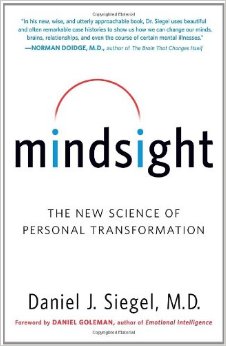
Image of "Mindsight" book

I recently learned about a new skill called “Mindsight,” based on the book of the same name by Doctor Daniel Siegel.

Siegel suggests this skill is a kind of focused attention. Mindsight allows us to see the internal workings of our own mind, including our mental processes, without being swept away by them through the autopilots of ignorance and habitual responses.

How often do you notice each day blending into the next? To what degree do you experience a bit of insanity and upset by not seeing better results, and feeling less engaged and alive?

EXERCISE:

How would a greater awareness of your inner thinking and outer efforts help you make more of each day?