“A ruffled mind makes a restless pillow.”

“A ruffled mind makes a restless pillow.”

—Charlotte Bronte, 19th Century English novelist

Image from Unsplash by Priscilla Du Preez

Perhaps no single part of our sleeping ritual is more important to a good night’s sleep than a comfortable pillow.

There is actually a pillow market 2019 Global Industry Report that covers the latest statistics and trends in this very competitive marketplace, with far too many details to even scratch the ten-billion dollar surface in this post.

A company called Scandia Home manufactures the St. Petersburg Pillow, with a cost ranging between $900 and $1,500. This unique piece of heaven can be customized for your yacht or private plane, with only the finest imported materials, including Siberian Down, and 439-thread-count silk!

EXERCISE:

Beyond memory foam, thread count, and perhaps pharmaceutical intervention, what strategies can and will you utilize to unruffle your mind, and sleep more peacefully in the future?

Feel free to reply to this post with the strategies and techniques you choose.

“Between saying and doing, many a pair of shoes is worn out.”

“Between saying and doing, many a pair of shoes is worn out.”

—Dame J. Iris Murdoch, 20th Century British novelist

Image from Unsplash by Jayden Brand

In the book, Factfulness, I was introduced to the concept of Level 1, 2, 3 and 4 societies. The primary mode of transportation in a Level One society is walking. In many cases, the people may not even have shoes to wear out in their daily endeavors.

As members of a Level 4 society—given that you are reading this post by email or on social media—you are probably doing far less walking these days.

We may want to look for other signs of wear that demonstrate our propensity to take action.

EXERCISE:

What are some examples of things that wear out and need repair or replacement due to the significant level of action you take to better your world?

Please reply to this post to share the evidence and examples you discovered.

Friday Review: Behavior

FRIDAY REVIEW: BEHAVIOR

What do your behaviors say about you? Here are a few behavior-related posts you may have missed. Click on the link to read the full message:


“If you can’t be a good example, then you’ll just have to be a horrible warning.”


“Put your light on the table where it can shine, without blinding others.”


“Keep out of the suction caused by those who drift backwards.”


“Set your course by the stars, not by the light of every passing ship.”

“Set your course by the stars, not by the light of every passing ship.”

—Omar N. Bradley, 20th Century American Military General

Image from harborfreight.com

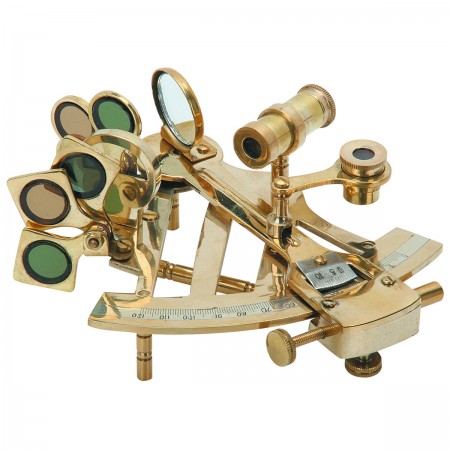
Historically, sailors used a device called a sextant to determine their position in the ocean, and to chart their course.

Given the fixed positions of various stars, including Polaris (The North Star), and other commonly seen constellations, they were surprisingly successful in finding their way.

With today’s GPS technology, only a few sailors continue to use the sextant — although many a masterful sailor uses it as a backup in case technology fails.

With the volume of cruise ships, container vessels, and other boats on our oceans, it would be foolhardy to try to navigate strictly by watching every passing ship.

EXERCISE:

Consider your core values and guiding principles as fixed stars that guide your life. Which do you cherish the most? How do they help you navigate life’s rough seas?

“Success is not to be pursued. It is to be attracted by the person you become.”

“Success is not to be pursued. It is to be attracted by the person you become.”

—Jim Rohn, 20th Century American motivational speaker

Image from jimrohn.com

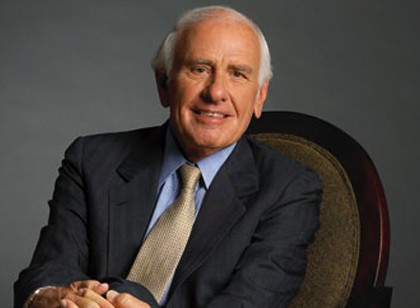
Jim Rohn, who passed away in 2009, was a personal development pioneer.

His over 6,000 seminars, countless books, tapes, learning programs and, of course inspirational quotes, have influenced millions.

Many of his wisest lessons were focused on our abilities to work on ourselves and contribute to others in our various communities.

One of his many students was a young, broke, down-and-out Tony Robbins, who has said many times that Rohn was the man who turned his life around. Tony, as we all know, has been working on himself for decades, and has paid forward similar lessons to millions.

EXERCISE:

What are the strategies, habits, and behaviors that help you continue your personal best journey?

What additional approaches can you incorporate in your days to both contribute to others and attract the success you desire?

“A day of worry is more exhausting than a week of work.”

“A day of worry is more exhausting than a week of work.”

—Sir John Lubbock, 19th Century British politician

Image from Unsplash by William Hook

Imagine you are a cell phone.

You begin your day with a full charge, and prepare to productively navigate your day. All of a sudden, a Worry App is opened on a family matter. Then two more open on your way to work. After your first cup of coffee, a couple more Apps open, due to an email and a text you’ve received.

Following a day of such events, your reserves of power are low or completely exhausted.

You’re in need of a recharge.

Unless you can limit or eliminate the open Worry Apps, you may find yourself headed to bed mentally and emotionally exhausted, sometimes unable to turn them off so you can rest.

EXERCISE:

How can you more efficiently and effectively allocate your physical, mental, and emotional energies throughout the day?

How would greater awareness of your worries limit or prevent you from experiencing these draining factors?

“There are many ways of going forward, but only one way of standing still.”

“There are many ways of going forward, but only one way of standing still.”

—Franklin D. Roosevelt, 32nd President of the United States

Image created in Canva

As part of my customized Personal Excellence Training — which sets the stage for the majority of coaching engagements — I introduce a self-coaching tool called “The Pivot Point.”

This technique uses the concept of “creative tension” described by Robert Fritz in his book, The Path of Least Resistance.

Essentially, the pivot point involves asking yourself — or perhaps a group — these three questions:

  1. What is the current reality?
  2. What is the vision or goal?
  3. What actions can and will I/we take to move forward?

The leverage of our vision provides the impetus to move forward, and creates the opportunity to better our situation.

EXERCISE:

Select at least one personal or professional front-burner issue or project to try out the Pivot Point technique. Please consider replying to this post to let me know how things go.

Friday Review: Adaptation

FRIDAY REVIEW: ADAPTATION

How adaptable are you? Here are a few adaptation-related posts you may have missed. Click the links to read the full message.


“Beware of all enterprises that require a new set of clothes.”


“Procrastination is the art of keeping up with yesterday.”


“The world is full of magic things, patiently waiting for our senses to grow sharper.”


“If you only have a hammer, you tend to see every problem as a nail.”

“If you only have a hammer, you tend to see every problem as a nail.”

—Abraham Maslow, 20th Century American Psychologist

Image from Unsplash by Travelergeek

When was the last time you needed to repair your car, an appliance, or some other device in your home?

In days gone by, we would sometimes give these items a good whack in hopes of getting them going again.

Sometimes it actually worked!

These days, it is rare that any single tool or technique can get the job done, given the multitude and complexity of the many technologies and challenges we face.

In our use of communication, leadership, management, and coaching tools, it almost always takes a tailored and customized approach to optimize our outcomes.

EXERCISE:

Where in your life is being a hammer not working?

Consider asking a friend, colleague, family member, or coach for guidance regarding what other tools might be a better choice.

“Don’t gain the world and lose your soul; wisdom is better than silver or gold.”

“Don’t gain the world and lose your soul; wisdom is better than silver or gold.”

—Bob Marley, 20th Century Jamaican singer/songwriter

Image from Unsplash by Steve Harvey

How strongly do you “fit” and experience a sense of belonging in your personal and professional communities?

To what degree do your beliefs and core values align and resonate with others at home and at work?

Where may you be looking the other way or squinting a bit as you view your world, due to the benefits and payoffs some of your communities or associations provide?

What, if any, soul-diminishing effects are you experiencing due to certain decisions or indecision?

EXERCISE:

What wise and perhaps courageous choices and actions can and will you take to strengthen your soulful foundations toward an even more richly rewarding life?