First we Form Habits

“First we form habits, then they form us.”

—Jim Rohn, late American Motivational Speaker
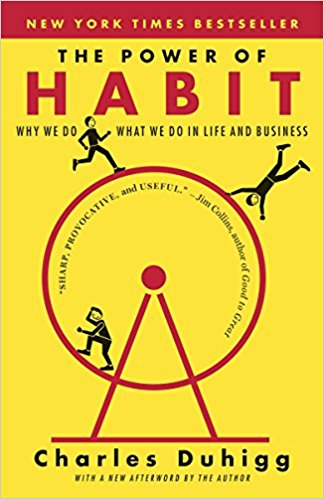
image of The Power of Habit Book Cover

How much do you like yourself?

To what degree do you give yourself the seal of approval for who you are and what you do?

These questions are intended to gain an objective perspective on your current habits because in many ways, we are our habits for both better or worse.

One way to get a clearer picture of your own habits is to observe others in your personal and professional communities. Who do you admire and respect? What habits do they exemplify in their daily pursuits?

Conversely, who are the people you dislike or feel critical toward? What habits do they have that cause you to feel this way?

EXERCISE:

What is a bad habit you want to eliminate or replace with a good habit? Which of your good habits could be even better?

Consider reading Charles Duhigg’s 2012 book, The Power of Habit, to help you form yourself into the person you aspire to be.


Friday Review of Achievement

FRIDAY REVIEW: ACHIEVEMENT

What’s on your list of achievements? Here are a few achievement-related posts you may have missed. Click the link to read the full message.


“Teamwork is the ability to direct individual accomplishment toward organizational objectives. It is the fuel that allows common people to attain uncommon results.”


“Man is a genius when he is dreaming.”


“If it scares you, it may be a good thing to try.”


appetite makes eating a delight

“Tis not the meat, but tis the appetite makes eating a delight.”

—Sir John Suckling, 17th Century English Poet

Image of a colorful feast

Image from Unsplash by Dan Gold

What are your very favorite foods?

Take a minute and actually visualize a plate or perhaps a buffet of your favorites set before you. Is your mouth watering and your stomach growling a bit? Consider these questions from the perspective of having an empty stomach, or being stuffed following a feast such as Thanksgiving.

Of what importance is having an appetite to your levels of pleasure and delight? In what other areas of your life could this metaphor apply?

EXERCISE:

What areas of your life cause you to hunger and feel delight in them? Consider the areas of learning, travel, work, community, faith, relationships, family, and adventure.

What other meaty areas would add to your delight, when getting full isn’t an issue?

Constraints can unwittingly open doors

“Constraints can unwittingly open so many doors.”

—Lindsay Hunter, Chicago-based Fiction Writer

Image of the sky through shattered glass

Image from Tzedek-Tzedek

The Theory of constraints is an important management system that helps businesses achieve their goals. The concept has proven to be beneficial in areas such as manufacturing, where it has improved service, on-time delivery, and reduced the need for excessive inventory.

Identifying constraints, or what some call bottlenecks or the weakest link in a chain, can help all of us become more efficient and effective simply by removing them or by finding a way around them.

Where, however, could constraints on either your personal or professional worlds actually serve you to explore and discover new opportunities?

EXERCISE:

Try a few thought experiments to examine the potential benefits of the following list of constraints:

  • Time: having a finite lifespan
  • Your memory
  • Money
  • Your health and fitness
  • The natural resources of the earth
  • Your belief system
  • Experience and knowledge
  • Space: your physical environment

Feel free to reply to this post with any insights you have, and opportunities you discover.

Virtue is not left to stand alone

“Virtue is not left to stand alone. He who practice it will have neighbors.”

—attributed to Confucius

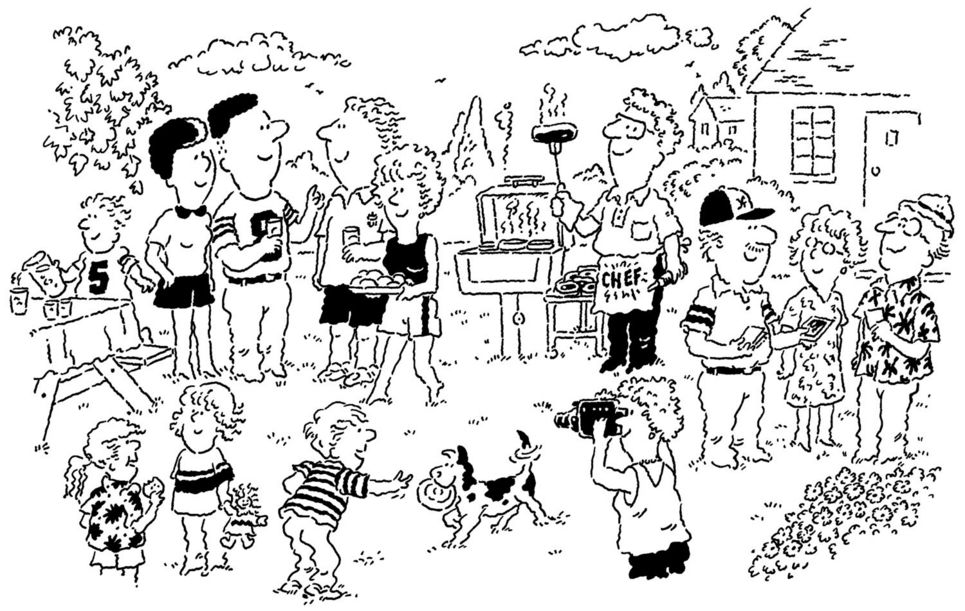
cartoon of a neighborhood party

Image from KC Parent

How do you stack up as a good neighbor or close friend?

Consider rating yourself from one to ten – with one being low and ten being high – regarding the following attributes of the word, virtue:

  • Goodness
  • Morality
  • Integrity
  • Dignity
  • Honor
  • Decency
  • Respectability
  • Honesty
  • Service-Oriented
  • Ethical

EXERCISE:

How can and will you attract more professional and personal friends and neighbors to yourself by living an even more virtuous life?

A wonderful gift may not be wrapped as you expect

“A wonderful gift may not be wrapped as you expect.”

—Johnathan Lockwood Huie, author of Simply an Inspired Life

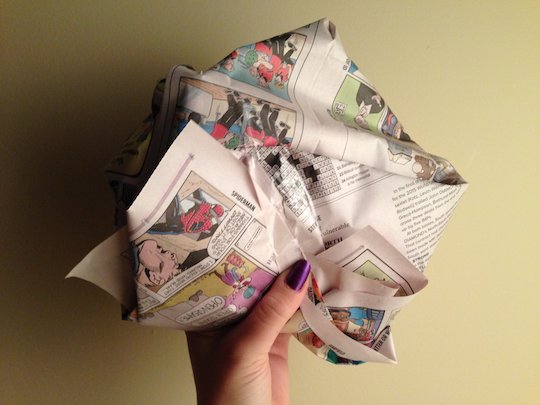
Image of a gift wrapped in the comic strips

Image from syracuse.com

When I was in elementary school, we were required by our teachers to cover our textbooks to protect them from damage and excessive wear.

At the time, many school supply and stationary stores carried colorful cartoon-character or superhero covers to do the job – for a price.

My mom, who was always careful with our family’s money, made her own book covers from brown paper bags from the supermarket. She knew this plain wrapper would do the job just fine – protecting the treasure of valuable information inside.

EXERCISE:

Where might you be overlooking some of life’s most wonderful gifts due to less than optimal packaging hiding the treasures inside?

Friday Review of Simplicity

FRIDAY REVIEW: SIMPLICITY

In a complex world, simplicity can be helpful. Here are a few simplicity-related posts you may have missed. Click to read the full message.


“If you can’t explain it to a six year old, you don’t understand it yourself.”


“A bird sitting on a tree is never afraid of the branch breaking, because its trust is not on the branch but on its own wings.”


“If you want to be free, learn to live simply.”


Never close your lips to those to whom you have opened your heart

“Never close your lips to those to whom you have opened your heart.”

—Charles Dickens, 19th Century English writer & social critic

Image of a man and woman in a coffee shop

Image from rawpixel on Unsplash

The alchemy of relationships, particularly close, caring relationships, is very special. Things like trust, respect, cooperation, and love aren’t so easily captured and kept in good repair.

One way to keep and enhance these heartfelt relationships thriving is to place considerable value and time in open and authentic dialogue, in which each party wishes to forward the relationship and the other individual.

When disagreement and conflict occur it is not the time to withdraw and slip into silence. This form of silence can be a death blow to a previously heart-warming relationship.

EXERCISE:

What current personal or professional relationship is most in need of open dialogue to keep and expand the open-heart feelings that may be slipping away?

We can only be said to be alive

“We can only be said to be alive in those moments when our hearts are conscious of our treasures.”

—Thornton Wilder, 20th Century American Playwright and Novelist

Image of Phil Colllins in a suit

Image from StubHub

In 1989, Phil Collins, the multi-talented musician and singer, released his popular and catchy song “Another Day in Paradise.” If you have 4 or 5 minutes, watch this video.

Unfortunately for me, I’ve been humming this tune and tapping my hand on the steering wheel of my car for all these years, without really listening to the lyrics.

The key phrase of the song is “Oh, think twice – it’s another day for you and me in paradise.”

Perhaps it was my meditation on gratitude this morning that had me think twice and be far more conscious of the abundance of daily treasures I often overlook.

EXERCISE:

How can you think twice and be far more conscious of your daily treasures, to be more alive and fully appreciative of the paradise around you?

Time is the wave upon the shore

“Time is the wave upon the shore. It takes some things away, but it brings other things.”

—Amy Neftzger, Author, researcher, drummer

Image of sunset and waves on a beach

Image from Unsplash by Ivana Moratto

The other night I couldn’t fall asleep. I tried numerous sleep strategies but still couldn’t catch any zzzz’s. The strategy that finally worked was to listen to an app on my phone that recreates the sound of waves rhythmically lapping against the shore.

Equating time to a wave upon the shore has appeal, a calming effect, as compared to the abrupt and fast aspects of our days.

EXERCISE:

How can you better and more fully embrace the flow of time and the comings and goings of life?