Patience

“Adopt the pace of nature: her secret is patience.”

—Ralph Waldo Emerson, American essayist, lecturer, and poet

Image from heyjamie.com

Image from heyjamie.com

What is the current pace of your life? If you are like many, it’s busy, rushed, in overdrive, or even hyper-drive. You may find yourself eating fast or convenience foods on the run, skipping meals altogether, or getting a boost from coffee and caffeinated energy drinks. Or just as damaging, you may be missing out on the rest and exercise your body needs to reach and maintain optimal health.

What results would be possible if you took a more patient approach to life and your top priorities? What items on your to-do list could you reduce or eliminate, to make room for a more patient and peaceful flow in your life?

EXERCISE:

What steps can and will you take to achieve a more natural and patient pace throughout your day?

How can you make this practice a daily habit?

A new book that will definitely help you progress in these areas is On Target Living, by Chris Johnson.


Focus

“The secret of change is to focus all of your energy, not in fighting the old, but on building the new.”

—Socrates, Classic Greek Philosopher

image from bigfishmedia.ca

image from bigfishmedia.ca

When I consider the idea of fighting the old ways of doing things, I think of the phrase, whatever we resist persists. Notice how some of your own less-than-desirable habits or behaviors seem to stick around no matter how much you try to fight them off. The act of building things is much like a replacement strategy where we insert what we desire into our lives instead.

EXERCISE:

What would be the biggest difference in your personal or professional life if you stopped fighting the old and started building the new?

Appreciation

“Appreciation is a wonderful thing; it makes what is excellent in others belong to us as well.”

—Author Unknown

Image from jewishfed.org

Image from jewishfed.org

Who doesn’t want to live an even more full and abundant life? We have all heard the statement that we can have virtually anything we want in life, we just can’t have everything. We must be prepared to make certain trade-offs. To have more of this or that we need intentionally to have less of something else. If we choose to start something new we often must stop something else.

A caveat to this thought involves exercising our appreciation muscles, so the excellence that surrounds us each day is available whenever we wish.

EXERCISE:

How can you expand your capacity to appreciate the riches and wonders of life all around you, to lead an even more full and abundantly rewarding life?

Thorn of Experience

“One thorn of experience is worth a whole wilderness of warning.”

—James Russell Lowell, 20th Century American poet, critic, and diplomat

Image from Flickr by Taro Taylor

Image from Flickr by Taro Taylor

Perhaps the single most significant reason the coaching profession has grown to over a $2 billion industry is the fact that it focuses a great degree on experiential learning. Although there is still a substantial value in telling and showing, it seems the stickiness and sustainability of the lesson comes from experiencing things firsthand, where we actually get on the field, run a few plays, and see what happens.

EXERCISE:

Where and how can you include far more experiential learning opportunities to help you progress even further in your life?

Focus

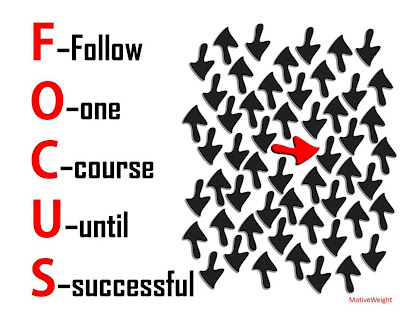
Follow One Course Until Successful (FOCUS)

—Author Unknown

Image from blog.ruzuku.com

Image from blog.ruzuku.com

One of my favorite quotes related to the FOCUS acronym is “If you try to chase two rabbits they both get away.”

In our “faster, faster” world, multi-tasking is a fairly common practice. Although this strategy seems to work in many circumstances, it often has drawbacks, particularly when we are faced with a very important priority. In such cases, even a small bit of distraction or taking our eye off the ball can have considerable undesirable consequences.

EXERCISE:

Identify one or two areas in your life where a lack of focus is having a less than desirable impact. Where would following one course until successful produce the greatest value for you today and in the future?

Leading the Pack

“Throw me to the wolves and I will return leading the pack.”

—Author Unknown

Image from www.fanpop.com

Image from www.fanpop.com

Today’s quote makes me think of the times my clients state that a colleague, coworker, or client “threw them under the bus.”  In almost all cases, they say it was in an unfair, unjust, and detrimental way.

Blaming, bullying, one-upmanship, and office politics are common occurrences. How we respond to such attacks, and how we rise above their potential negative impacts is a skill which we could all benefit from time to time.

EXERCISE:

A book that I have read numerous times over the years – The Four Agreements by Don Miguel Ruiz – points to fundamental ideas that can help us all return, leading the pack, when we are thrown to the wolves. They are:

  1. Be impeccable with your word
  2. Don’t take anything personally
  3. Don’t make assumptions
  4. Always do your best

career and passion

“It’s a beautiful thing when a career and passion come together.”

—Author Unknown

Image from Flickr by Chris Parfitt

Image from Flickr by Chris Parfitt

Watching young children at play is a joyful activity. If you happen to be a parent, the joy is magnified even more. The exuberance and passion these little ones show as they engage their world is truly a thing of beauty. Some would even say that play is their job.

Now take the average working man or woman –  including yourself if you wish – and examine the level of passion and fulfillment they show as they head off to work on Monday morning. Few people would call their facial expressions “a thing of beauty.”

What happened between our time as little ones and our adult years?

EXERCISE:

How and in what ways can you regain the playful and passionate exuberance of your youth, to make your current career or career transition a reason to look forward to many more beautiful Mondays?


Is the Glass Half Empty

“People who wonder whether the glass is half empty or half full miss the point. The glass is refillable.”

—simon sinek, speaker and author


Image from breacan.org.au

Image from breacan.org.au

Imagine you have an entire month to take the road trip of your life, anywhere you wish. You have just won the use of a large luxury mobile home or recreational vehicle. The only limitation is that you were only given half a tank of fuel.

Of course, we can look on the bright side of things to estimate how far we could go, or we can be upset given the limited range available for this adventure. This view of things seems silly knowing that we always have the ability to top off the tank anytime we wish.

EXERCISE:

Where in either your professional or personal worlds are you operating with the half full or half empty perspective?  What would be possible if you assumed an attitude of overflowing abundance instead?

Great Leaders

“Great leaders don’t blame the tools they’re given. They work to sharpen them.”

—Author Unknown

Image from comicbook.com

Image from comicbook.com

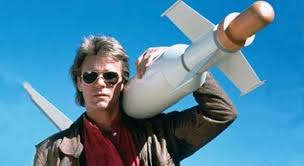
MacGyver was a very popular action adventure TV series in The United States and some other markets, from 1985 to 1992.

Resourceful and possessing an encyclopedic knowledge of the physical sciences, the main character solved complex problems by making things out of ordinary objects, using his ever-present, always sharp Swiss Army knife.

EXERCISE:

Where and in what ways can you make the most of the tools and resources available to you?

Where can you, as Stephen Covey might suggest, “sharpen the saw” of your abilities to be a MacGyver-like problem solver in your world?

Shelf Life

“Ideas have a short shelf life. You must act on them before the expiration date.”

-John Maxwell, American author and speaker

Image from michellelianna.wordpress.com

Image from michellelianna.wordpress.com

When you visit the grocery store to purchase food for yourself and your family, do you have a particular strategy? Do you make a comprehensive list, or just have a general idea of what you need? Do you walk down each aisle to see what is on sale, or fill your cart with what appeals to you in the moment, especially when you’re hungry as you shop?

One strategy I employ is to examine the expiration date on all packaged food.  On numerous occasions, I find myself looking toward the back of the shelf to select those items that will stay freshest longest.

EXERCISE:

What are some of the best ideas sitting on the shelves of your mind? Which one will you act upon today and not let it expire?