The price of Anything

“The price of anything is the amount of life you exchange for it.”

– Henry David Thoreau, American author, philosopher and transcendentalist

QC #1011b

One of the first quotes I ever shared in The Quotable Coach series was “time is the coin of life” – how we spend our time and who we spend it with literally has a price.

Exercise:

Examine your life domains and ask yourself if each investment of your valuable life equity was worth it.

Consider making a few adjustments by doing more of some things, less of others, and starting a few new and interesting activities – and of course stopping those intolerable ones that you regret the most.

“When we are no longer able to change a situation, we are challenged to change ourselves.”

“When we are no longer able to change a situation, we are challenged to change ourselves.”

—Viktor Frankl, Austrian neurologist and Holocaust survivor

Image from Unsplash by Maria Thalassinou

Very few days pass by without each of us experiencing at least a few upsets. It is very common for our desires to be unfulfilled or our expectations to be thwarted by outside events. One way to navigate these bumps in the road is to look inward at our attitudes, so we can maintain our footing and continue to move ahead.

Exercise:

What are a few upsetting or undesirable situations in your professional or personal life that you are unable to change at this time?

What do you need to do to rise to the challenge of changing yourself, in order to make the best of these difficult circumstances?

“Have patience. All things are difficult before they become easy.”

“Have patience. All things are difficult before they become easy.”

– Saadi, medieval Persian poet

Photo by Tyler Milligan on Unsplash

A common characteristic of hard-driving “type A” people is impatience. Often, this quality leads to considerable success. It can, however, also often have a dark side.

I’m currently reading Quiet: The Power of Introverts in a World That Can’t Stop Talking by Susan Cain. There’s considerable evidence from her research that introverts often demonstrate greater patience and often greater mastery of tasks that require patience and persistence in practice.

Exercise:

In what areas of your personal and professional life would greater patience support greater success? Watch Cain’s “The Power of Introverts” TED talk or consider reading the book … if you have the patience.

The Wise Man Questions

“The wise man questions himself; the fool, others.”

– Henri Arnold, cartoonist

question-mark

One of the greatest tools in a coach’s toolbox is the question. Answers to open-ended questions—those that begin with who, what, where, when, why and how—provide a level of depth and significance from well below the surface, often into new territories of awareness and insight.

I disagree with Henri Arnold’s statement that fools ask such questions of others: after all, I’d be calling all coaches fools! I do however believe that when coaches also ask these same questions of themselves, they often enhance their own development considerably. Arnold might say that a coach without their own internal or external coach is a fool.

Exercise:

Pay attention to the types of questions you and your colleagues, friends, and family members ask one another during the day. Which ones enhance your life journey, and propel you toward wisdom?

“Our job is the excuse through which we get to love people.”

“Our job is the excuse through which we get to love people.”

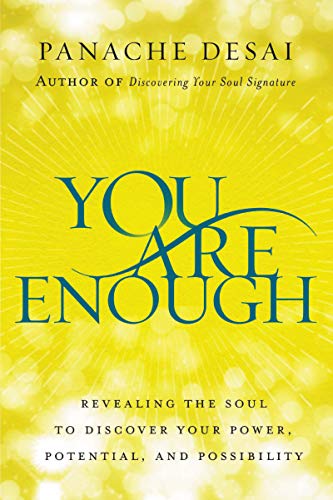
– Panache Desai, author of You are Enough

What percent of your life do you spend engaged in work? For the sake of today’s quote, I’m going to define work as our vocation, or the way we earn a living.

For the person working Monday through Friday, a minimum of 8 hours a day (who does that these days?) work represents approximately one fourth of our life. If the song lyrics from the Beatles tune are true, and all you need is love, or the old song love makes the world go round, then perhaps Desai is really on to something.

Exercise:

How can you view your daily work efforts as an act of love, contribution and generosity, instead of something to get through on the way to your weekend?

Don’t stumble over something behind you

“Don’t stumble over something behind you.”

– Seneca, Roman Stoic philosopher

Where do you live? I don’t mean your country,  city, or state. Ultimately, we all live in our thoughts, regardless of our physical location.

With this in mind, how often do your thoughts go to past events and experiences that were negative and upsetting? As humans, we have the ability to instantly travel back in time, to revisit and yes, stumble over these same events along with all their limiting feelings.

Exercise:

Imagine that you are born with a  factory-installed time machine with three settings: past, present and future. How can you, through greater self-awareness and intentionality, limit your negative journeys backwards to maximize your experiencing of the present?  Perhaps you could venture forward from time to time into the delightful possibilities of the future!

Who looks outside dreams. who looks inside awakens.

“Who looks outside dreams; who looks inside awakens.”

– Carl G.Jung, psychotherapist and psychiatrist

Image of man in contemplation

Image from Unsplash by Ben White

As a former science teacher and professed watcher of the Discovery Channel (and TV shows from my youth such as Mr. Wizard), I have always been fascinated by exploring new worlds beyond my reach.

During my childhood, I even dreamed of one day being an astronaut and visiting the moon and the planets. As I aged and pursued adventure, personal growth and my career in coaching, I found a new excitement in taking more frequent journeys within my mind and my heart – all without the assistance of a rocket.

Exercise:

Consider engaging in your own inner journey daily, through a practice of your choice such as meditation, prayer, journal writing, and the reading of insightful or thought-provoking books or blogs.

Feel free to reply to this message and let me know what practices you use to awaken and clarify your vision.

If we only listened with the same passion that we feel about being heard

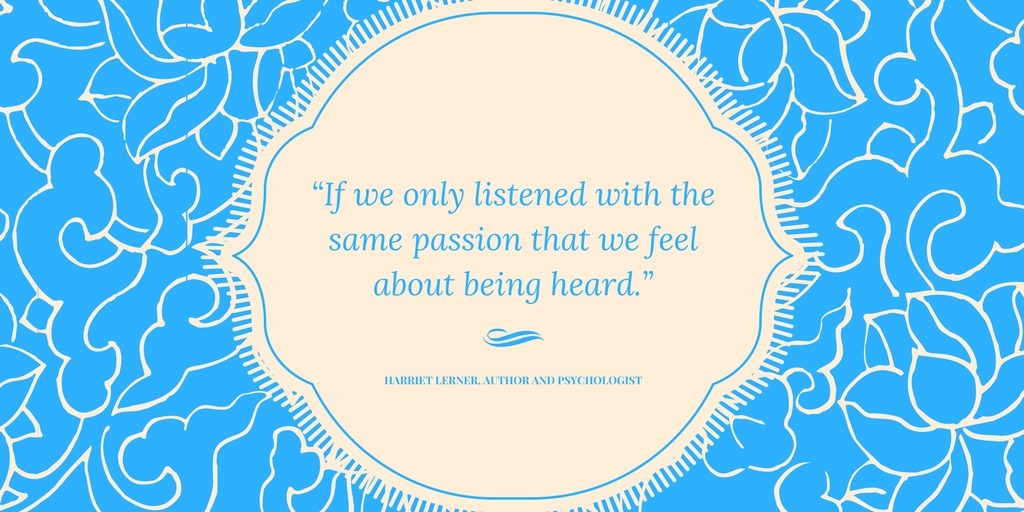
“If we only listened with the same passion that we feel about being heard.”

– Harriet Lerner, author and psychologist

My experience in the business of coaching and 30+ years of marriage has proved this key to success. Lerner refers to being “others-focused” rather than “self-focused.” Being sincerely interested in others and generously listening so that they can fully express themselves are fundamental to building quality relationships, and lead to a successful life.

Exercise:

When you are listening to others with great passion and focus, imagine that money is coming right out of their mouths, and that your job is to capture the full value of what they have to say and contribute.

You can take this quote to the bank. 🙂 !

“The ability to perceive or think differently is more important than the knowledge gained.”

“The ability to perceive or think differently is more important than the knowledge gained.”

– David Bohm, theoretical physicist


On / off, right / wrong, black / white are examples of polar opposites or, some might say, the duality of a situation. Knowledge, although highly prized and valuable in our world, often points us in the direction of the “right answer” and can often lead us to a somewhat limited view on a particular subject.

Bohm suggests that being open to various perspectives and having the ability to think differently is more important than knowledge in our world today. We need the wisdom to evaluate things with a full spectrum of colors and multiple shades of grey.

Exercise:

Where in your personal and professional life are you limited by knowledge gained and your need to be right? How can you exercise your “try it on” muscle to explore opportunities and possibilities beyond your knowledge of things?

“Laughter is an instant vacation.”

“Laughter is an instant vacation.”

– Milton Berle
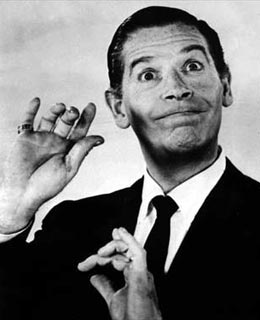
Milton Berle

In the book Anatomy of an Illness, Norman Cousins goes to considerable length to overcome his debilitating condition, with the help of funny movies, other forms of humor, and high dose Vitamin C.

There is considerable evidence that the lighthearted experience of laughter has positive effects on our immune system. It protects our nervous system by reducing stress, and it may actually enhance our life span.

Milton Burle, often referred to as “Mr. Television” or “Uncle Miltie” was born in 1908 and lived to the age of 93; he had a career of bringing “s—t-eating grins” and belly laughs to generations.

In our rapidly-moving and often stress-filled lives, we often find ourselves longing for an escape to our favorite vacation spot.  Unfortunately, our ability to make these journeys may only occur a few times a year. Let’s all take Burle’s suggestion, and take far more mini-vacations to brighten our days.

Exercise:

Google Milton Burle and check out some of his video clips on YouTube.

Explore the works of other comedians – such as Lucille Ball, Carol Burnett, Robin Williams, Billy Crystal and Bob Hope – or check out some jokes / funny story books and websites and share a few chuckles on a daily basis.