FRIDAY REVIEW: TEACHING
We are all teachers at some level. Here are a few teaching-related posts you may have missed. Click the links to read the full message.


We are all teachers at some level. Here are a few teaching-related posts you may have missed. Click the links to read the full message.
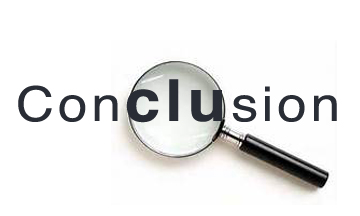
Image from MP3ringtone
Time pressure is one of many factors affecting our personal and professional worlds. Most people I coach are experiencing unprecedented levels of stress. They feel they are required to accomplish more in less time than ever before, just to keep up.
Critical thinking and decision-making are vital components of the world we live in. It often feels like we are all on a game show in which getting the right answer is only one part of how we win. The speed of our answer is also part of the equation.
The sheer number of decisions we need to make causes many of us to seek short cuts in our decision-making process, to avoid exhaustion and burnout.
How are you currently allocating your mental energies to your personal and professional priorities? How can you conserve or strengthen this energy to help you reach your most optimal and wisest conclusion?
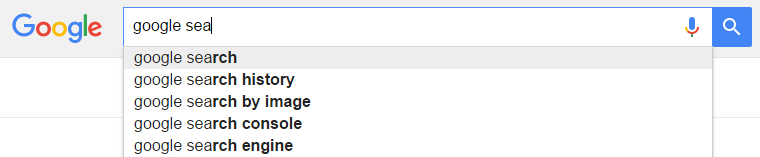
When was the last time you did a Google search? What subject were you investigating? How many hits did you get, and how many were actually relevant to your inquiry?
I recall doing book reports in my youth, going to the library, or examining my own World Book Encyclopedia to piece together my paper.
Today, we have infinite amounts of information on most subjects. Navigating the world with some sense of sanity has made our intuitive skills and abilities of discernment more important than ever before.
What are some of your most useful intuitive strategies to sort through the volumes of information to help you make optimal decisions? Consider seeking input on this subject from others, to discover ideas you might not have considered. This may be just the data you need most.
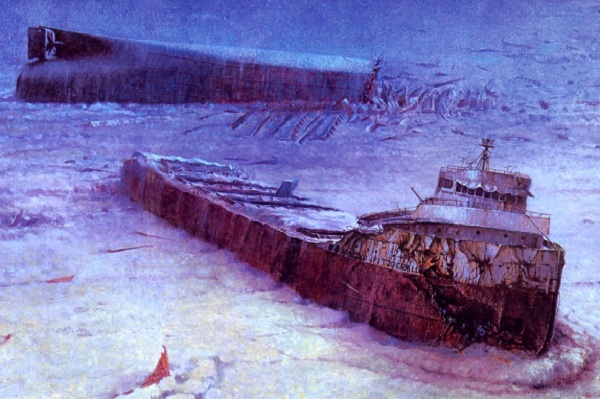
Image of SS Edmund Fitzgerald by NewsMax.com
As a citizen of Michigan, I greatly appreciate our five Great Lakes, the largest group of freshwater lakes in the world. The lakes have been traversed by native people since the dawn of time, and by western man since the 17th century.
Thousands of ships have sunk in these waters, and an estimated 30,000 people have lost their lives as a result. The most famous was the wreck of the SS Edmund Fitzgerald, which sank in a Lake Superior storm in November, 1975, with the loss of the entire 29-member crew.
What personal and professional waters are you navigating these days? What stormy or rocky events are causing you to take on water and giving you that sinking feeling?
How and in what ways can you bail any water that has entered your worlds, and begin sailing toward calmer, more prosperous seas?

image from The Storage Facilitator
If you are a fan of Shakespeare, consider the advice Polonius provides to his son Laertes in Act I, Scene III of Hamlet:
Neither a borrower nor a lender be, for loan oft loses both itself and friend.
What has been your experience with such matters? Where did things work out just fine, and where did things go wrong?
How do these sayings influence your point of view and perspective on being generous and helping others in need?
Consider responding to this post with your thoughts or perhaps discuss your view on this subject with a friend.
How trusting are you of others? How trustworthy are you? Here are a few trust-related posts you may have missed. Click the links to read the full message.

“To trust yourself, to test your limits. That is the courage to succeed.”


“Trust that when the answer is ‘no,’ there’s a better ‘yes’ down the road.”

Image from Flickr by Vinoth Chandar
We are all creatures of habit. Just take a look at a typical day to explore all of the routines and rituals that engage your time.
The good news is that habits are often extremely helpful in that they usually provide us the necessary momentum to pursue and achieve many of our goals.
On the other hand, new goals that we passionately desire rarely come to fruition because we continue to follow our current path, using familiar strategies and tactics.
Where and on what personal or professional goals is blazing a path the thing to do to achieve what you most desire? What new and different behaviors and attitudes will be required to do so?

Image of Milford Sound from Flickr by Bernard Spragg
What do the following places have in common?
For those who wish to travel more, these are wondrous destinations in New Zealand.
I visited these amazing places as part of my 60th birthday adventure. Getting out into the world can be transformational! In just a few weeks, I felt I took a quantum leap in my awareness and knowledge of geography, history, culture, plants, animals, and many other subjects.
How and in what ways can you investigate and explore your world more fully to add and expand to you awareness and knowledge? Consider scheduling one of your most exciting “Bucket List” travel adventures soon.

Image from Times of Malta
How often do you observe quarrels in your personal or professional worlds? If, for some reason, you don’t see much, simply take a look at our political environment and the resulting media circus!
Since it clearly takes two to tango, why is it that many of us blame others for missing a step or for stepping on each others toes?
What if, instead of pointing our index finger at others, we acknowledge the three fingers pointing back at us and take greater responsibility for our current realities?
What would happen in your relationships and your world if you looked at what’s right and good about others, and take greater responsibility for the quarrels you may experience?

Image from nasa.gov
Early man believed that Earth was the center of everything, since they observed moons, planets, and stars revolving around it in the night sky. As science advanced, we learned that Earth is actually in an elliptical orbit around the sun.
With further advances in science⏤particularly in astronomy and astrophysics⏤we now know that we are a small speck on a small planet in a small solar system tucked away in the far corner of one out of two trillion galaxies in the universe.
And yet, many people believe they are the center of the universe, and that the world should somehow work out in whatever way they desire. History has clearly proven this idea ridiculously untrue, yet many still want to believe it.
How would seeing yourself and others as part of the oneness of all things provide you greater peace of mind and contentment? Consider the fact that we are all stardust, and that we have an important role to play in this infinite universe.