To improve your chances of finishing, cut your goal in half

“To improve your chances of finishing, cut your goal in half or double your timeline for completion.”

—Jon Acuff, author of Finish — Give Yourself the Gift of Done

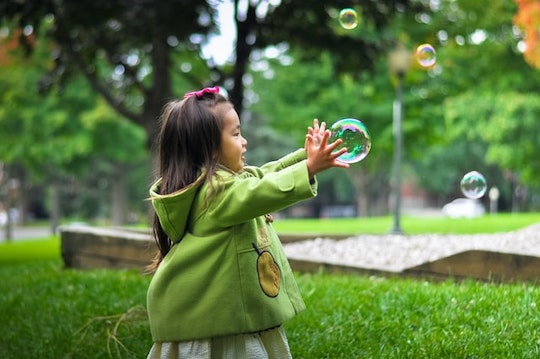
Image from Unsplash by Alice Yamamura

As we enter the halfway point of 2022, how are you progressing on the goals you established in January?

How many have been realized? Where are you on track?

Where have you fallen behind or perhaps given up completely?

To some, today’s quote looks like a cop out or a form of sandbagging. After all, we are supposed to swing for the fences and stretch for the stars if we listen to the most popular advice on achievement. This may be all well and good in theory but not if we never see things through and wallow in regret.

EXERCISE:

Where would cutting your goals down to size or giving yourself more time to complete things dramatically increase the likelihood of finishing?

Managing your own and others’ expectations will be an important consideration to reduce the chances of upsets along the way.


“See limits on your resources as opportunities to get creative.”

“See limits on your resources as opportunities to get creative.”

Joshua Becker, Founder of Becoming Minimalist

Image from Unsplash by Jr Korpa

Growing up my family lived in a very modest row house in Philadelphia. My dad was a physical education teacher and my mom worked as a receptionist at Temple University Hospital.

The majority of our summers were spent at Camp Indian Lake in the Pocono Mountains, where my dad happily worked as the camp’s director. On hot summer days when we were home and before school was back in session, we were always looking for things to do. One day when I must have been getting on my mom’s last nerve, she handed me a plastic bucket filled with water and an old paint brush and told me to go outside and paint the cement wall and driveway out back. Given the scorching heat it took less than a minute for the water to evaporate and offer me another blank canvas for my artistic pursuits.

EXERCISE:

Where and how can and do your see limits on your resources as opportunities to get creative? Please reply to this post to share some examples from your own life that bring a smile to your face.

Sometimes it feels good to be a passenger and go where life takes you.

Sometimes it feels good to be a passenger and go where life takes you.

—Calm App Reflection

Image from Unsplash by Erik Odiin

When you take trips in your car, who drives? What percentage of the time are you at the wheel versus riding shotgun or even in the back seat?

I have a strong preference to be in control, and only reluctantly become a passenger when I’m tired and the risk of me driving affects the safety of those with me.

Given this pattern, today’s quote seemed worth a closer look, and I became curious about what I might be missing with my hands always in the “two and ten” positions.

EXERCISE:

Choose an entire day in which you let others and life itself take the wheel.

How might you make this a regular practice to see what surprises life may offer around the next corner?

Friday Review: Service

Friday Review: Service

Where in your life have you been of service to others? Here are a few related posts you may have missed.

“What would happen if you doubled down on service?”


“If the customer comes first, there is a good chance the customer will come back.”


“The more you know about the people you serve, the better you serve the people you know.”


“Look beyond yourself, see a need and meet it.”

“Look beyond yourself, see a need and meet it.”

Joshua Becker, author of Becoming Minimalist

Image from Amazon

There seems to be a continuum between selfish and selfless tendencies for most of us. On one hand, sustainable happiness and life satisfaction are rarely seen by focusing solely on ourselves. On the other, the complete focus only on the needs of others  — although noble — has been demonstrated to also have a down side, including burnout and health challenges.

Where do you see yourself between these two poles?

How do you meet your own needs to have the capacity to serve and support others in your communities?

EXERCISE:

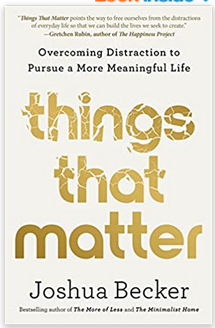
Where and when is it appropriate to be SELF-ISH to meet your own needs, or to be OTHER-ISH to meet the needs of others?  How would doing so meet your own need for purpose and a more meaningful life?  Consider checking out Joshua Becker’s new book, Things That Matter, for additional ideas on this subject.

Trust is a product of vulnerability that grows over time and requires

“Trust is a product of vulnerability that grows over time and requires work, attention, and full engagement. Trust isn’t a grand gesture — it’s a growing marble collection.”

Brene Brown, American research professor, lecturer, and author

Image from Unsplash by Acton Crawford

The development of trusting relationships is considered by most people a highly worthy pursuit. Considering how it might be metaphorically related to a marble collection intrigued me.

As a boy, I never collected marbles although I played with them from time to time. For me, it was bottle caps and baseball cards. Examining my efforts, to shoot, flip, and throw these objects with increased mastery, I can recall the various friendships surrounding these times. The connections with the kids in the neighborhood had a richness that went well beyond us simply growing our collections.

EXERCISE:

What are some of the ways you develop and grow your own treasured collection of trusting relationships?  Consider reviewing my trust-o-meter assessment for additional ideas to grow in this area.

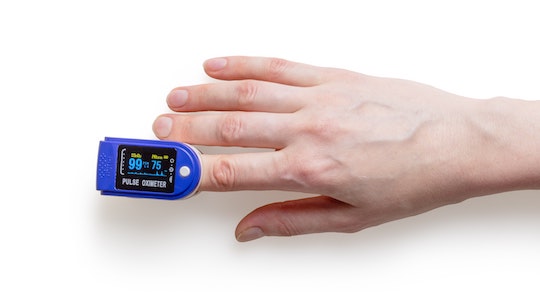
“If you have a pulse, you have a purpose.”

“If you have a pulse, you have a purpose.”

—Richard Leider, Faculty member of the Modern Elder Academy

Image from Unsplash by Mockup Graphics

Ask yourself the following questions:

  • Am I doing what I love to do?
  • Is what I do helpful to others?
  • Does it energize me or drain me?

Consider modifying these closed questions to open ended questions such as….

  • How often do I get to do what I love?
  • How are my efforts helpful to others?
  • How energized and alive do I feel when engaged in these activities?

EXERCISE:

What are some ways you can and will increase your heart rate to live an even more inspired and purposeful life?

Where there is awareness there is growth

Where there is awareness there is growth.

—Calm App Reflection

Image from Unsplash by olieman.eth

Today’s quote got me thinking about the definition of insanity which suggests that it is fruitless to expect different results when we do the same thing over and over.

I prefer to embrace the idea of “When patterns are broken, new worlds emerge,” penned by Tuli Kupferberg.

Given the perspectives above, awareness seems to be a key to opening the doors to growth and new possibilities. Mindlessly trying the same keys that didn’t open the door initially seems to only keep us locked out of our fullest potential.

EXERCISE:

Where are you currently stalled or stopped in your efforts to grow?

How can you deepen or broaden your mindfulness efforts to unlock new doors and discover more of what’s inside?

Who can and will you ask for help you in your efforts?

Friday Review: Mistakes

Friday Review: MISTAKES

How do you view the mistakes you have made? Here are a few related posts you may have missed.

“We should learn from the mistakes of others. We don’t have time to make them all ourselves.”


“The greatest mistake you can make in life is to continually be afraid you will make one.”


“Mistakes are the portals of discovery.”


When it comes to our children, so often our lessons are caught more than taught

“When it comes to our children, so often our lessons are caught more than taught.”

Joshua Becker, American author, writer, and philanthropist

Image from Unsplash by Leo Rivas

How do you respond when given unwanted advice? During your childhood, how often do you recall being told what to do and how to behave? Look to your parents, teachers, and other adults at the time regarding how they tried to mold you.

For many of us, the do’s and don’ts of navigating our world were taught by these well intended individuals. After all, these were likely the methods used on them in their youth. To what degree do such approaches work to create the independent, free-thinking, well-adjusted children we all wish to launch into the world?

Children today are exposed to a barrage of messages from countless sources. Who are the role models setting the example you want them to catch to guide and support their journey?

EXERCISE:

How can you support and create an environment for your children and grandchildren in which more of life’s most important lessons are caught?