We would rather have one man or woman working with us than three merely working for us

“We would rather have one man or woman working with us than three merely working for us.”

—J. Danby Day, per Forbes Magazine

Image of cast of "Who's the Boss?"

Image from Zimbio

When it comes to the subjects of leadership and management, one of my biggest pet peeves is the word “Boss.”

I find myself squirming, often downright repulsed by the idea of one person managing an individual or team through the “top-down / command-and-control” manner conveyed by this word.

My 35+ years of experience working for public and private companies have shown me that people are far more fulfilled, empowered, satisfied and successful when they work with one another rather than for others.

Because of the feeling of contributing to a community, people experience a heightened sense of impact and purpose, knowing they are truly valued.

EXERCISE:

How can you become a more masterful leader, manager, and coach in your professional and personal communities so people gravitate and look forward to working with you?


Friday Review: Asking Questions

FRIDAY REVIEW: QUESTIONS

How often do you question the things you hear or read? Here are a few posts about questions you may have missed. Click the links to read the full message.


“There is more than one right answer.”


“When I look back in five years, which of these options will make the best story?”


“A wise man’s questions contain half the answer.”


I leave my troubles in my clothes

“When I go to bed, I leave my trouble in my clothes.”

—Dutch Proverb

Image of a pile of clothes on a chair

Image from Unsplash by Renata Fraga

Have you ever experienced insomnia?

How often do you literally carry your burdens and troubles to bed, through incessant thinking and rumination about an issue?

Besides being physically tired and mentally fatigued to begin with, you can’t really accomplish anything by letting issues churn in your head through the night. You only add to the stress by loss of the restful sleep you require to take on tomorrow with a full tank and a positive attitude.

EXERCISE:

What bedtime behaviors and rituals could you consider to “leave your troubles in your clothes”?

Consider asking friends and colleagues what works for them, or try searching “sleep strategies” on the web. You’ll be amazed by the volume of content, and the magnitude and impact of this common issue.

No One Agrees With Others Opinions

“No one agrees with other people’s opinion. They merely agree with their own opinions expressed by somebody else.”

—Sydney Tremayne, Canadian Stock Investment Strategist

Image of man holding placard saying "Ask the right questions"

Image from FlightJobs

How would you like to be a more masterful leader and have far greater influence in your professional and personal relationships?

For this to occur, it requires less of you and more from others.

Have you noticed that virtually everyone is far more interested in what they are thinking than in what you may be saying? Being interested rather than interesting can be just the strategy to discover their opinions and leanings on any topic. Their perspective and beliefs can point you to the areas where they can be more easily led and influenced.

EXERCISE:

Where and with whom can you tap into the opinions and beliefs held by others, to significantly increase your current levels of leadership and influence?

The Best Cure for a Sluggish Mind

“The best cure for a sluggish mind is to disturb its routine.”

—William H. Danforth, 20th Century Founder of The American Youth Foundation

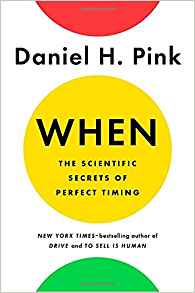
Image of Book Cover

Are you a Lark or an Owl?

Said another way: Are you a morning person or a night person?

Larks are at their best in the morning and usually hit their low energy walls at mid-afternoon.

Owls start their days a bit more slowly, hit their peak at mid-morning, and work productively much later into the day.

In his book, WHEN, Daniel Pink points out that both Larks and Owls need to insert breaks and even an occasional nap into their days. We need this to break up the marathon lives we live and cure our sluggish minds.

EXERCISE:

Where in your day would you most benefit from a change or break, in order to renew or recharge?

Consider blocking out 15-30 minutes each day over the next week, and see what you notice about your effectiveness and productivity.

The only way some of us exercise our minds

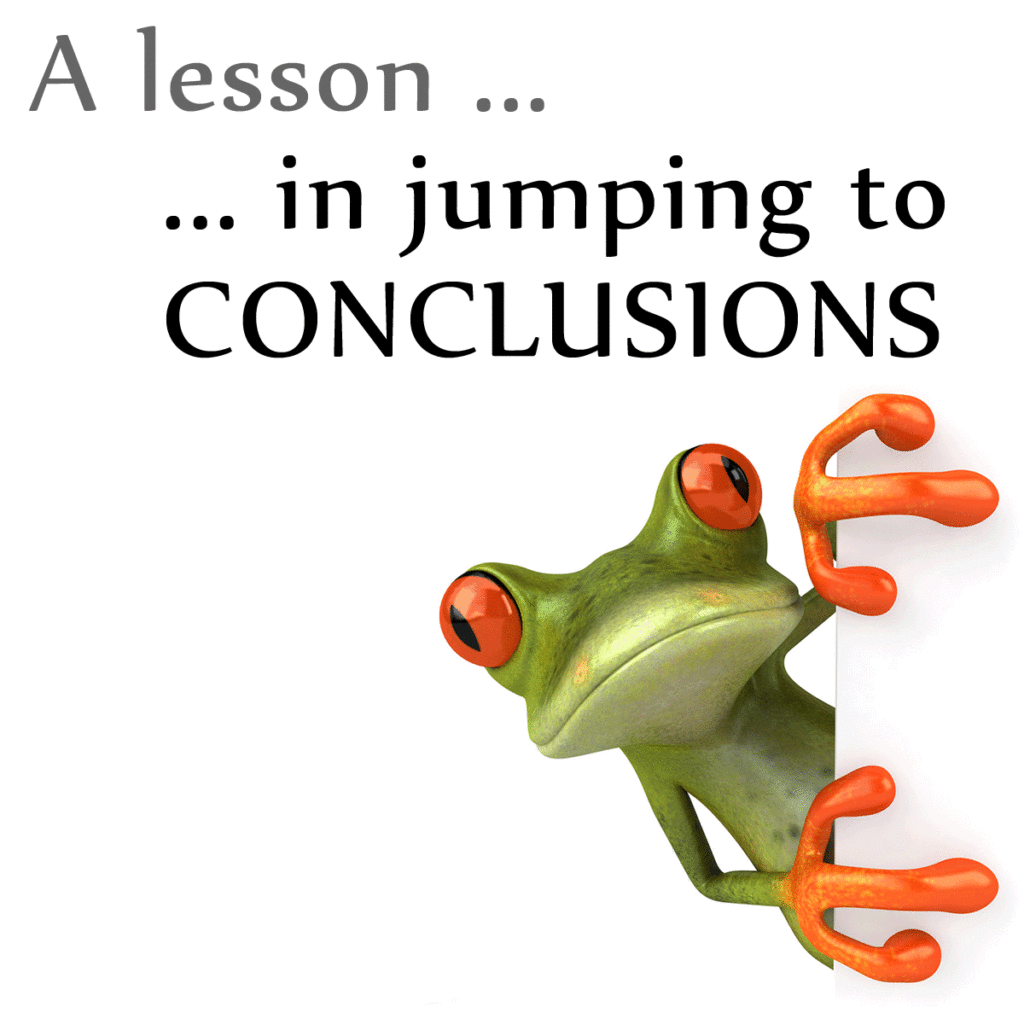
“The only way some of us exercise our minds is by jumping to conclusions.”

—Cullen Hightower, 20th Century American writer

Image of a frog jumping to conclusions

Image from Ellen’s Little Visits

With our never-ending race to get it all done today, we have all run into a problem. Despite our brain’s magnificent power to process vast amounts of information, we are beginning to hit a barrier to open and novel thinking.

We have learned a trick in which our established mental models create shortcuts to our processing power. We skip the often useful objective and reflective capacities needed in many situations.

EXERCISE:

Where have you recently jumped to an incorrect conclusion? Where and with whom might a slower, more thoughtful and open-minded approach prove most useful, in your professional or personal life?

Friday Review Acceptance

FRIDAY REVIEW: ACCEPTANCE

What is the hardest part of acceptance for you? Here are a few posts related to acceptance you may have missed. Click the links to read the full message.


“There are two primary choices in life: to accept conditions as they exist, or accept the responsibility for changing them.”


“Life doesn’t have to be perfect to be wonderful.”


“To thine own self be nice.”


The Safest Way to Double Your Money

“The safest way to double your money is to fold it over and put it in your pocket.”

—Kin Hubbard, 20th Century American Journalist

Image of folded hundred dollar bills

Image from Fight4Survival

For many people, money represents freedom, independence, security, and peace of mind. The topic of money can cause all kinds of trouble, and often has great impact on our relationships.

The simple advice to “make more and spend less” doesn’t always cut it, and we often find ourselves continually stressing over our finances.

As we age, many of us begin to appreciate more fully the saying, “The best things in life are not things.” We begin to look closely at how we spend our time, not just our money.

EXERCISE:

Where might taking “The Best Things in Life are Free” approach help you gain greater pleasure and allow you to pocket a bit more of the freedom, independence, security, and peace of mind you desire?

You Must Look Into People as well as at Them

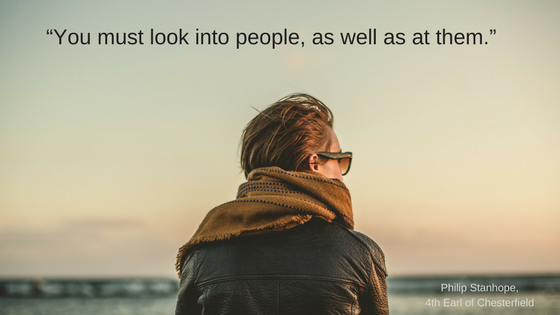
“You must look into people, as well as at them.”

—Philip Stanhope, 4th Earl of Chesterfield, 18th Century British Statesman

Image of a man on the beach staring into space

Taking a sincere interest and seeking to fully understand the thoughts, feelings, and beliefs of another could be one of the most important things we can do to change the world around us.

How many of your problems and life challenges – not to mention those of the world – are due to breakdowns in relationships and communication in general?

How often do you find yourself or someone else engaged in surface observations of others, with a critical or judgmental perspective? How does doing so diminish the relationship qualities including respect, trust, and cooperation?

EXERCISE:

Where and how can you look more deeply into the people in your professional and personal life, to change your world for the better?

Men are Not Against You

“Men are not against you; they’re merely for themselves.”

—Gene Fowler, 20th Century American journalist

Image of Wile E. Coyote and the Road Runner

Image from Lesterbanks

Do you have any enemies? Is there an archnemesis in your personal or professional community? What is it like to be around this person, or even to simply think about them?

What have you done to contribute to the rift between the two of you? What have you tried to perhaps mend fences?

EXERCISE:

Instead of being against one another with all the damage it can produce, how would a better understanding of what this individual stands for help?

Once you better understand their motivators and beliefs, perhaps you can break the vicious cycle of making each other wrong.